By Thomas Bainbridge
The Tyne and Wear Derby is the most fiercely contested rivalry in English football. The two cities, thirteen miles apart, harbour a bitter animosity.
But this is more than a sporting rivalry. Its origins are deeply embedded in the history of the region.

Sunderland, centred on Monkwearmouth, was once a centre for religion and scholarship. While Newcastle gained in influence after the Norman Conquest as a bastion of royal authority, and subsequently as a defensive outpost against the incursions of Scottish armies and raiding parties.
With the early development of mining and trade, contention between the two towns began to emerge. By the 1630s, the King’s favouritism to the “ancient and opulent” families of Newcastle gave the town a great advantage, and coal poured from the mouth of the Tyne towards London.[1]
Despite their subservient position, Sunderland also slowly began to grow, and benefited from its own lesser coal exports, creating a rising class of business-minded gentry who felt Newcastle’s dominance an injustice. Another blow against them was dealt when Charles I began to levy ‘ship-money’, an arbitrary tax which disproportionately affected the town.
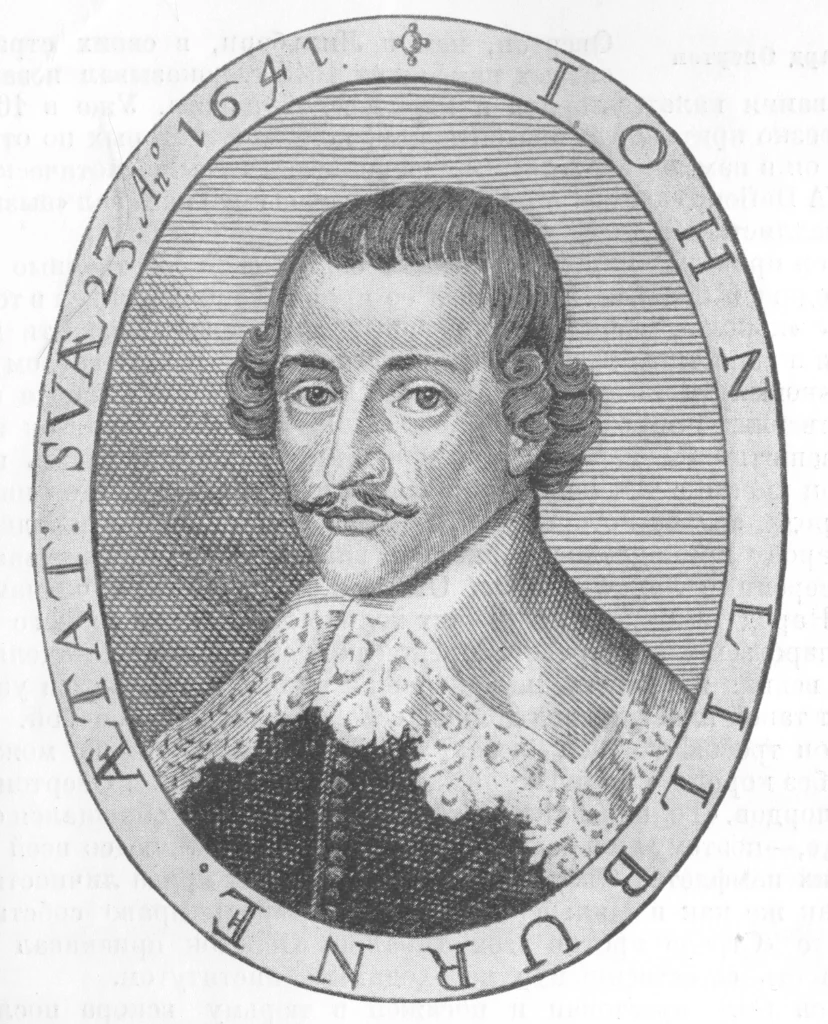
Sunderland then became a hotbed of dissent and radical Parliamentarian thought. The Leveller, John Lilburne, one of the most intensely vocal and influential figures of the Civil War, came from a prominent Sunderland family. Lilburne’s influence was monumental, writing numerous pamphlets such as England’s Birthright Justified, which fulminated against the oppressive measures of the King.
Power Struggle
With the onset of war in 1642, control over the rich coalfields of the North East was considered a priority for both sides, and each went about attempting to secure the region.
In November 1643, the Parliamentary forces, prevented from marching north by the army of William Cavendish, Marquess of Newcastle, signed a pact of alliance with the Scottish Covenanters.
The Covenanters were a force of 14,000 Scottish Presbyterians who were commanded by the Earl of Leven to cross the Tweed and march south, thus forcing the Marquess of Newcastle to wheel around and prevent them taking the town. On 2nd February 1644, Leven succeeded in reaching Newcastle, only hours after the town had begun its siege preparations.
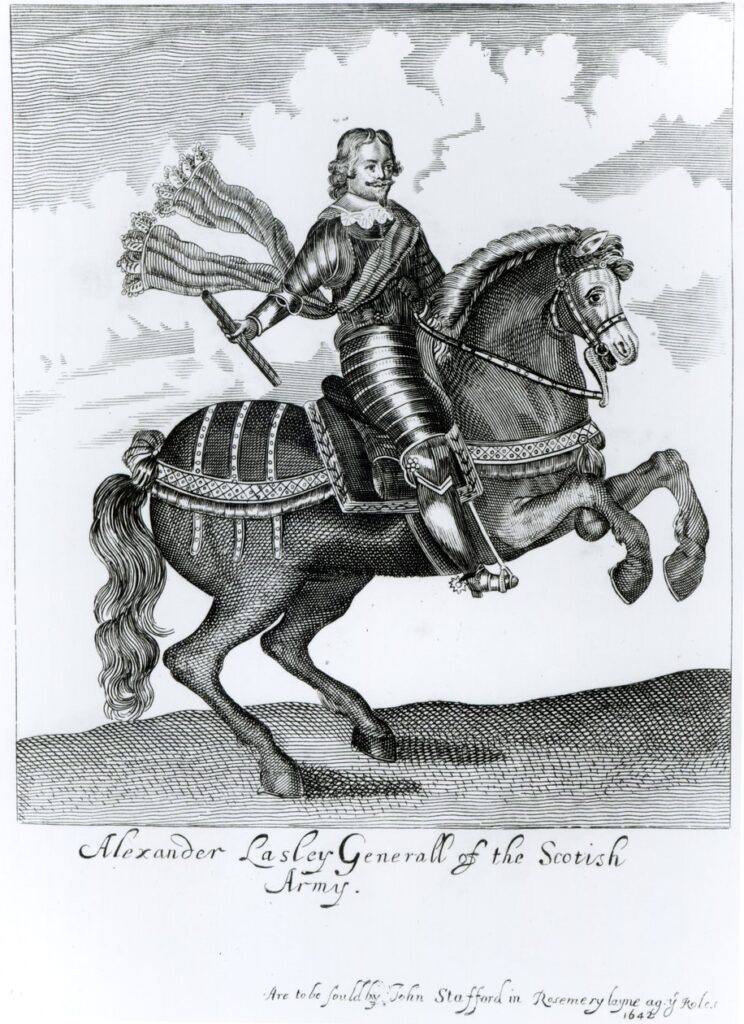
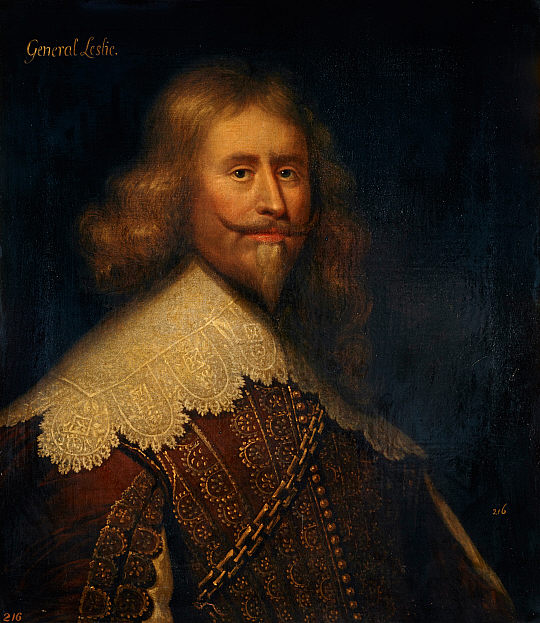
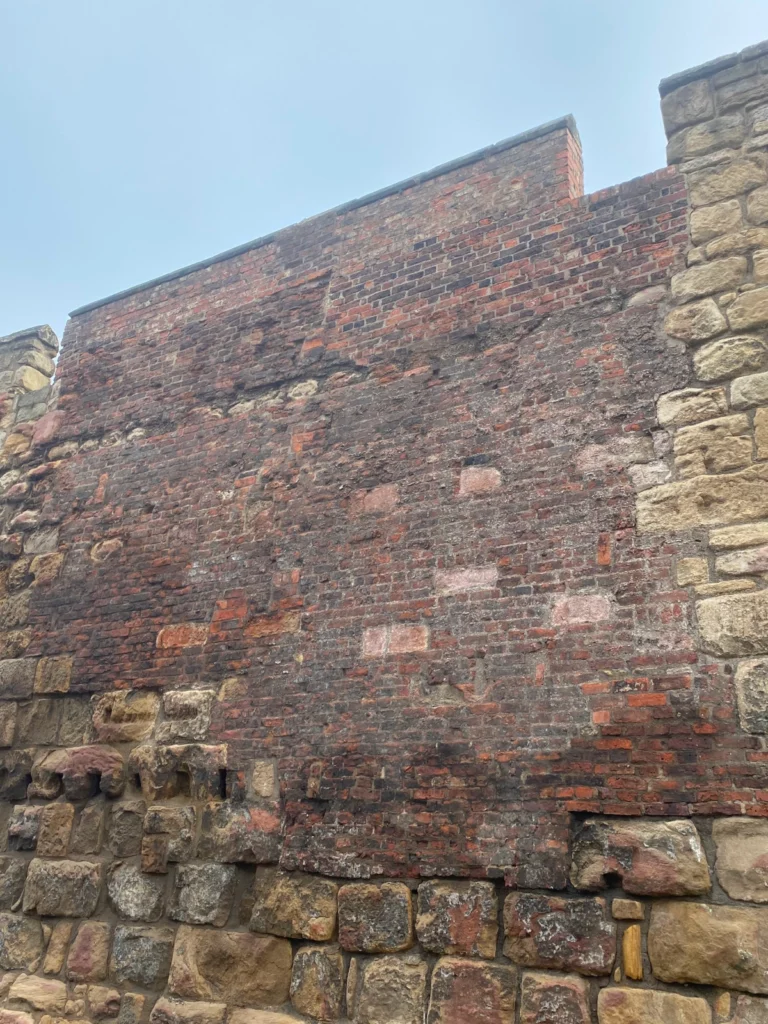
Leven did make a brief attempt to take the town but was dissuaded by the extensive fortifications that had been put in place. The Marquess had even ordered the burning and destruction of portions of the town to prevent the Scots gaining a foothold. Leven therefore bypassed Newcastle and crossed the Tyne.
Though Newcastle and Durham remained Royalist strongholds, the Scots occupied surrounding areas including South Shields, Tynemouth, and Sunderland, where they were welcomed by the Parliamentarian populations.
However, the Royalist army at Newcastle was reinforced with a troop of cavalry. Stronger and now freer to manoeuvre, the Marquess left the city in force to confront the Scots on open ground…
The Battle of Boldon Hill — 24th March 1644
The two armies, arrayed between the Wear and the Tyne, were of roughly equivalent size: The Royalists with 2000 cavalrymen and 4300 foot, to the Scots’ 1600 cavalry and 5200 foot. The Earl of Leven’s troops were primarily Scots, though aided by local Parliamentarians, while the Marquess of Newcastle’s forces were drawn from across the country. The battle, though named after Boldon Hill (now Downhill), in reality was fought further west, in between the villages of Boldon, Hylton and Southwick (though the exact location is disputed). Boldon Hill itself was the site of the Royalist encampment.
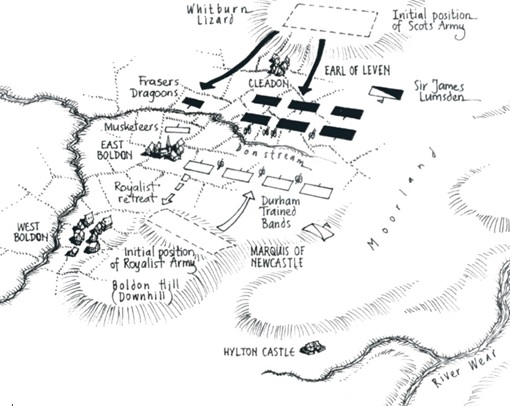
The action began with light skirmishing and steadily grew in intensity. The Scots attempted to bring up artillery across the Wear by boat, though two guns were lost in the process. The fighting continued into the night. As one Scottish soldier described it,
“Many officers, who have been old soldiers, did affirm they had never seen so long and hot a service in the nighttime; there were divers killed on both sides.”

After vigorous sabre rattling and profuse musketry, the two forces retreated to their respective positions. The Royalists dead counted 240, while the Scots admitted to losing around 300. The former then proceeded to retreat to their stronghold at Durham. The North was thus secured to continue the export of coal to the Parliamentarian forces in the South through Sunderland.
But this newly secured port, as well as the addition of Blyth, could still not handle the volumes of coal required to supply the South, as Newcastle had hitherto done. So the two armies met again in 1644 at Marston Moor, with the Parlimentarians’ end goal being to capture Newcastle.
The result of the Battle of Marston Moor was a crushing defeat for the Royalists and a resumption of a state of siege at Newcastle. This time the siege held for seven months, bravely defended by the town’s mayor, John Marley.
A Fine Risposte
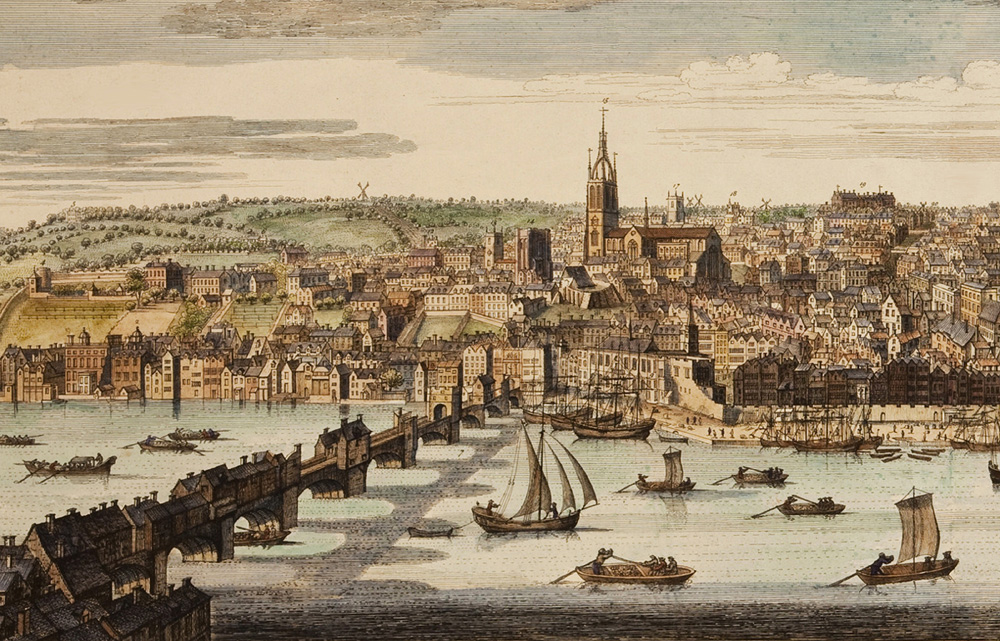
A famous story from the siege told that: frustrated with their progress, General Leven threatened to fire on the distinctive lantern tower of St Nicholas’ Church, a landmark, then as now, symbolic of the town. Marley’s response to this threat was to place his Scottish prisoners in the tower in full view of the Scots’ artillery, which was enough to deter the Scots and spare the church from destruction.
Intractable Enemies
Are these events the seeds of the footballing modern rivalry? You might be inclined to disagree. It was a primarily Scottish army which fought at Boldon Hill against the King’s forces, not one made up of the population of Sunderland.
Instead, rather than the cause, the Battle of Boldon Hill was the symptom of emerging competiton between the two towns, stoking political, social, religious and economic allegiances.
The need for a steady supply of coal by both sides in the war provided the context in which this rivalry could be vented. Now it is instead vented on the pitch, where money still plays its part…
Notes:
- Free Born John: Biography of John Lilburne by Pauline Gregg (2000), p97
2. When Charles II gained the throne in the Restoration of 1660, some of Sunderland’s rights were then reversed and Newcastle was again rewarded for its loyalty.
3. During the Jacobite Rebellions of the early 18th century, the people of Newcastle were once again expressly loyal to the (Hanoverian) King, while the people of Sunderland supported the Stuarts.
4. Also read how North Shields’ ambitions were stifled and Cromwell appealed to about the coal trade by Ralph Gardiner in 1650s: penbal.uk/ralph-gardner-obelisk-to-be-restored/

Regarding the rivalry between the football teams, I remember the Sunderland fan buses being laid on for their home games from North Shields in addition to other locations in South East Northumberland, whilst the Newcastle fans had easier access to their grounds.
Our class at Linskill were split between both teams approx. 60% Newcastle, 30% Sunderland the remaining 10% not footy fans. I seem to remember that their home games were on alternative Saturdays and many football fans would frequent both St.James and Roker Park, thereby supporting both clubs.
When an apprentice at J.W. Moore in the late 60s there would be banter between those from the South of the river and those from the North, however, when Sunderland won against Leeds in the FA Cup the regular Toon followers from work travelled to Wembley in support of the Mackems.
Incidentally, the first time I heard that term “Mackem” was around 1968, when the guy I was apprenticed to called a Sunderland co-worker a “Mackem and Tackem” based upon the Sunderland pronunciation of “make them and take them”.
The rivalry between both teams was relatively friendly then, however, in the late 70’s early 80’s a hatred built up between the rival supporters.
I agree totally, until the late 80s my best man and I used to go to Roker Park one week and t James the next, this bitter rivalry is a recent thing. Its a shame we cant be more like rugby supporters and have a drink together and gently take the mickey