
The Town Under Puritan Tyranny in the 1650s
By Thomas Bainbridge
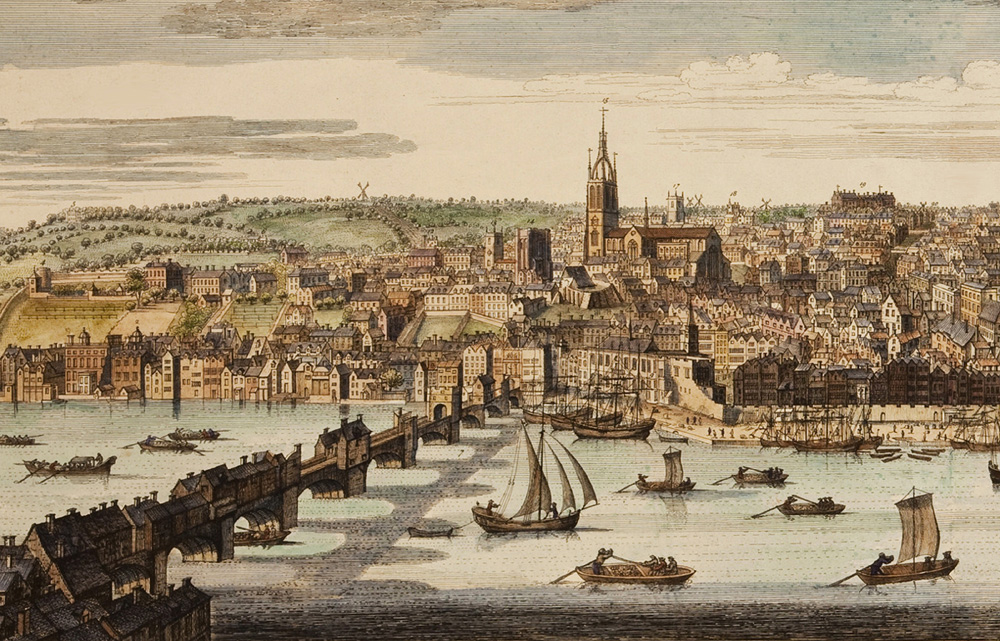
With the conclusion of the English Civil War in 1648, the Parliamentarian forces led by Oliver Cromwell were victorious. But rather than a period of joy and liberty, the country was placed under the thumb of a party of Puritans who imposed their stern religious dogmas onto society. Some of the effects are well-known: the banning of Christmas celebrations, the playing of sports, gambling, blasphemy and drunkenness. These strictures were imposed excessively upon Newcastle, which had not previously had a large puritanical population.
Even more sinister were the actions prosecuted against those accused of witchcraft and heresy, often resulting in execution. These currents culminated in one of the most barbaric episodes within the history of Newcastle.
Having previously been a Royalist stronghold, the Newcastle garrison had surrendered to the Scottish Covenanter army after their siege of the town in 1644. The Covenanters were a force of fervent Presbyterian Puritans, fanatically devoted to the upkeep of the Kirk, and rabidly intolerant of all religious threats they perceived in society—including what they identified as witchcraft.
Indeed, the Scottish Witchcraft Act of 1649 expanded the definition, and punishments available, for offences of witchcraft, and these regulations became increasingly enforced too in Northern England, in which the Scottish army now held sway.
Pursuant to this, the magistrate of Newcastle had contracted two men, Thomas Shevill and Cuthbert Nicholason, to recruit a ‘witchfinder’ from Scotland and bring him to the town in order to root out any who might be ‘friends to Satan’. Even more so, the townsfolk were requested to inform on their neighbours, and that “All people [should] bring in any complaint against any woman for a witch.”
The witchfinder himself was paid twenty shillings for each witch that he identified. In the course of his investigations in the town, he accused thirty-one individuals on these charges. Thirty of these were women and one was a man, Matthew Bulmer — a supposed wizard who was thought to transform himself into a black cat and prowl the town at night. Those he accused languished in Newgate Prison for over a year awaiting trial, while one, Jane Martin, was held in the Newcastle Keep dungeon known as the Heron Pit, manacled to the wall, underfed and exposed to the cold and damp.
After levying these accusations, it was necessary to provide ‘proof’ of the claims. The witchfinder had many such ‘methods’ for doing so. One was torture. Though technically outlawed in England, certain forms were employed including sleep deprivation in order to force a dubious confession. However, the most prominent test to determine if someone was a witch was to prick their skin. If blood was drawn out, then the accused could not be a witch, since it was believed that witches did not bleed. More than just a small needle, these were sometimes thick iron bodkins which resembled spear points. The brutality of the experiment is evidenced in the description given by one Colonel Hobson: “in sight of all the people laid her body naked to the Waste, with her cloaths over her head […] and then he ran a pin into her Thigh”. Thankfully, in this instance, blood ‘gushed out’ of the inflicted wound, and she was deemed innocent. However, sixteen of the accused were not so lucky, and they were convicted on the charges, and sentenced to death.

On 21st August 1650, the execution by hanging of the sixteen ‘witches’ was looked upon with excitement by a large crowd on the Town Moor. One horrendous detail related in one account was that Margaret Brown, one of the unfortunate women, bled profusely from her neck after being hanged, from which many afterwards took as a sign from God of her innocence. Those executed were then buried in unmarked graves in St. Andrew’s Church. One report claims that the bodies even had nails hammered into their kneecaps after execution in order to prevent their resurrection.

In the aftermath of the hangings, when people had finally come to their senses, the abominable actions of the witchfinder (whose name we have no record of) were avenged. He was brought to trial and found guilty of wrongly accusing over 200 women of witchcraft, he too being summarily executed.
Of course, witches do not exist, and in reality, these tortures were inflicted upon innocent and terrified girls and women who had no recourse to defend themselves from such accusations. Unfathomable to us, the extremity of the religious beliefs held by many during the seventeenth century made it perfectly possible to many that witches did exist and that they were conspiring to help the Devil in his mission. The memory of these events, however distant, casts a gruesome legacy over the town today.
Accused and executed:
- Matthew Bulmer
- Elizabeth Anderson
- Jane Hunter
- Mary Potts
- Alice Hume
- Elianor Rogerson
- Margaret Muffit
- Margaret Maddison
- Elizabeth Brown
- Margaret Brown
- Jane Copeland
- Ann Watson
- Elianor Henderson
- Elizabeth Dobson
- Katherine Coultor
The Wicked of the Earth
Read about the characters and events surrounding the witch trial in this excellent historical novel by A.D. Bergin. The story’s hero, James Archer, still haunted from fighting for Cromwell in Ireland, returns to Newcastle to face the ugly underbelly of the Town at the height of the witch panic.
A Climate of Fear and Oppression
Notwithstanding the witch trials, the period must have been a rather despairing one on the whole, with people being beaten and dragged off to prison for various perceived transgressions.
No one symbolises the injustice of the period more than the brewer and campaigner, Ralph Gardner, from whom almost everything we know about the witch trials comes, and who famously characterised Newcastle’s governors as: “unchristian, illegal, oppressive and repugnant to the Laws of England.”
Gardner details the painful indignties that were inflicted on women, including the scold’s bridle, used to publicly silence a woman accused of spreading gossip, slander or giving people grief generally.
“John Willis, of Ipswich, upon his oath said, that he, this deponent, was in Newcastle six months ago, and there he saw one Ann Bidlestone drove through the streets, by an officer of the same corporation, holding a rope in his hand, the other end fastened to an engine called the branks, which is like a crown, it being of iron, which was musled, over the head and face, with a great gap or tongue of iron forced into her mouth, which forced the blood out; and that is the punishment which the magistrates do inflict upon chiding and scoulding women; and that he hath often seen the like done to others.”
Another harsh measure meted out was the Drunkards Cloak, also known as the Newcastle Cloak:
“He, this deponent, further affirms, that he hath seen men drove up and down the streets, with a great tub or barrel, opened in the sides, with a hole in one end, to put through their heads, and so cover their shoulders and bodies, down to the small of their legs, and then close the same, called the new-fashioned cloak, and so make them march to the view of all beholders; and this is their punishment for drunkards, or the like.”
Gardner continues:
“These are such practices as are not granted by their charter-law, and are repugnant to the known laws of England.
Drunkards are to pay a fine of five shillings to the poor, to be paid within one week, or be set in the stocks six hours; for the second ofience, to be bound to the good behaviour.
Scoulds are to be duckt over head and ears, into the water, in a ducking-stool.
I was certainly informed, by persons of worth, that the punishments above are but gentle admonitions, to what they knew was acted by two magistrates of Newcastle, one for killing a poor workman of his own, and being questioned for it, and condemned, compounded with king James for it, paying to a scotch lord his weight in gold and silver, every seven years, or thereabouts, &c. the other magistrate found a poor man cutting a few horse-sticks in his wood, for which offence he bound him to a tree, and whipt him to death.”

These scenes were a product of the backwards religious zealotry that pervaded the age. Ultimately such oppressive rule had the effect of pitting the townsfolk against each other. The people of Newcastle had been used to living in relative freedom and unity, and it would not be until the Restoration at the end of the decade when the town and indeed the country could put the failed experiment of Puritanism behind them and enjoy a more modern and secular existence.
References:
After the end of the Puritanical reign, it was recorded that the people of Newcastle once more enjoyed themselves after years of misery: ‘Sin now appears with a brazen face’.
The Lords Loud Call to England by Puritan cleric Henry Jessey, p. 24
W.N. Neill, The Professional Pricker and His Test for Witchcraft. The Scottish Historical Review , Apr., 1922, Vol. 19, No. 75 (Apr., 1922), pp. 205 213
Roger Howell Jr., Newcastle upon Tyne and the Puritan Revolution (1967)
Englands grievance discovered, in relation to the coal-trade by Ralph Gardner, pp. 172-173