
By Thomas Bainbridge
The English Civil War seemed to be over. Charles I had been captured and peace prevailed throughout England.
But in a last bid to hold onto power, the King aimed to play off one set of his subjects against the other.
Chiefly, Charles had failed to fully agree to nineteen clauses of the so-called ‘Newcastle Propositions’, which angered the English Parliament, while the Scots were more amenable…
Second Civil War
In 1647 Charles reopened secret negotiations with the Scots, who agreed to an alliance if they were granted their religious freedoms. He then rallied his diverse support, engulfing the country once more in conflict. In 1648 uprisings began across the South, while a Covenanter Scots army invaded across the River Tweed, threatening Newcastle once more.
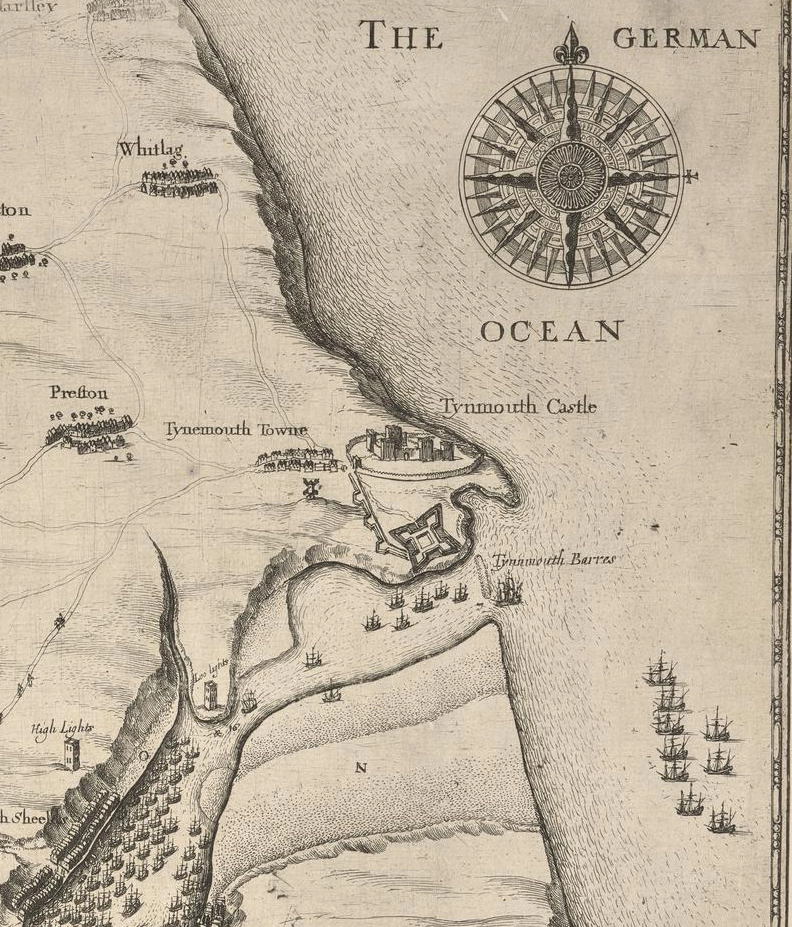
This was exacerbated by another problem: The Governor of Tynemouth Castle, Colonel Henry Lilburne, hitherto a staunch Parliamentarian, switched sides and declared for the Royalists.[1]
He released the prisoners that were being held there and gathered the garrison. He told them that if they did not fight for the King they would be executed. The story of the defection was related by Liburne’s commanding officer, Arthur Haselrig, who was astonished by the treachery:
“Lieut.-Col. Lilburn, being deputy-governor of that castle, commanded most of the officers upon several services out of the castle, and then armed and set at liberty the prisoners, and plucked up the drawbridge, and told the soldiers, that he would pistol every soldier that would not be for himself and King Charles.
Whereupon many ran over the works [i.e escaped], and a very honest and faithful corporal, refusing to deliver up his arms to him upon those terms, he thrust him through the body and killed him.
And immediately he shot off several pieces of ordnance, declaring that he kept the castle for King Charles, and sent to the Sheels and other adjacent towns and made proclamation for all that loved him and King Charles to come to the castle for his assistance; and many seamen and others came to him immediately.”
HHE Craster, ‘History of Northumberland’, Vol. VIII, p.192
The Castle then prepared for a siege…
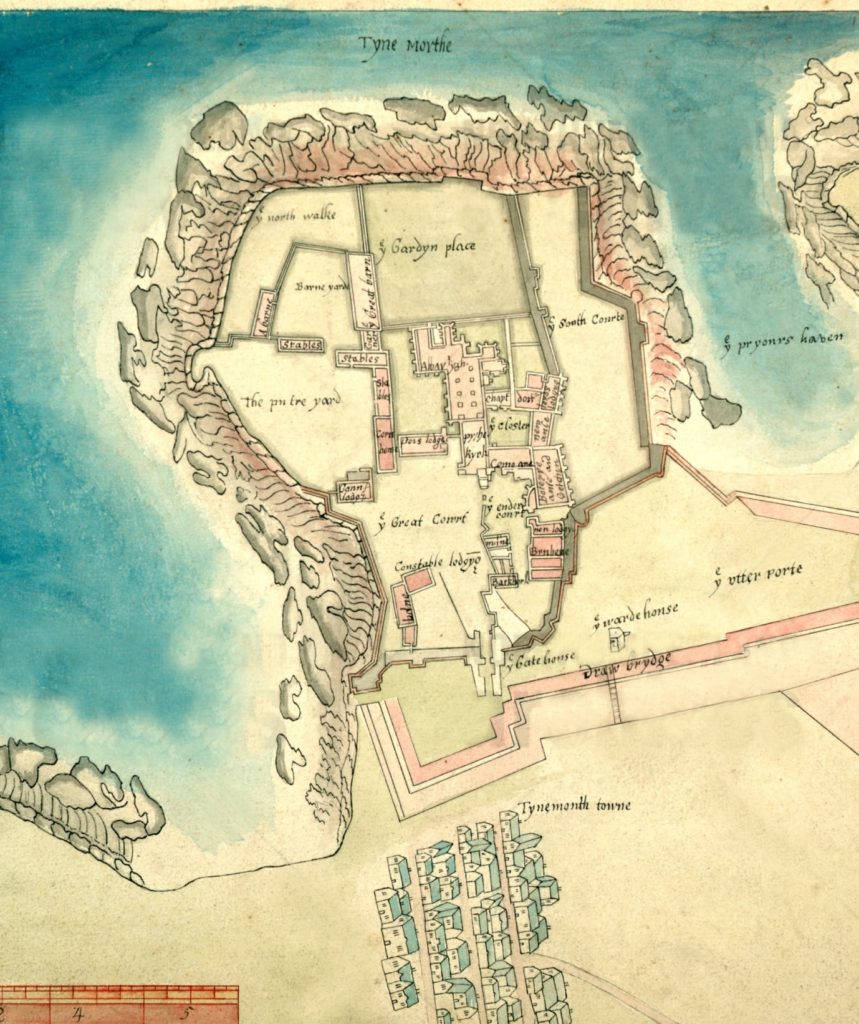
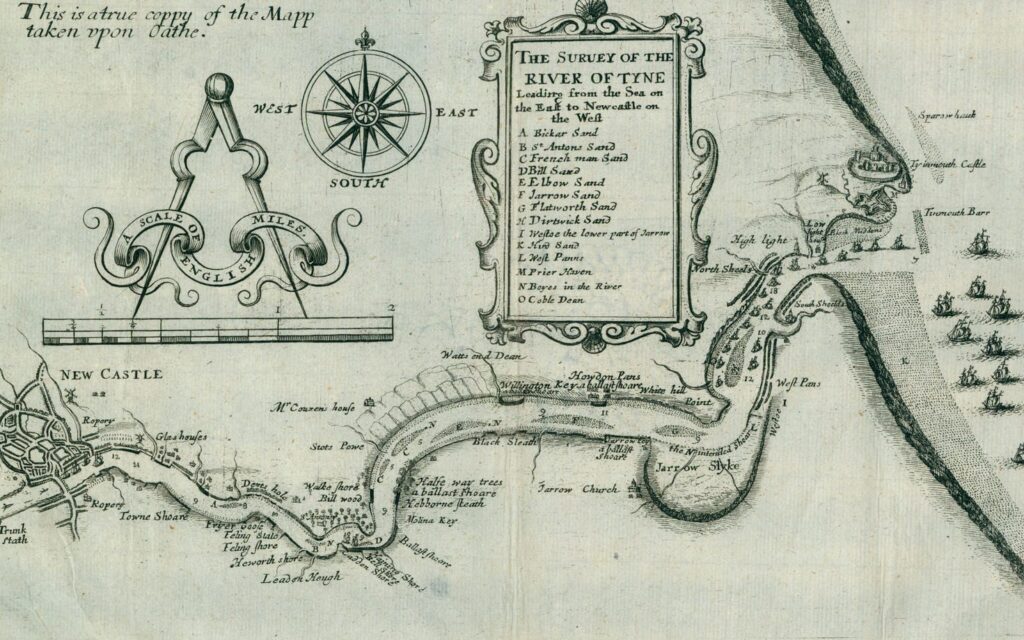

Lilburne’s betrayal was a thorn in the side of the Parliamentarian cause as it could prevent the export of coal from the Tyne, which was so vital to the war effort. It was therefore deemed necessary to dislodge the foe and to this end General Haselrig, the newly-appointed Governor of Newcastle, marched on the ancient site of the Priory with a ‘considerable brigade’ in order to quell the enemy force. The subsequent siege of Tynemouth on the 11th August, 1648, was extremely brief.

Battle of Tynemouth: 11th August 1648
Beginning the attack at one in the morning, Heselrig’s men tried to scale the walls with ladders, which were initially found to be too short. In return, the defenders fired their cannons from the battlements, but their shots were ineffective. To repulse the enemy, they were forced to lean over the wall to fire their small arms, exposing themselves to returning volleys of musket fire, peppering their ranks.
They ultimately could not resist the onslaught as the Parliamentarians vaulted the defences. When they reached the battlements, the garrison surrendered — of which some were then brutally put to the sword. It was an overwhelming victory: It was recorded that the attackers themselves had only suffered one killed and three wounded. Colonel Lilburne himself was found amongst the dead. His lifeless body was decapitated and his head hoisted above the Castle walls as a warning to Royalist sympathisers.
Haselrig wrote:
“The works are exceeding high, and, though their ladders were long, they could not easily get up; the enemy still, as they mounted, with pikes and gunners’ ladles pushed them down. Some storming at the gunholes, the enemy were forced to come so high upon the works that our soldiers underneath shot them into the bellies and killed divers of them; but at last ours mounted the works, recovered the castle, and killed many seamen and others; and, amongst the number that were slain, they found Lieut-Col Lilburn.”
John Rushworth, lawyer, historian and politician from the period, wrote of the battle:
“They advance all night [from Newcastle], ladders are sent to them by sea; about two in the morning they fall to work, the ladders prove too short; the lieutenant-colonel [Lilburne] fires four pieces of ordnance upon the stormers; they, not discouraged, force in at the port-holes, and, after a short dispute, become possessors of the castle, and masters of the soldiers, who cry out for quarter, and then yield. Many of these within were slain; among the rest the perfidious governor’s body was found: three of the stormers were wounded, but one slain.”
Despite Henry Lilburne’s betrayal, his family mourned the loss of their “unfortunate” son and brother. Indeed, Haselrig himself lamented Henry’s actions, reflecting:
“He was ever very active and faithful for the Parliament, and known to be a valiant man. He did not give the least suspition of being a traitor to the Parliament till the day of his revolt.”
The reasons why Lilburne changed his allegiance are still somewhat obscure.
The Second English Civil War, like the siege, was also short-lived, aided by the victory at Tynemouth, which allowed the continued export of coal. A pamphlet published in London shortly after the batrtle thanked Haselrig for his victory, stating:
“Let this gallantry of Sir Arthur Heslerig and the stormers never be forgotten. Let London especially remember this, for unlesse so happily regained, no more coles could be expected this year.”
‘A Particular of the several Victories’ (1648)
The Royalist designs being foiled, Charles was executed and the Scots eventually defeated. Thus ended the fighting in England. However, there were still long years ahead in which the victorious Parliamentary cause gave way to a morose Puritan theocracy which was to hold ill tidings for the people of Newcastle.
Notes
- Henry was the youngest brother of John Lilburne, who had himself been an active Parliamentarian figure and a leading Leveller. However, John too had become disillusioned with the Parliamentary cause and was imprisoned for his radical ideals — which may go some way to explaining Henry’s own defection.
- John Brand in his ‘History of Newcastle’ (1789) p.117, relates a curious story about the prisoners kept at Tynemouth Castle prior to Lilburne’s defection:
“They escaped through a privy built on the north side of the castle; and though the rock is very high, yet with sheets sewed together, let themselves down.”
This could well be an early reference to the tunnel leading from the Castle out to Jingling Geordie’s Hole, explored here by drone.

Another point of interest regarding Hesilrig relevant to North Shields is that he had led the cavalry regiment known as ‘the Lobsters’ and one of the officers serving under him was Edward Toll who later became a wealthy draper. Edward Toll came to be in the ownership of land in Wolviston near Billingham, Cowpen Town Farm in Blyth and High Lighthouse Close in North Shields. this passed to his granddaughter Elizabeth Toll who married Josias Dockwray the son of Thomas the third vicar of Christ Church and grandson of Thomas first vicar of Christ Church. The land passed to the son of Josias and Elizabeth another Thomas Dockwray vicar of St Mary, Stamfordham, it was he who built Dockwray Square and left the Cowpen and Wolviston properties to his sisters
source : The Dockwrays: Surviving Cromwell https://amzn.eu/d/2eau6sU