By Crasterfarian
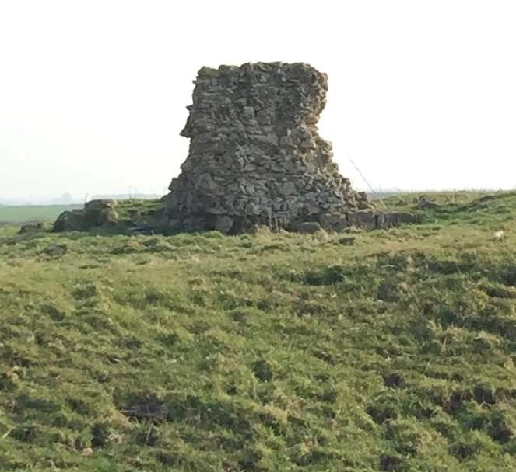
I wonder how many of you have passed this by and wondered “hmmm I wonder what that is?”
You’ll see it on the way to Seahouses as you turn the corner towards at Tughall.
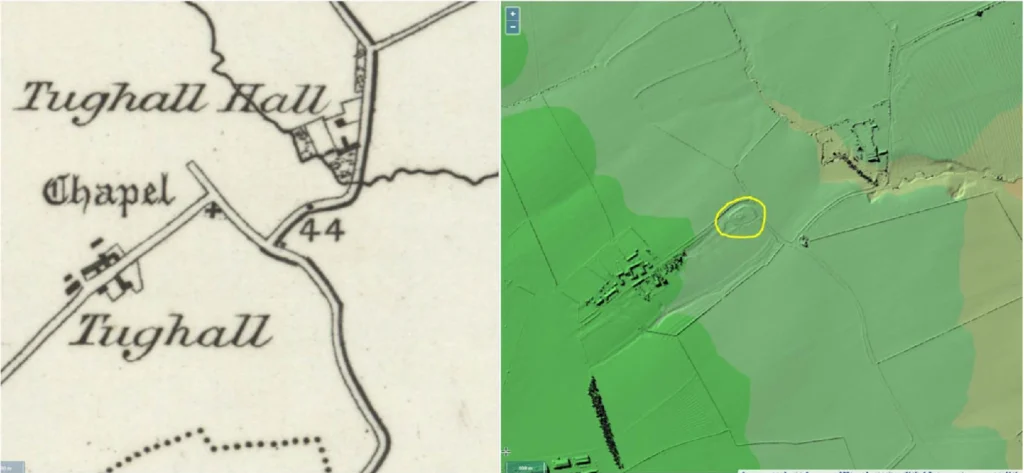
These tiny remains are all that are left of the deserted medieval village of Tughall.
I’ve added a LiDAR image and an old map so you can see what I’m blithering on aboot.
The old wall in these pictures is all that remains of the village’s 12th century chapel.
However, this site is not just any ordinary village chapel.
The reason it was built here is because it was also the spot where the body of St Cuthbert was said to have spent the night on the 13th of December 1069.
After St Cuthbert died on Inner Farne on March the 20th, 687 AD, his body was moved back to Lindisfarne and he was buried there.
Lindisfarne was famously sacked by the Vikings on the 8th of June 793 AD.
Hey… maybe they were heading for the Blaydon Races.
“Whoa me lads, ye should have seen us gannin,
chopping the heeds off all the monks, just as they were stannin…”
This was to be the start of several such raids and by 875 the monastic site on the island had been abandoned completely.
The remaining holy relics and Cuthbert’s body were removed with the retreating monks to the mainland.
His body was then taken on a seven-year odyssey around Northumberland — think Cuthbert’s Cave — eventually finding a home in the old Roman town of Concangis, or Chester-le-Street, via Melrose. Aye, I know…, I’m pleased they weren’t driving a taxi it would have cost a fortune.
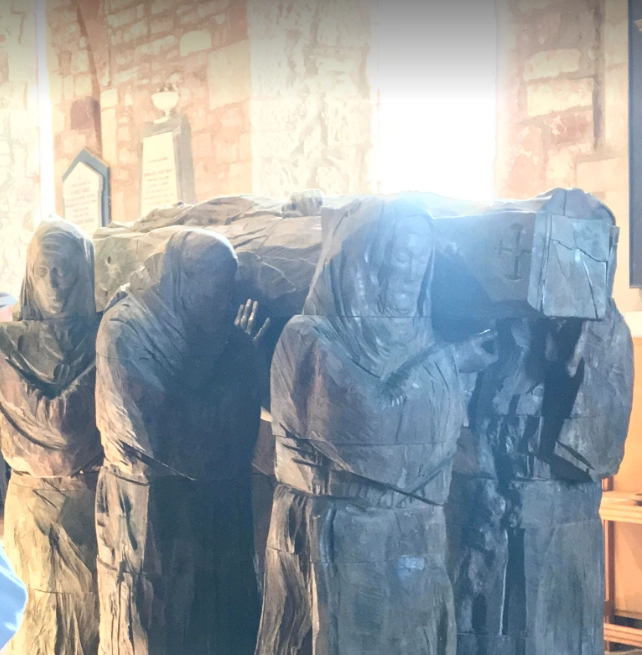
After further fears of Viking raids up the River Wear, he was again moved to Ripon for a short period and ultimately he ended up in Durham. But his travels were not over.
After the Norman invasion of 1066, think King Harold having his peeper shot oot at Hastings, the new King William the First decided to lay the North to waste and headed up in 1069 looking for bother. It is said that after his visit to lay waste to Northumberland, on his return over the Tyne, he had the Roman bridge pulled down to cut them off. Imagine that still standing after it was constructed in 120AD.
This prompted Bishop Æthelwine to move Cuthbert’s body once more.
It was on this journey back to Lindisfarne that the coffin rested on this spot at Tughall.
The chapel is fabled to have been built over the place where the coffin was laid down overnight.
Anyway, he ended up back at Durham Cathedral, where his remains lie to this day. The poor bugger must be the most travelled corpse in the UK.
The village of Tughall itself had another auspicious visitor in 1292 AD when Edward the First stayed here en route to Scotland. Think Braveheart…
With love from the Crasterfarian XX