By Thomas Bainbridge
The burgeoning reputation of Newcastle upon Tyne as an epicentre of English industry and trade with a growing ‘proletarian’ population made it an appealing location for revolutionary figures to propagate their ideas.
In the early 1770s, just at the time that Thomas Spence extolled the ‘Rights of Man’, there arrived another more notable figure in history, who quietly wandered the streets of the city, unsuspected for the momentous role he would one day play on the world stage.
Jean-Paul Marat was a lowly (indeed he was short at only five feet tall) French-Swiss physician who had left his native land to ply his trade and preach his radical creed. Following periods in London, Edinburgh and Dublin, Marat headed to Newcastle to gather his thoughts. There he frequented the many pubs and coffee houses as well as the Circulating Bookshop in the Bigg Market owned by Robert Sands. It was in Newcastle, writing daily, that he would compose his magnum opus, Les Chaînes de l’Esclavage — The Chains of Slavery.
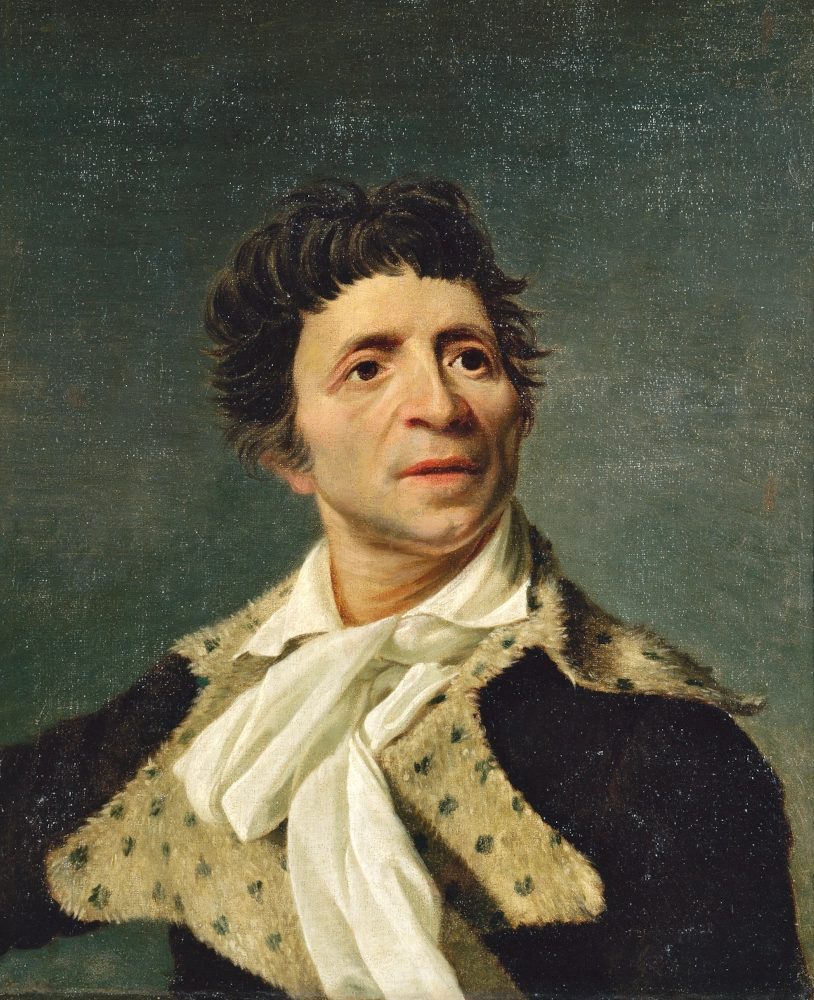
Marat’s diatribe was devoted to decrying the increasing despotism that he believed to be infecting British politics. Hitherto, England was renown throughout Europe for the tameness and liberality of its laws and institutions. Marat’s own intellectual hero, Montesquieu, had praised the British constitution as the finest the world had ever produced — especially compared with the absolutism and growing inequality within France.
However, this notion was shaken in the 1760s by a scandal that rocked the British political landscape. The notable radical MP, John Wilkes, called for parliamentary reform, including to the system of rotten boroughs which allowed individuals to buy their place in Parliament (lampooned so effectively in Blackadder). Wilkes’ efforts were stopped short. He was accused of treason and forced to flee abroad. More startlingly, in 1768, many of Wilkes’ supporters demonstrated against the injustice done to him and were met forcefully by heavy cavalry. This resulted in the Massacre of St. George’s Fields, in which seven were killed and thousands dispersed by sword and pistol. Soon, though, Wilkes returned to England in triumph and became the Mayor of London in 1774.
Marat was incensed by these events and set to work. Writing with frenzied speed, he supposedly only slept two hours each night before re-awaking with renewed vigour and drinking inordinate quantities of coffee in the process. He feverishly scrawled out his agitated ideas, composing the work within only six weeks — a staggering achievement.
Upon completion of the manuscript, it was said that Marat fell into a semi-comatose state of exhaustion (‘mental annihilation’ as he described it), only waking after thirteen days. The result was a forceful tract of political philosophy. He began the work with the following appeal:
“If by collecting into one point of view under your eyes the villainous measures planned by Princes to attain absolute empire, and the dismal scenes ever attendant on despotism, I could inspire you with horror against tyranny, and revive in your breasts the holy flame of liberty which burnt in those of your forefathers, I should esteem myself the most happy of men.’
Marat then provided a exhaustive list of all the means by which a government attempts to enslave the public, such as by parliamentary avarice and military subjugation.
The work soon courted the attention of the town itself as Marat (initially misattributed as Dr. Mariot) sent volumes to the Companies of Bricklayers, Goldsmiths and Lumbermen in anticipation of an upcoming election. He would later recall the local populace with warm tones:
“Those of Newcastle in particular, not wanting me alone to bear the costs of the edition I had distributed as gifts, reimbursed me fully… after having celebrated me each in turn and bestowed upon me the civic crown [i.e. honorary membership].”
At the same time, numerous radical clubs sprang up across the city to discuss the swirling currents of contemporary politics. A Constitutional Society was set up. Inspired by Marat’s treatise, the group was devoted to the ideals of Wilkes, desiring a reduction in the period between parliamentary elections from seven to three years as a means to keep politicians accountable to the electorate. Another club, The Independent, soon began to meet weekly at Sheville’s in the Bigg Market, with a third group consisting of ‘patriots’ meeting at Hume’s in the Close.
Clearly, Marat’s ideas had met with fertile ground. Indeed, one debate held by a local philosophical society in October 1775 concerning the question ‘Which is the better form of Government, a Limited Monarchy, as in Great Britain, or a Republic?’, resulted in an overwhelming vote for the latter.
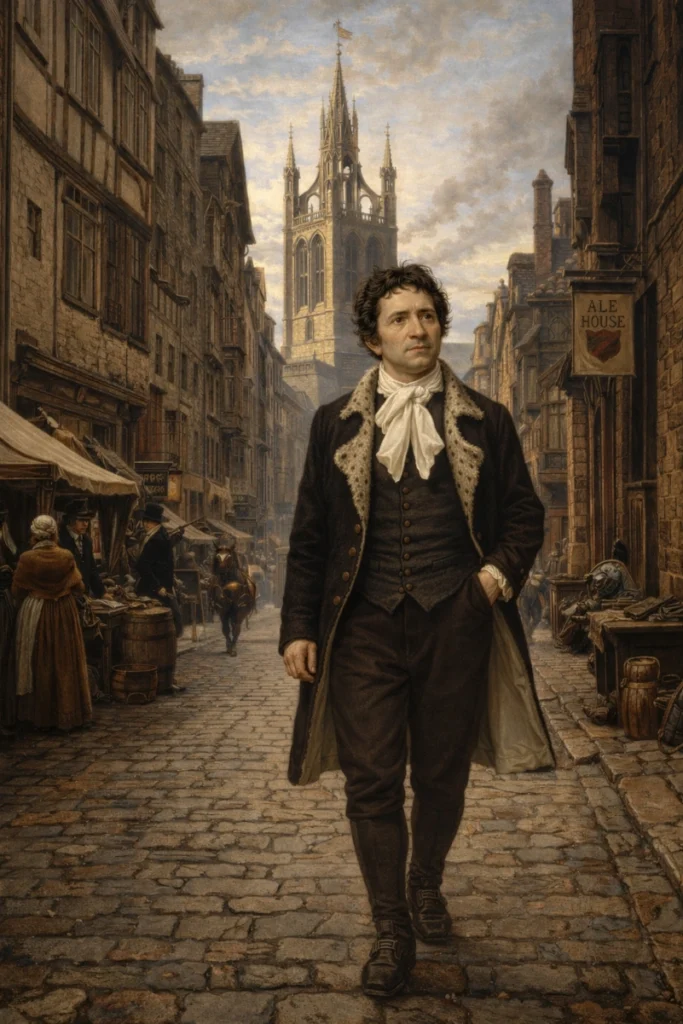
It is not unfathomable to imagine that Marat’s populist politics were bolstered by his everyday experiences encountering jocular and hardworking Geordies. Despite their cheerful demeanors, their appearances denoted the rough burdens of their trades, including, amongst them, the toiling conditions of the coal mines. Marat’s role as a physician would undoubtedly have brought him squarely in confrontation with the horrendous diseases which were peculiar to the line of work, including debilitating lung cancers from coaldust, and the physical deformities caused by the confined space in which the miners worked. Marat’s observations of their plight would have mirrored similar brutalities faced by his own countrymen across the channel, contrasted with the overt luxury of the aristocracy.
Marat eventually returned to France. In Paris he became one of the pivotal figures of the newly sprung revolution of 1789, becoming known as ‘L’Ami du Peuple’ — The People’s Friend — for his radical journalism on their behalf.
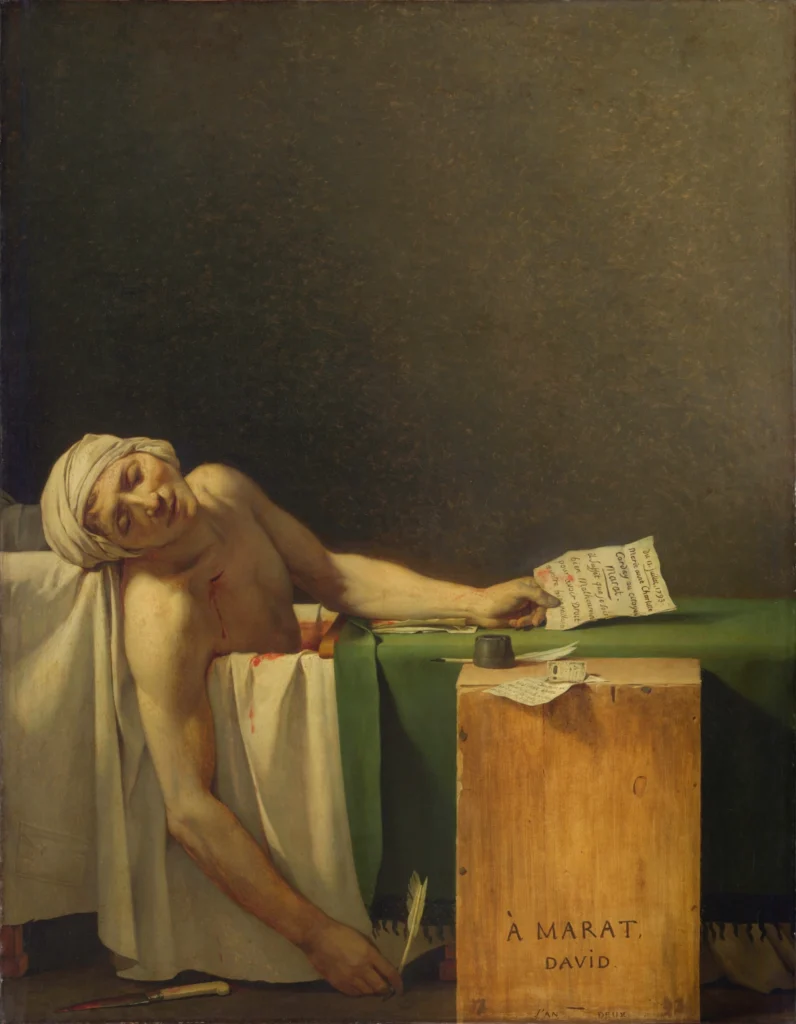
However, Marat would soon meet an ignoble end. While relaxing in his bathtub (the only antidote to his increasingly worsening skin condition), he was stabbed by the supporter of an opposition party — a woman named Charlotte Corday. Marat was struck down almost instantly, uttering a final farewell to his amour who dwelt in the next room, while his blood stained the newspaper that he clutched in his hand a deep burgundy.