By Crasterfarian
A ‘Mammy Joan’s Story’ Craster 1942
One of my greatest pleasures is to sit with my mam and talk. We talk about everything — history, and in particular her childhood.
She was born in Dunstan village in late 1932 but then moved to Glasgow with Nana and William Mather, her father.
I don’t say ‘Granda’ as despite him being my biological grandfather, I never knew him. Bill Hughes was always and will always be my Granda.
They had been evacuated from Glasgow to Huntly in Scotland, to avoid the Blitz and the Luftwaffe’s attempt to destroy the shipyards. Nana, Mam, and her two younger sisters, Jean and Edna.
After a short time there, Nana Butters told them, ‘to get themselves back to Craster’, so down they came and all moved in together at 5 Heugh Crescent (now Heugh Road).
As an aside, Mam used to still send a Christmas card to the family in Huntly that ‘put them up’ during their evacuation, a Mr and Mrs Pirrie, until they finally passed away.
A Mine — or Inconvenience
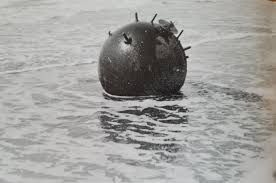
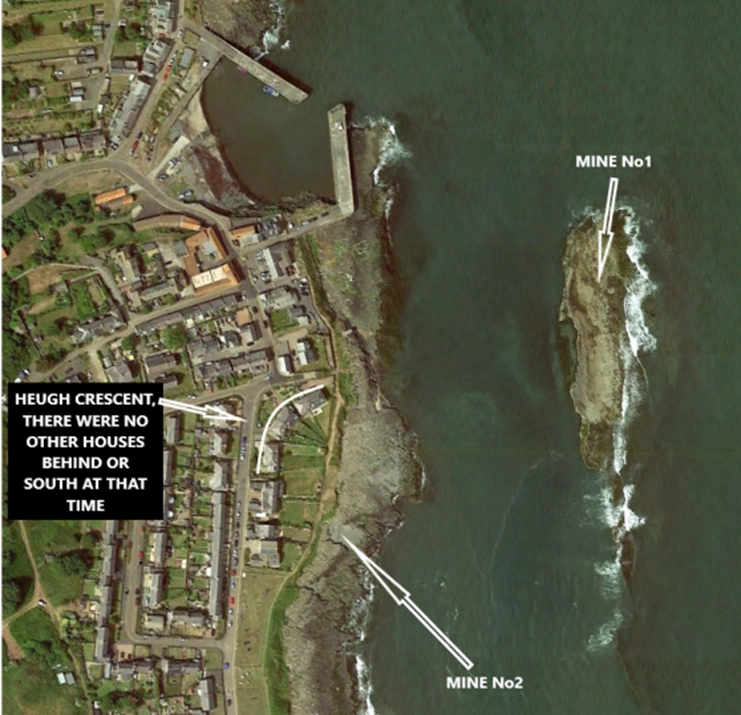
Mam tells a story of two sea mines that came ashore at Craster in 1942.
She recalls the tale with a twinkle in her eye, a sense of fun and adventure.
“The sea fetched two mines in that year,” she says, as if she’s talking about driftwood.
“As if we hadn’t enough to weather without that.”
On this day in 1942, the War didn’t arrive in Craster with sirens and soldiers.
They’d all witnessed the construction of the coastal defences — the roadblocks at the turn field and its pillbox, the building of the Chain Home Low Station on the Heugh, barbed wire going up all along the coast, not to mention the minefield on Cushat Knock and Scrog Hill to protect the northern approach to the radar station.
They watched the dismantling of the metal ‘bins’ on the south pier, which was dressed up as being a ‘landmark’ for German bombers, when in fact they were taken down as they interfered with the radar…
But these 1-metre-diameter balls of death, containing up to 300 kg of TNT and weighing around 1,000 kg in total, came in on the tide like wraiths skulking out of the shadows, waiting to detonate and release their deathly blast.
The very tide that had provided Craster with its livelihood for generations brought these harbingers of destruction right to its door.
Mam’s words: “They were on top of Muckle Carr. Big black things, bobbing in the shallow water and rolling back and forth about like they had all the time in the world.”
People all stood watching from what they considered a safe distance — which in Craster terms meant they were closer than they should have been, close enough to see properly.
Mam’s words: “I was sat on the windowsill at Number 5 Heugh Crescent,” she says. “I always liked sitting there.”
She says it like she can still see it.
Mam’s words: “It had been rolling about most of the morning. Then in the afternoon, one of them went.”
That’s her word for it.
Went.
Glass came in. She was blown off the sill and onto the floor.
“I don’t know how I wasn’t cut,” she says. “Not a scratch. Lucky, I suppose.”
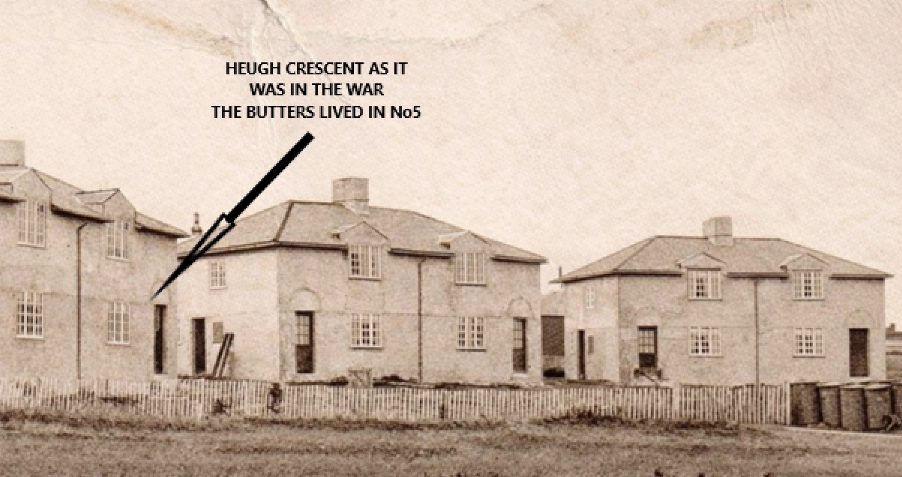
After that, the whole of Heugh Crescent was evacuated.
The design of the crescent made an almost perfect amphitheatre to witness — and absorb — the main blast of the mine on Muckle Carr.
In 1942 there were only six houses built south of the village shop.
Heugh Wynd — what would become Heugh Road later incorporating Heugh Crescent, South Acres and the site of the old school — hadn’t been started.
The Exodus
They carried what they could up to Aunt Mary’s in Dunstan Square.
A mattress on the floor.
Coats for blankets.
Sisters whispering in the dark.
Then in the night, the second one detonated, down in the gut below where Michael Robson’s house stands now.
Mam’s words:
“That one was louder,” she says. “You felt that.”
She was lying on the mattress when it happened.
“And the mattress went wavy.”
That’s how she remembers it.
Not blast pressure. Not shockwave.
Wavy.
“It lifted under you, like you were on water. I remember thinking, well that’s not normal.”
Next morning, every window was gone.
It was proper cold.
Folk cut up Oxo and baked bean cardboard boxes and wedged them into the frames until the glazier could get round.
Bits of lettering showing backwards where glass should’ve been.
And that was that.
They still played out.
Still fetched messages.
Still got told off.
The boats went out and the sea gave fish, but that year though it gave explosions for good measure.
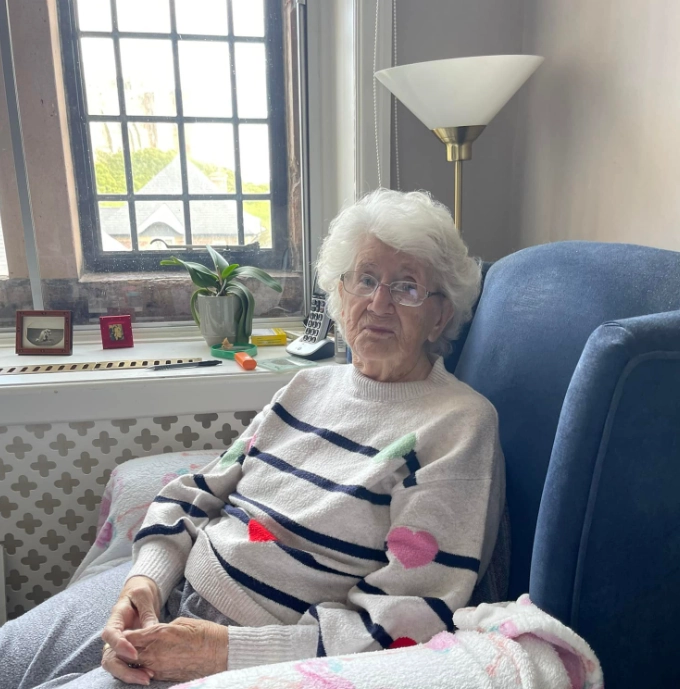
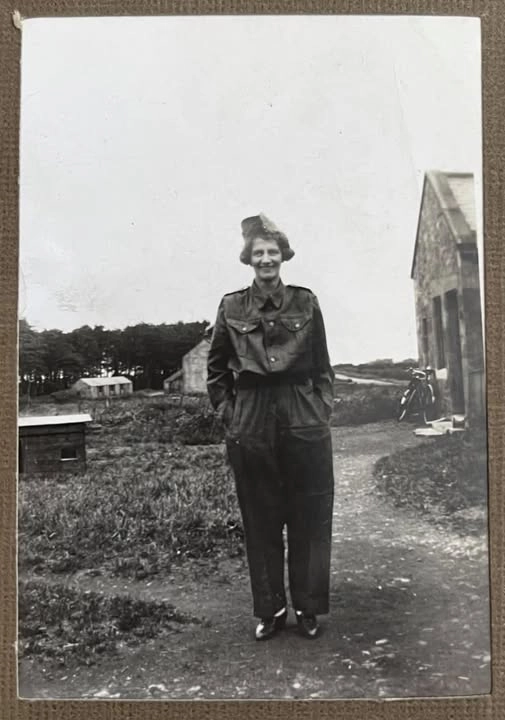
As I sit beside her now and she tells the tale, her hands wrapped round a cup of tea, warming her old arthritic fingers, she’s actually back there — with her sisters, on that mattress.
She talks of it like it was nothing. Like it was just part of the daily routine. The stubbornness of that generation to make do and mend still washes down to us in these stories.
But let us not forget…
Somewhere tonight, someone else’s bairns are sitting by a window, watching the horizon.
Seeing arcs of light going to and fro, not understanding what it’s all about, as world leaders carry out their machinations for agendas they don’t understand.
Somewhere else, a mattress will go wavy and a child will gasp with terror.
As they grow old, and tell their tales to their own children, they’ll remember their parents’ worry, the hushed conversations, rushed evacuations to a safer space, the booms and bangs, the screams of jets, the feel of percussion waves…
And the night their mattress went wavy.
Mam was lucky. The glass missed her. The war passed. The cardboard came down and the people of Craster just got on with it, as was their way.
With love from the Crasterfarian XX