
By Thomas Bainbridge
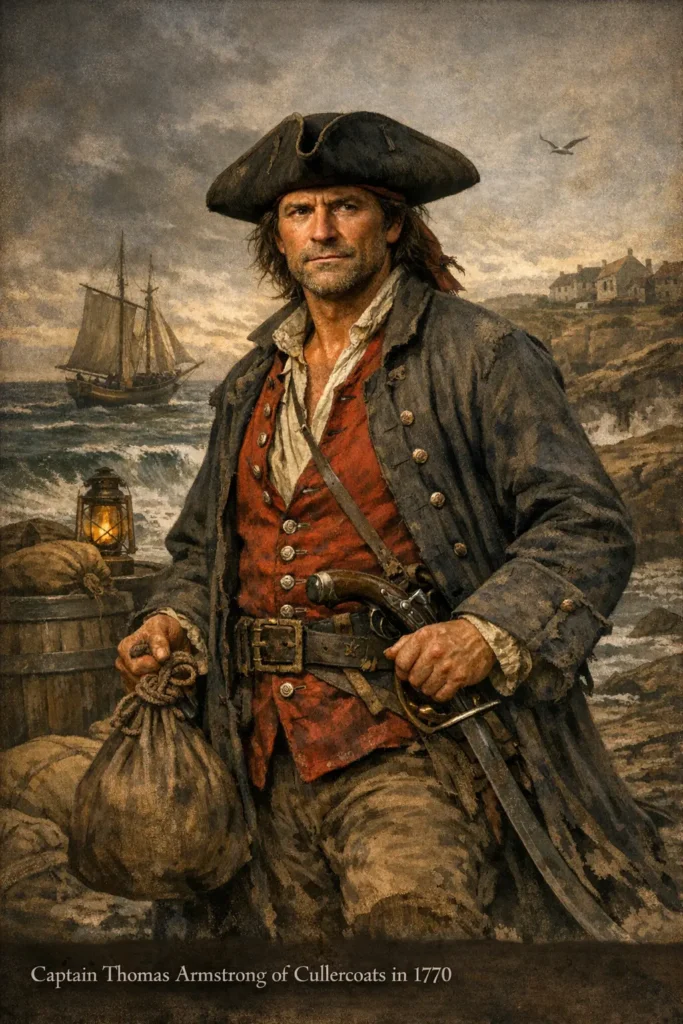
The trade that passed through the ports of England in the 18th century both from the Continent and the burgeoning British dominions afforded immediate opportunities to amass wealth — both within and without the bounds of the law. Naturally, smuggling comprised one of the most lucrative ventures of the period.
The Tyne was no exception in exploiting this contraband trade and the craggy coastline of the North East is particularly suited to it. The coves, inlets and shallow shores allow small vessels ample locations in which to covertly unload illicit cargo.
The government devised methods to counter these activities. A task force was formed to enforce customs on all goods that entered British waters, with powers to board ships and search their decks, meting out heavy reprimands for anything found to be out of the ordinary. Naturally, men were employed to carry out these stringent tasks. Thomas Armstrong (1735-1785), a native of North Shields, was one such officer.
A Rogue’s Rise
Initially, Armstrong was regarded as brash and arrogant by his peers and was known to have a fierce temper. Still, he was remarkably competent, and by 23 he was the first mate of a revenue cutter, the Bridlington, which patrolled the coastline of the German Ocean (as it was then known) between the Tyne and the Wear, spying for suspicious activity.
However, Thomas soon himself became seduced by the temptations of crime and the luxurious and tropical goods to be found aboard certain ships. Before long, he was happy to pilfer the smuggled goods without declaring them to the authorities, accepting them in the form of a bribe paid to look the other way.
Thomas Armstrong had several brothers who were also employed by Customs House and were involved in the racket. Richard Armstrong worked in the offices as a clerk and was able to doctor the records to clear the evidence of their wrongdoing. Their father, Nicholas, who had first found them their jobs, was the Riding Officer, whose role it was to prevent smuggling on land and to maintain communication between the Newcastle and Sunderland outports.
Still, Thomas Armstrong quickly drew the suspicion of his commanding officer, Captain Coverdale, who then sought justice. As could be expected, Nicholas took the side of his son, and soon they had orchestrated the removal of Coverdale from his post, leaving Armstrong as the Captain of the Bridlington, in full control to enact his criminal desires.
Sanctuary for a Smuggler
Captain Armstrong’s activity became commonplace and his crew likely shared in the burgeoning proceeds. In 1768, Armstrong even designed his imposing new house for the purpose:
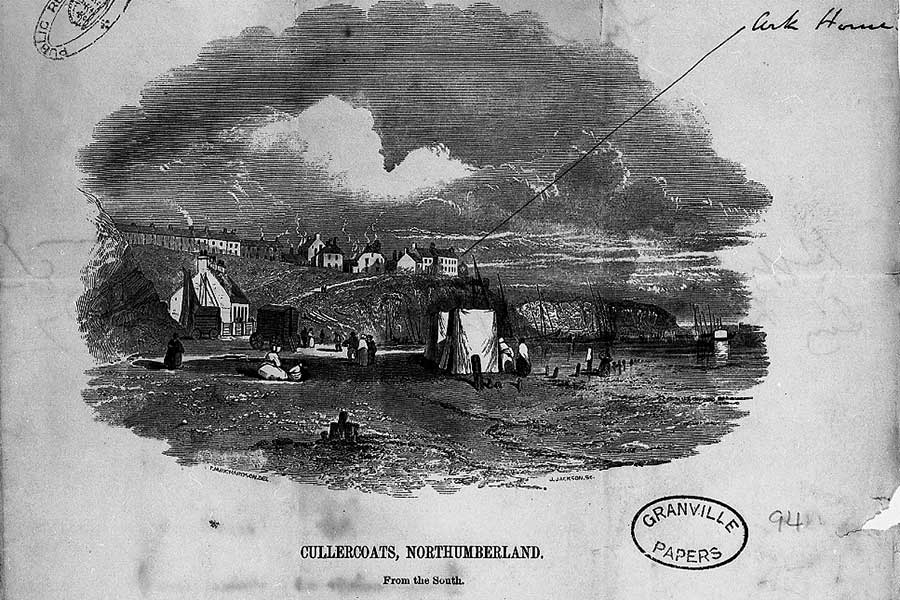
Cliff House (or Ark House as it was then called) overlooks Cullercoats Bay and served as the base of Armstrong’s enterprise. It is the oldest building in Cullercoats, after the whole of the old village was demolished decades ago.
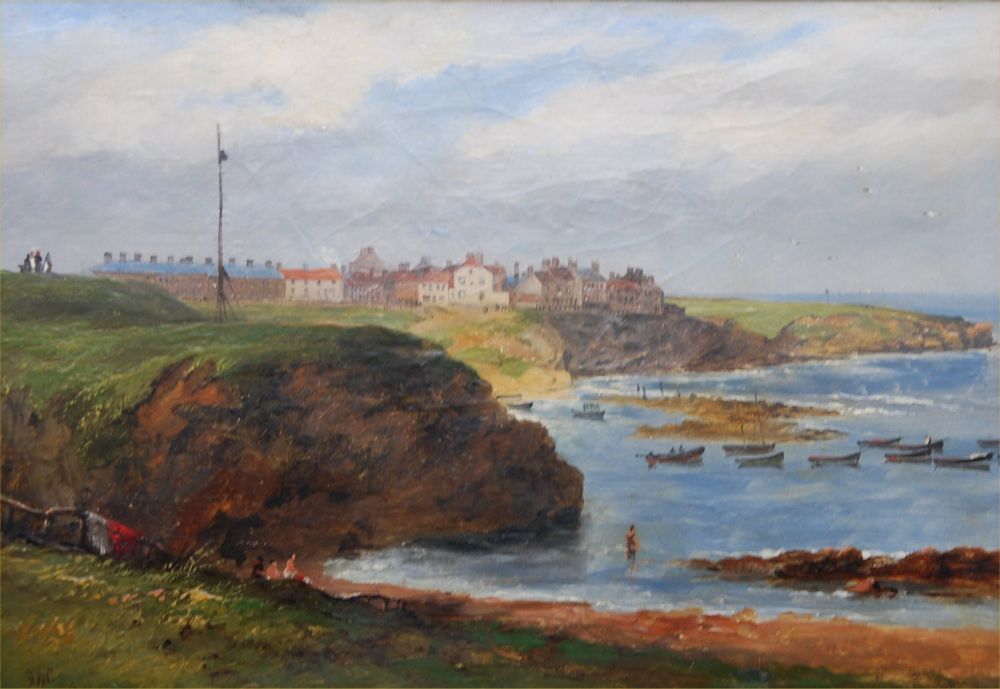
Cullercoats was an obvious bolthole for Armstrong. It was a community isolated from everything but the sea, and so poor that it relied on smuggling. The whole population were in on it, they enabled it and benefitted from it.

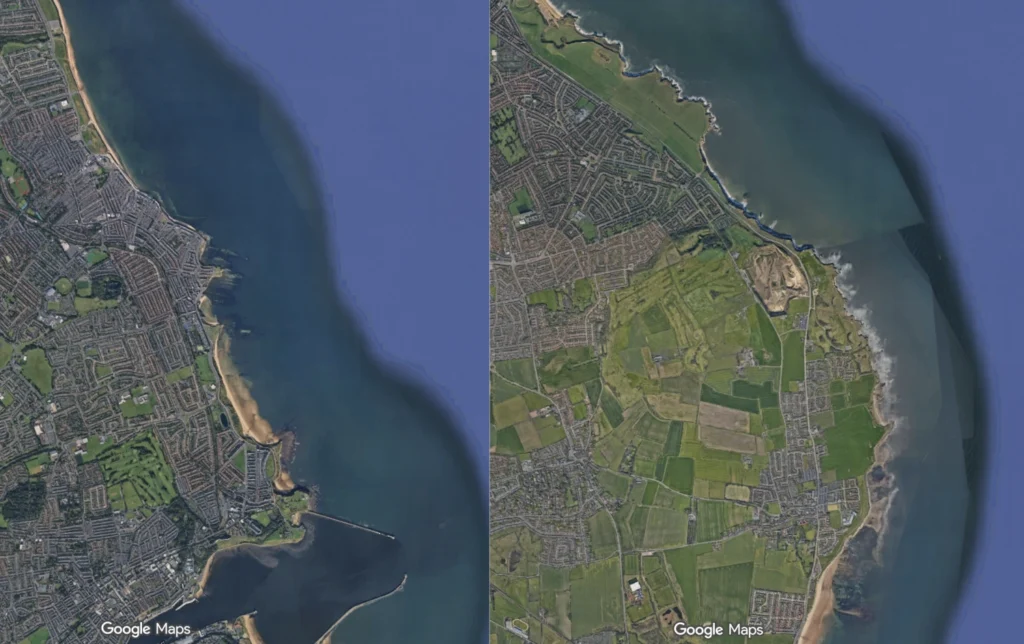
Cliff House features two very deep cellars accessed from a trapdoor in the study. One of these chambers contains a series of iron cages that served as cells. The cellars are connected to a tunnel that led to the shore, but is now blocked up behind the sea wall on Jakeys Bay directly below the house.
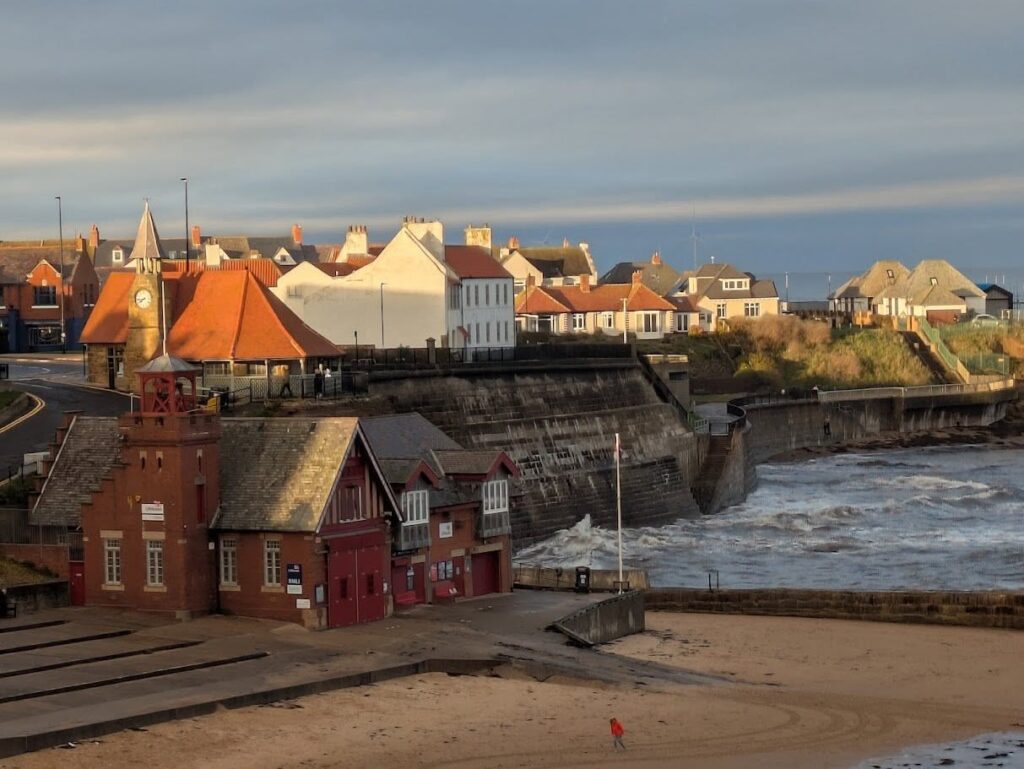
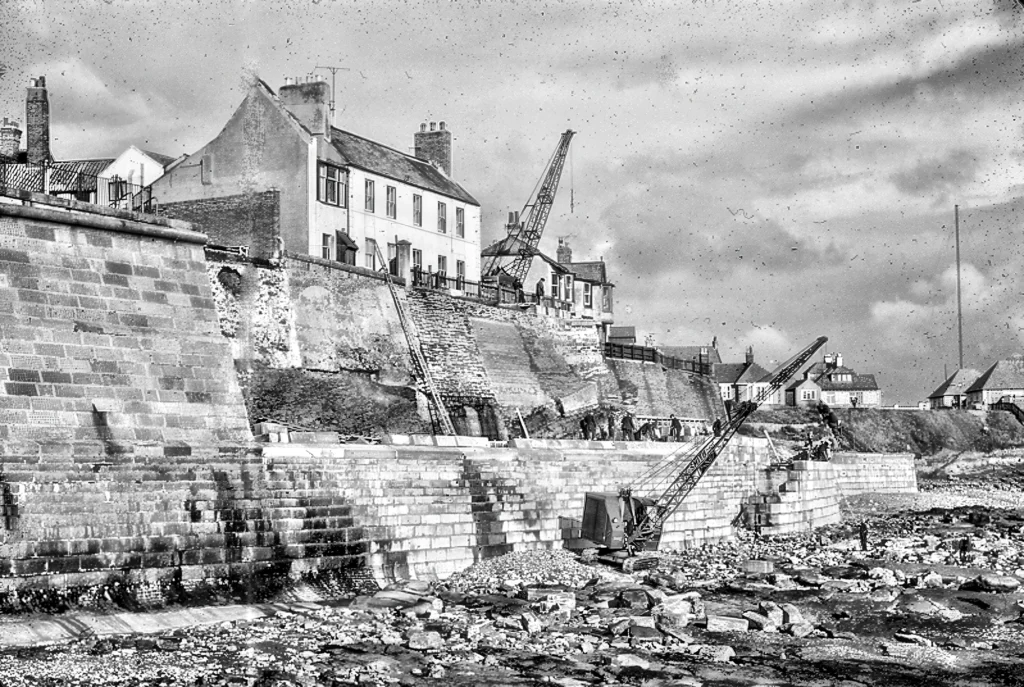
Check out the Society’s work here: tynemouthps.co.uk Currently they have an exhibtion on Bedford Street, North Shields.
The sea wall you can see in the images was built in the 1960s, around the same time the old Cullercoats village was bulldozed. It’s worth noting that the Cliff House tunnel is not the only tunnel under Cullercoats. John Street, for instance, also has a passage beneath it.
18th Century Economics
The goods Armstrong and his crew came into contact with were varied, including cloths, spices and dried fruits, but predominantly they consisted of heavily-taxed high-demand commodities: tea, brandy, wine, whisky and tobacco. These were no longer considered exotic luxuries, but increasingly viewed as staple goods by the British public.
In this region, salt was also a high-value, oppressively-taxed and frequently-smuggled cargo, with the main centres of production being Hartley, Cullercoats, South Shields and Sunderland. South Shields in the 1760s was said to be the biggest salt making town in Britain, which is something Daniel Defoe noted during his time on Tyneside.
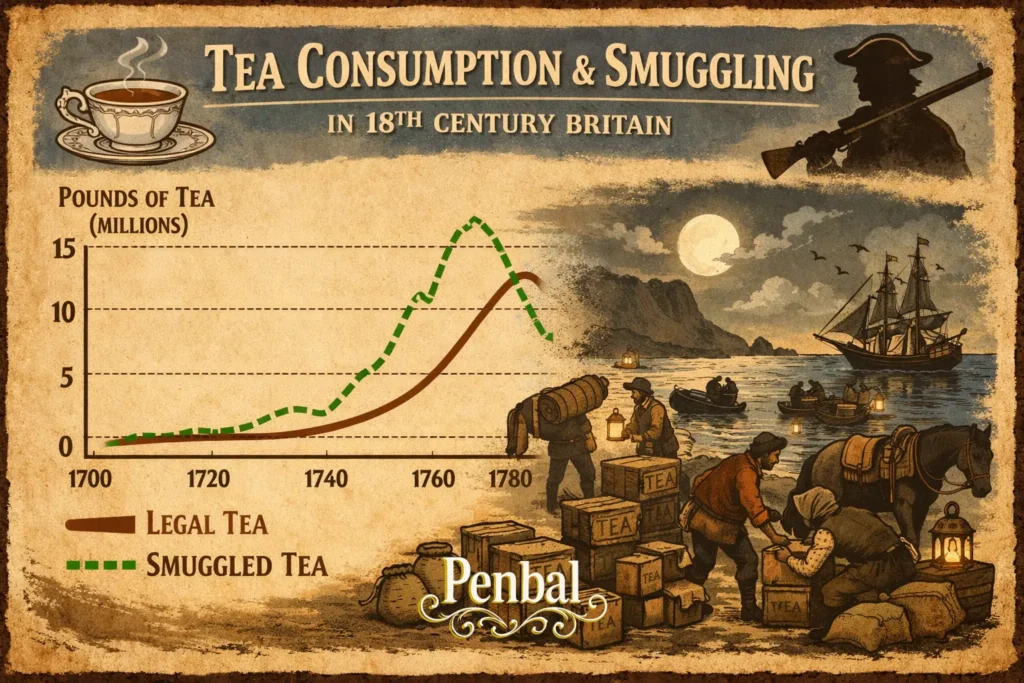
Thomas Armstrong’s activities did not go wholly unnoticed. In 1771, he was charged with embezzlement of five sacks of tea and 240 gallons of Dutch Gin. For this he was suspended and had his pay docked for six months. Still, the extent of his takings remained undetected and he was soon back to his old tricks.
Occupational Hazards
There was a definite danger involved in Armstrong’s role, as smugglers were often well-armed and not so compliant towards losing portions of their cargo. On boarding a vessel in Sunderland, Armstrong’s crew were met with resistance which developed into a vicious melee, as they were set upon with axes and cutlasses.
On the other hand, many smugglers held a higher regard for Captain Armstrong, with whom they regularly transacted business. In fact, one notorious pair, Lucas and Wallard, were on such good terms that they often dined aboard his armed cutters, Eagle and Mermaid. Armstrong then turned a blind eye to their comings and goings. Yet, it was thanks to this pair that Armstrong was eventually caught out. In 1776, it was reported that:
“There is the strongest reason to believe that the escape of Lucas and Wallard was concerted between them and the officers of the cutters, and that they are therefore unworthy of any future trust or confidence and we have therefore dismissed them.”
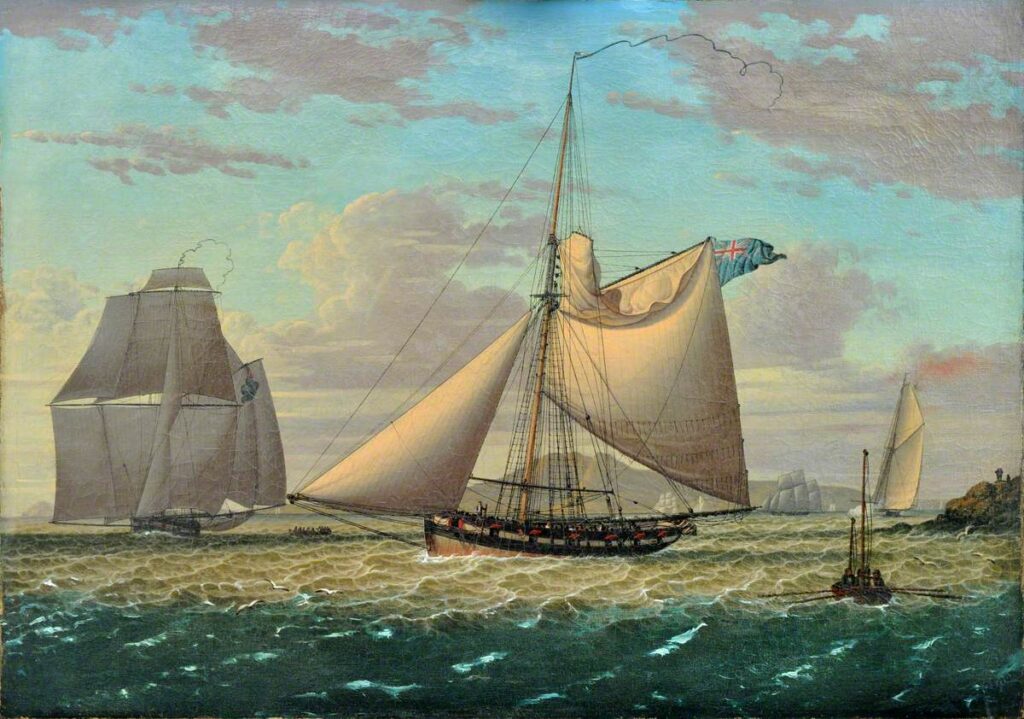
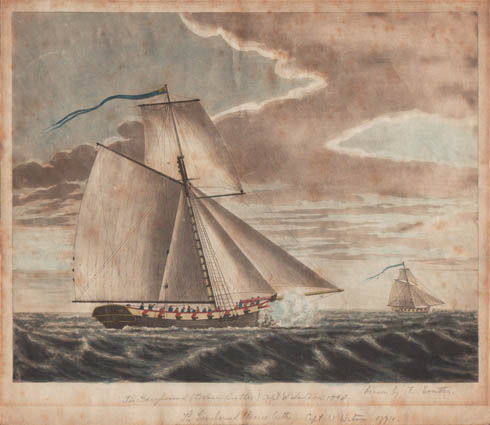
As the 1770s went on, Captain Armstrong became a law unto himself and ended up with blood on his hands. He was known for attacking and firing upon ships with little warning, getting into fights with crew members and having opponents locked up or even killed. In the end, Armstrong could barely set foot on land because he had so many charges arrayed against him.
By this stage in his career all pretense had been dropped as he functioned as a full-time smuggler, and essentially a pirate, by going after legitimate ships.
At the same time, all this greed and villainy had made him a considerably wealthy man, hence the legendary nickname, ‘Jingling Geordie’.
When the law did catch up with Thomas Armstrong, his punishments somehow still seemed lenient. He was removed from his post and his ship, Mermaid, was confiscated. But he had a new ship readily built, and with family allies still staffing the customs office, he continued to smuggle with impunity up and down the bays until his early demise in 1785, aged 51.
Moral Reckoning
Should Thomas Armstrong be demonised for smuggling? The region was poor at the time with only a few avenues were open to an intelligent, hardworking and fearless individual. The primary living in the coastal villages in Northumberland was gained from the toil and drudgery of fishing, which itself was fraught with danger. Living amongst such hardship, it is not surprising that he might wish to improve his lot — even if it meant breaking the law.
References:
National Archives talk by Nick Barratt: https://media.nationalarchives.gov.uk/index.php/thomas-armstrong-the-smuggler-king-of-cullercoats/