By Thomas Bainbridge
It is 250 years since the birth of the American nation, consecrated by the signing of the Declaration of Independence in 1776. But this document would have been mere words on a parchment, had not one man fought to make them a reality.
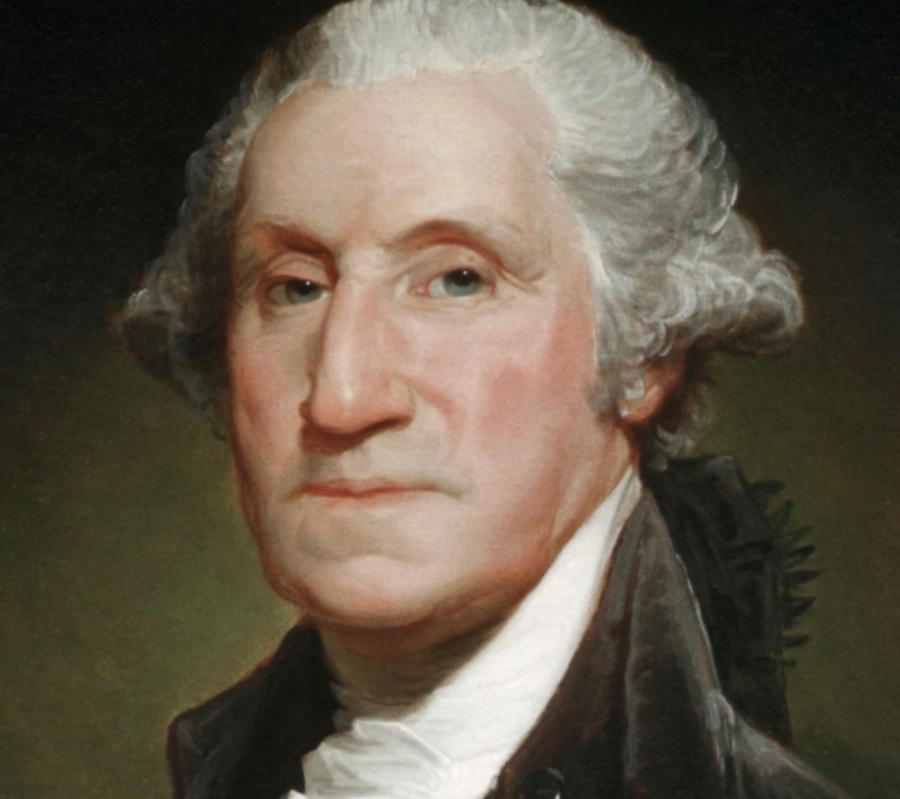
George Washington was a surveyor, soldier and statesman who, more than any other, was responsible for the formation of the modern United States — which he would go on to govern as its first president. He was a stalwart general: stern, tenacious, untiring in his duty, a leader of men under the most trying of circumstances. For eight years he led a ramshackle army against the greatest imperial power in the world.
Masses have been written about the man, but few are aware that his outstanding qualities owed something to his ancestors, who took their name from a quiet spot along the banks of the River Wear.
Too busily engaged in the trying vicissitudes of his own life, he had little time to research those of his ancestors, though there he would have found immense fascination. In a letter to an English genealogist tracing this history, Washington declared,
“I have often heard others of the family, older than myself, say, that our ancestors who first settled in this country came from some one of the northern counties of England; but whether from Lancashire, Yorkshire, or one still more northerly, I do not precisely remember.”
More northerly indeed…
Ancient Origins
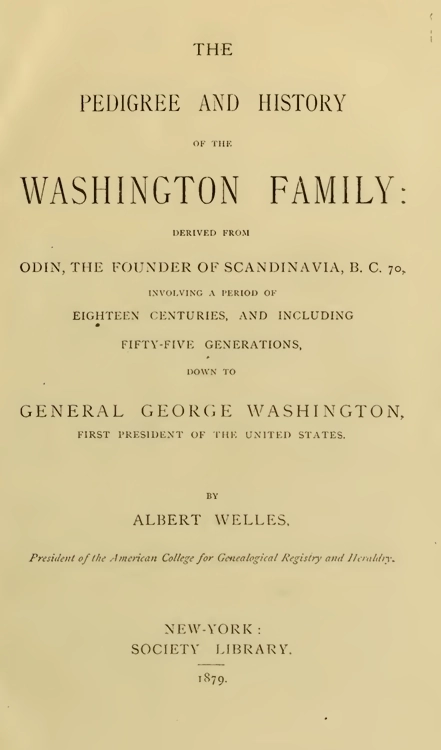
The Washingtons can ultimately trace their line to Crínán of Dunkeld in Perthshire, whose sons had ruled as kings of Scotland for hundreds of years. An even more fanciful origin point of the Washingtons’ genealogy has been fixed to King Odin, the ‘founder of Scandinavia’, and even more spectacularly, one of the Vikings to have landed in Newfoundland.
Yet, in many ways, the history of the family is more illustrative of the breadth of English history, as numerous branches found themselves dispersed throughout the latter kingdom, engaged at various points in its great historical events. Thus, it was said that,
“From the conquest of Britain in the twelfth century to the independence of its American colonies, seven centuries after that epoch, a martial spirit, associated with energy, endurance, resolution, constancy, and valor, appears to have been the prevailing family characteristic of the Washingtons.”
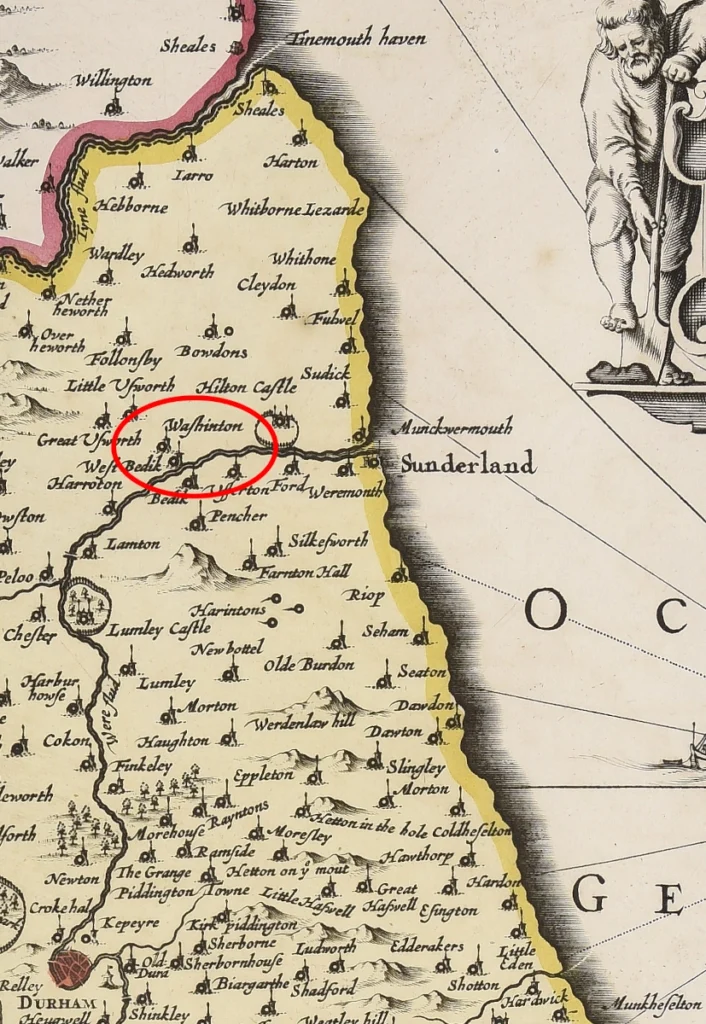
In 1183, William de Hertburne, the member of a powerful Norman family that had arrived in the wake of the Conquest, traded his own estate of Hertburne (modern Hartburn in Stockton) for Wessyngtonlands in the diocese of Durham. From the village, he re-styled himself ‘de Wessyngton’, and erected a stone-built manor nearby as his family seat.
The name Wessyngton is itself shrouded in mystery, of which no exact record remains. The most prominent theory is that developed from the Anglo-Saxon Hwæsingatūn, meaning the lands of Hwæsa’s descendants — Hwæsa, or Wassa, being a hypothesised Saxon warlord in the region.
The village was an ancient place. Surtees, the historian of the Palatinate, describes it in 1820, as “a scattered village, on irregular broken ground.” One tale recounts that the site had contained some of the venerated relics of St. Cuthbert after his body had been rescued from a Viking raid on Lindisfarne.
Nobility
For almost four centuries the Washington family inhabited the area, and became notable figures within the local gentry as vassals to the Bishop of Durham and retainers of the powerful Neville family. It is not unlikely, then, that a member of the Washington clan was amongst the English host which fought at the Battle of Neville’s Cross in 1346.
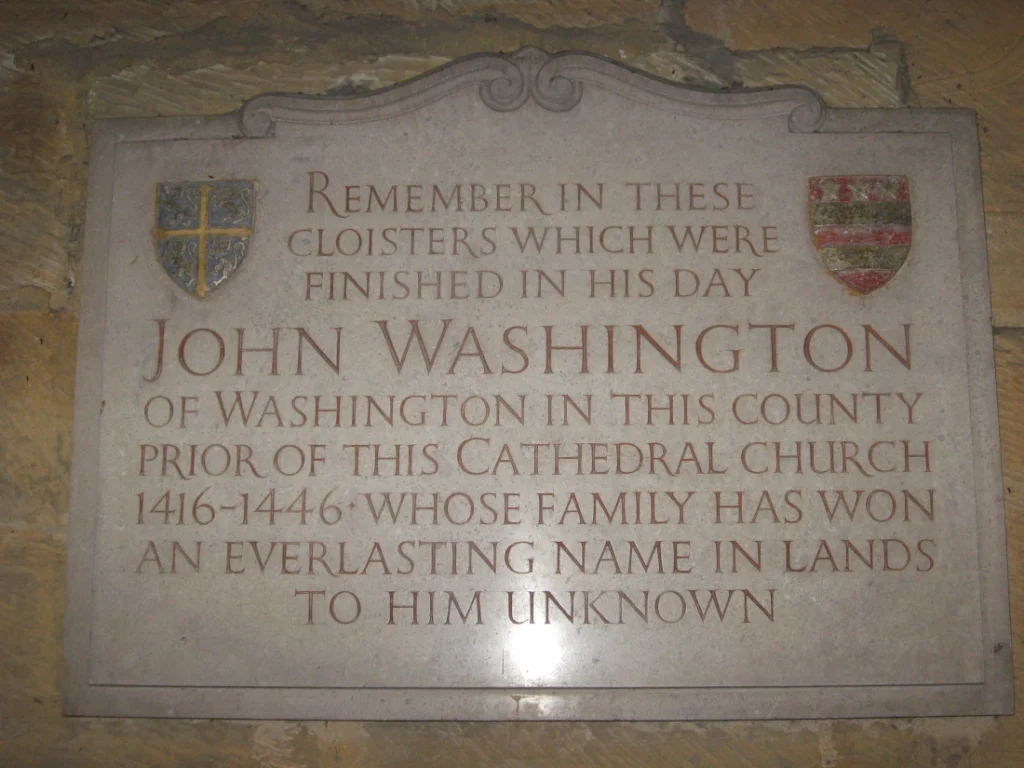
Less than a century later, in 1416, engaged in more tranquil pursuits, the Benedictine monk John Wessington became Prior of Durham.
During the 15th century the manor passed by the marriage of a female descendant, Eleanor Washington, to the Tempests. Finally, in 1613, it had passed to John Mallory who sold the Old Hall to the Bishopric, and moved with his family to Sulgrave Manor in Northampton.
Royalists
Yet, the Washingtons were prodigious, and numerous lines continued throughout the rest of England, transplanted to Westmorland, Lancaster and Northamptonshire. During the English Civil War, the Washington family fervently supported the Royalist cause, evidencing once more their penchant as military commanders.
Lieutenant-Colonel James Washington was killed at the siege of Pontefract, the final Royalist stronghold to defy Cromwell.
Another, Colonel Henry Washington was largely responsible for the Royalist capture of Bristol in 1645 after leading a portion of the attack on its defences. Later, he commanded the Royalist garrison at Worcester, defying Fairfax’s entreaty to surrender and enduring a subsequent three-month-long siege until generous terms were granted, allowing his men to evacuate while retaining their arms.
America
Ironically, it was this loyalty to the monarchy which their descendants would famously oppose, which led the Washingtons to flee England to the New World.
In 1657, brothers Lawrence and John Washington, George’s great-grandfather, wishing to escape the morose Cromwellian protectorate, emigrated to the colony of Virginia, settling in Bridges Creek, Westmoreland County, along the banks of the Potomac River, not far from the city that now bears their name.
Still, as one biographer wrote,
“the military qualities of the European ancestors were perpetuated by their American descendants, from the very first who emigrated to this country.”
John, as Lieutenant-Colonel of the Virginia militia, fought against Native American Seneca tribesmen in the dense American wilderness, a feat which George would himself replicate.
For three generations the family remained in Virginia, becoming well-to-do citizens and representatives in its local government, until the War of Independence, in which George Washington played so prominent a role.
Stars and Stripes
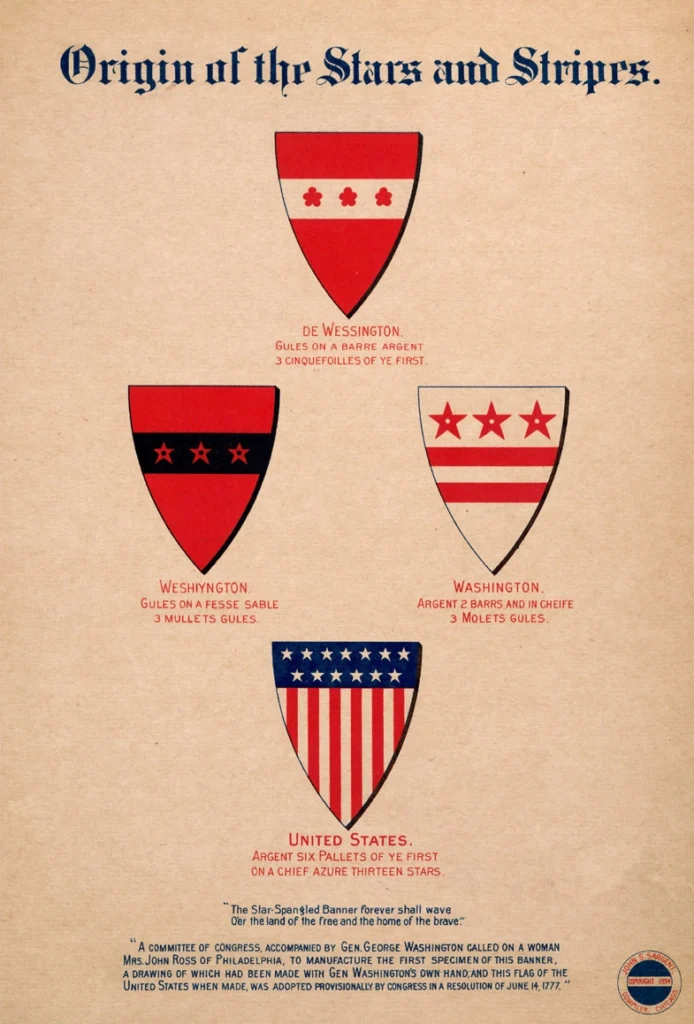
But one more startling detail remains: The Washington family crest, originating within the Old Hall in Sunderland, bears ‘the blazon, Argent, two bar gules, in chief, three mullets’. The Latin motto, EXITUS ACTA PROBAT, aptly translates to ‘The Outcome Justifies the Deed’. The heraldic terminology, in layman’s terms, denotes that the crest is of a white background with red stripes, above which are three stars.
The theory is therefore that the Washington crest became the basis for the Stars and Stripes: Old Glory, the very same that was planted on Iwo Jima. Others have said that this claim has “no evidence whatsoever”. But, as one historian retorted,
“Can any one reasonably doubt that these insignia suggested the Stars and Stripes and the spread eagle of the national ensign, and that those on whom it devolved to choose the national emblem paid a well merited compliment to the father of their country by adopting the arms and crest of the family?”
It seems difficult to discredit the theory as it seems so evidently plausible. Regardless, it is the same crest which now adorns the walls of the American capital of Washington, D.C. Whatever the truth of the matter, the theory was warmly invoked by Martin Tupper in 1876:
The Washingtons, of Wessyngton,
In County Durham, and of Sulgrave manor,
County Northampton, bore upon their shield
Three stars atop, three stripes below the fess,
Gules—that is red —on white, and for the crest
An eagle’s head upspringing to the light.
The architraves at Sulgrave testify.
As sundry painted windows in the hall
At Wessyngton, this was their family coat.
And at Mount Vernon I myself have noted
An old cast-iron, ‘scutcheoned chimney-back
Charged with that heraldry.