
By Crasterfarian
Tucked quietly above the wooded valley of the Wallsend Burn, on a high spur of land and buried in the back of a modern housing estate lie the ruins of Holy Cross Church
If you didn’t know it was there, you’d miss it, however, take a little time to go and have a look as the current remains are dated to the 12th Century. However, these stones were reused from an earlier church on that site that may date back to the 6th or 7th Century, and the very earliest coverts of St Paulinus and his conversion of the people of Northumbria.
The stones also tell a story that bridges the collapse of Rome, the rise of Christianity, and the enduring resilience of Northumbrian culture.
Roman Stone and Anglo-Saxon Vision
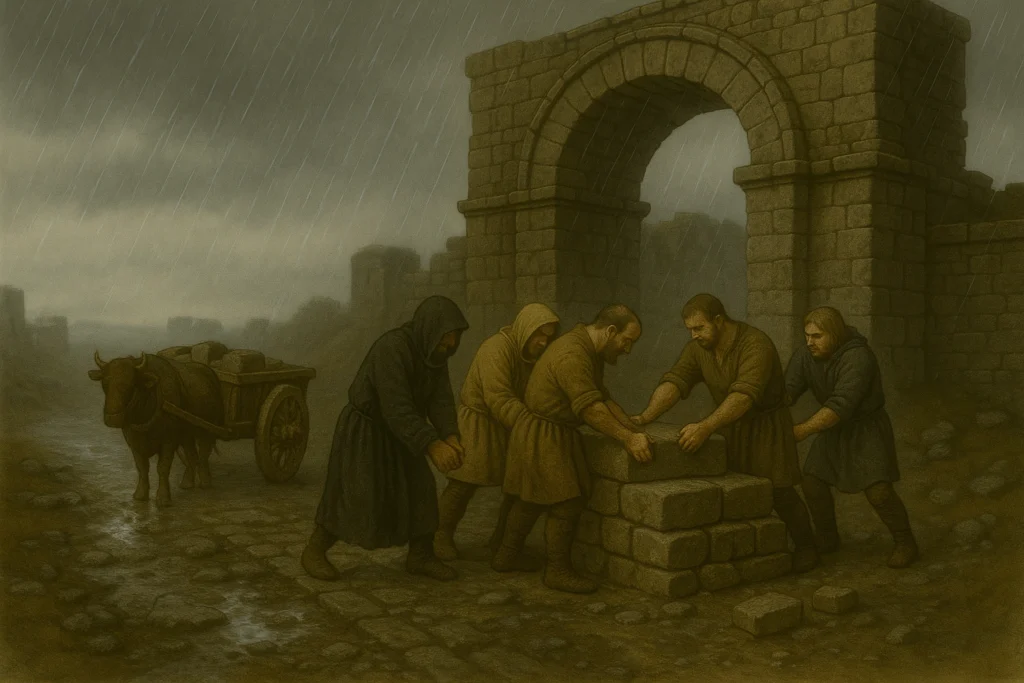
A key feature of Holy Cross Church is its use of Roman masonry, which almost certainly came from Segedunum.
The fort lies only 0.75 miles away and it’s highly probable that early Christian builders, and many others, used the fort as a vast quarry, a B&Q DIY centre of its day, except it was free.
Not only did the take the stone blocks but, as any engineer knows, the best way to learn how something works or is made is to take it apart. This meant that unknowingly, the Roman master masons left a legacy of their building prowess, a physical blueprint of how to build in stone

The massive surviving southern doorway bears the hallmarks of Roman craftsmanship and looks like they simply dismantled the doorway at Segedunum hoyed it in a cart and reassembled it, ‘Beamish Museum’ style at the site of the church.
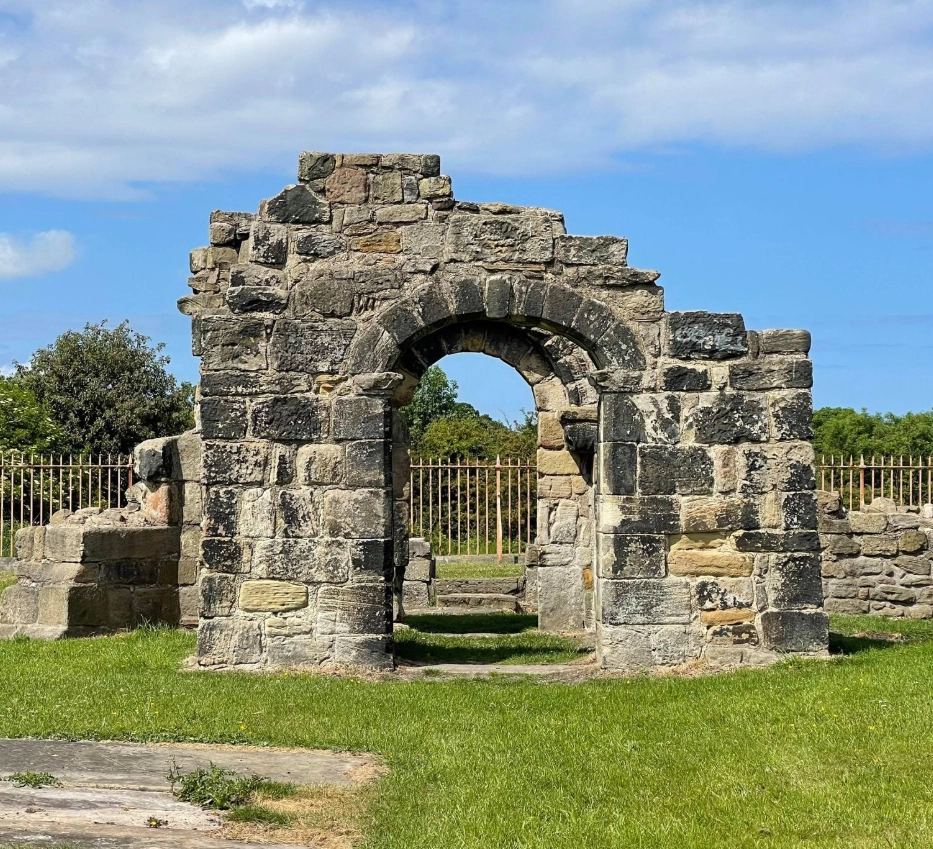
There are some giveaways that its Roman too, the impost lintel blocks at the base of the springers that stick out are a Roman feature. Not only that, they echo those of another archway, in another early church some 40 miles away.
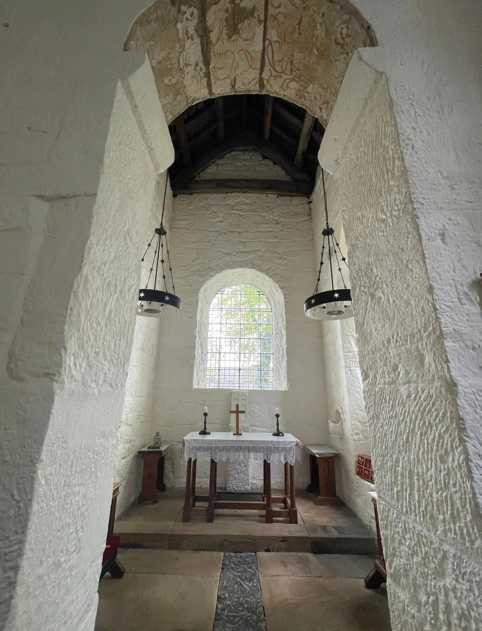
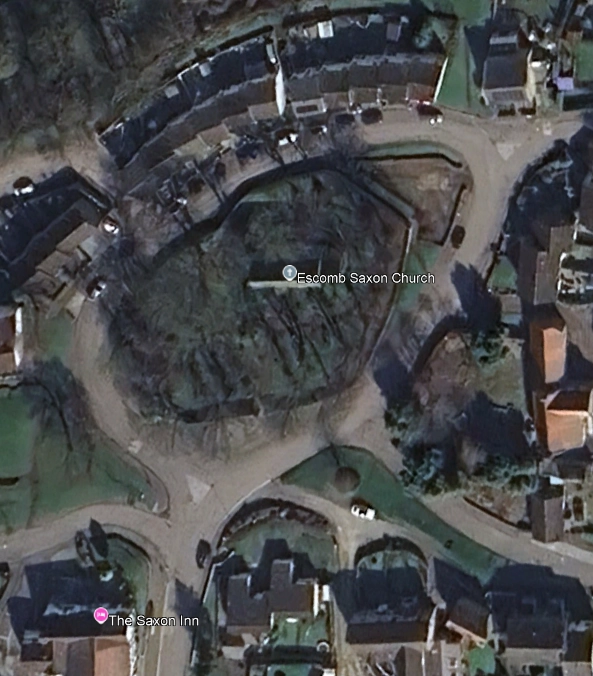
St John’s Church in Escomb is arguably the oldest standing church in the North of England, and one of the finest surviving examples of early Anglo-Saxon architecture in the country.
Built around 650 AD, but possibly earlier, the Church lies just south of the River Wear, a region long influenced by Roman and later Christian activity.
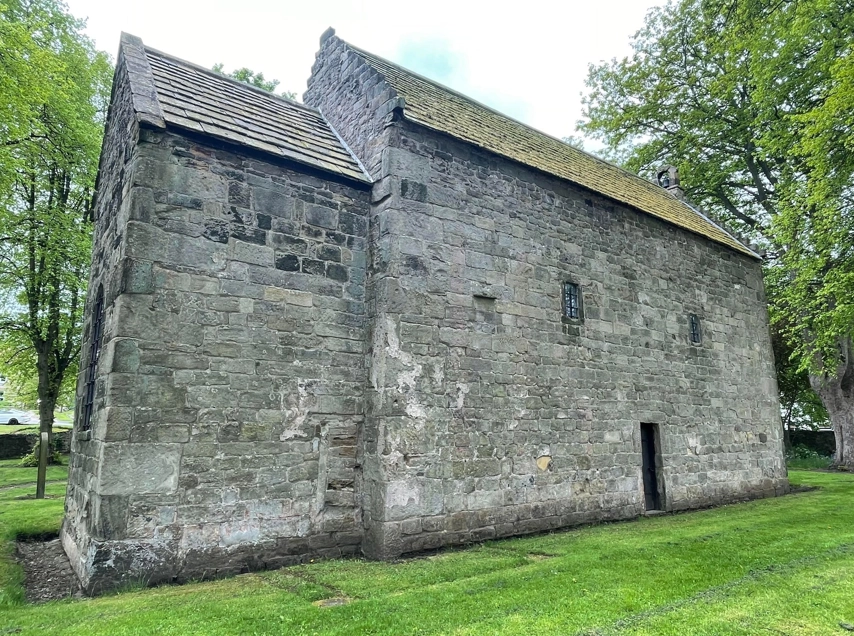
At Escomb, almost all the stone used in the church was taken from the fort of Vinovia (Binchester).
The construction technique is all Roman, so again, dismantled from one site, block by block and then rebuilt as it was dismantled.
The large blocks at the base, then smaller stones above, and then returning to large blocks again, would suggest at least two Roman buildings were dismantled and reconstructed into the church.
There is a centurial stone of the 6th Legion (Legio VI Victrix) proudly visible in the north wall, a quiet tribute to the men who once garrisoned the northern frontier.
Shared Tactics, Shared Beliefs
Both Escomb and Holy Cross demonstrate how early-medieval builders saw Roman ruins not as relics, but as quarries of durable prestige.
Not only that, but there were also nearly complete Roman buildings that could be copied in construction style teaching the Saxons how to build in stone.

The chancel arch at Escomb is thought to have been a Roman gate structure from Binchester (Vinovia).
It is strikingly similar in design and construction to one at Chesters Fort (Cilurnum) on Hadrian’s Wall, many parts of which were also built by the 6th Legion.

Holy Cross’s use of similar masonry suggests that the builders there shared this knowledge or at least the inspiration, or maybe it was the same guys that built both churches.
Missing Legacy of the Surrounding Settlements
Like Escomb, Holy Cross may once have served as the heart of a small Christian community, clinging to its faith amid post-Roman uncertainty. Sadly, the area around the church has had little excavation so there is nothing really known about it. Similarly at Escomb, a building project in the 60’s on the surrounding area wiped out any archaeological evidence.
Holy Cross

Escomb
Stone as Testimony
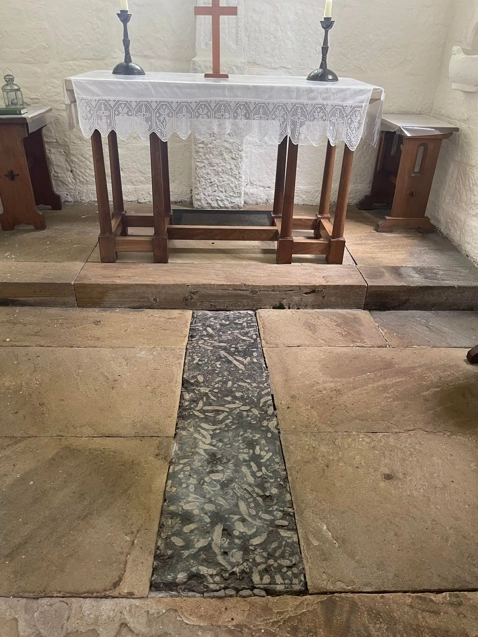
One particularly poetic feature in Escomb’s chancel is a Frosterley Marble grave slab, rich in fossilised coral, lying just beneath the altar.
It marks not just a burial, but a convergence of deep time and devotion, quarrying and polishing its surface.
There is also a massive hint of irony because at that time, the early Christians thought the world was only 6,000 years old, yet they capped an important grave with fossilised remains dating back over 300 million years.
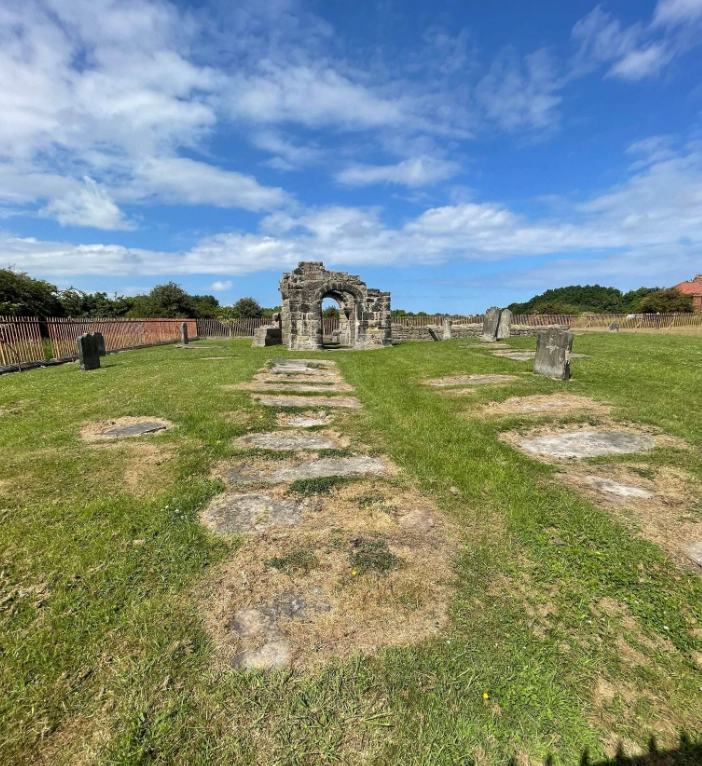
Holy Cross, too, is surrounded by ancient, weathered grave markers, most now illegible.
These lonely stones are fragments of countless untold stories, early parishioners, medieval priests, maybe even descendants of Roman soldiers who settled the land long after the legions departed.
Frosterley Marble Tomb at Escomb
Holy Cross Gravestones
Both churches were eventually abandoned, Holy Cross by the late 18th century, and Escomb briefly in the modern era before its rediscovery and conservation.
Yet they remain, stubborn against time, telling us that Northumbria never truly let go of its Roman inheritance, it simply reshaped it with a Christian heart.
A Landscape Reused
It’s worth noting how these sites now sit oddly in their modern settings.
Escomb is surrounded by a 1960s housing estate. As noted, no archaeological survey was done before the homes were built, a missed opportunity to learn more about the early community that likely surrounded the church.
Holy Cross, similarly, stands quietly and mostly forgotten, even though it almost certainly overlies an ancient burial ground and potentially earlier church.
Both churches share the fate of many historic sites in the North, underappreciated, under-explored, but quietly magnificent.
Both are open to the public and free to visit so, please make the effort and visit
With Love from the Crasterfarian XX
See also:

I really enjoy your very readable & interesting articles on little known places of interest which I would otherwise probably never heard of.