
By Thomas Bainbridge
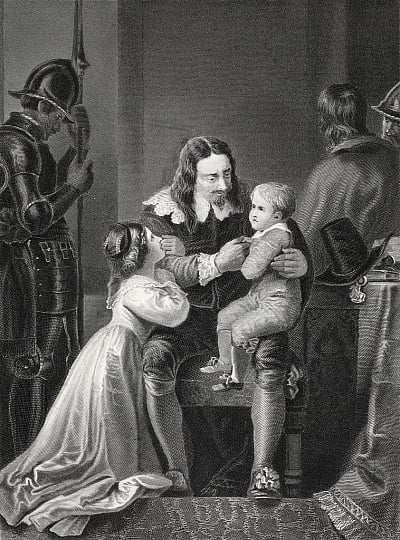
The capture of Charles I in 1646 portended the end of the First English Civil War. After having fled from the Royalist capital of Oxford while disguised as a servant, the King gave himself up and was taken into custody by the Scottish Covenanter Army under the command of Alexander Leslie, the Earl of Leven.
But where to hold him? Newcastle was the obvious location. Though still in England, it was remote and under the sway of the Scots who had invaded the North and captured the town in 1644.
“On Wednesday, May 13, the Scottish army came into Newcastle, a lane of musquets and pikes being by order of Sir James Lumsdale, the governor, made from Gateshead, the place where his majesty entered the town, all along the streets to the general’s quarters, where his majesty took up his lodging.”
John Rushworth, lawyer, historian and politician from the period
“Upon his majesty’s entry into Newcastle, he was caressed with bonfires and ringing of bells, drums and trumpets, and peals of ordnance; but guarded by 300 of the Scottish horse, those near him bare-headed. He lodged at General Leven’s quarters, who proclaimed that papists or delinquents should not come near his person; and that although his majesty was present, yet all men whatsoever should yield obedience to the ordinance of the parliament.”
Henry Bourne, Newcastle antiquarian from early 18th Century
Lodged in the Newe House, alongside Leven and his lieutenants, the Scots tried daily to convert him to their brand of Presbyterianism. They also implored him to sign the National Covenant renouncing the religious measures that Charles had imposed upon his Kingdoms. However, he showed his disdain by vocally protesting certain elements within the puritan masses held in St. Nicholas’ Church (now Cathedral).
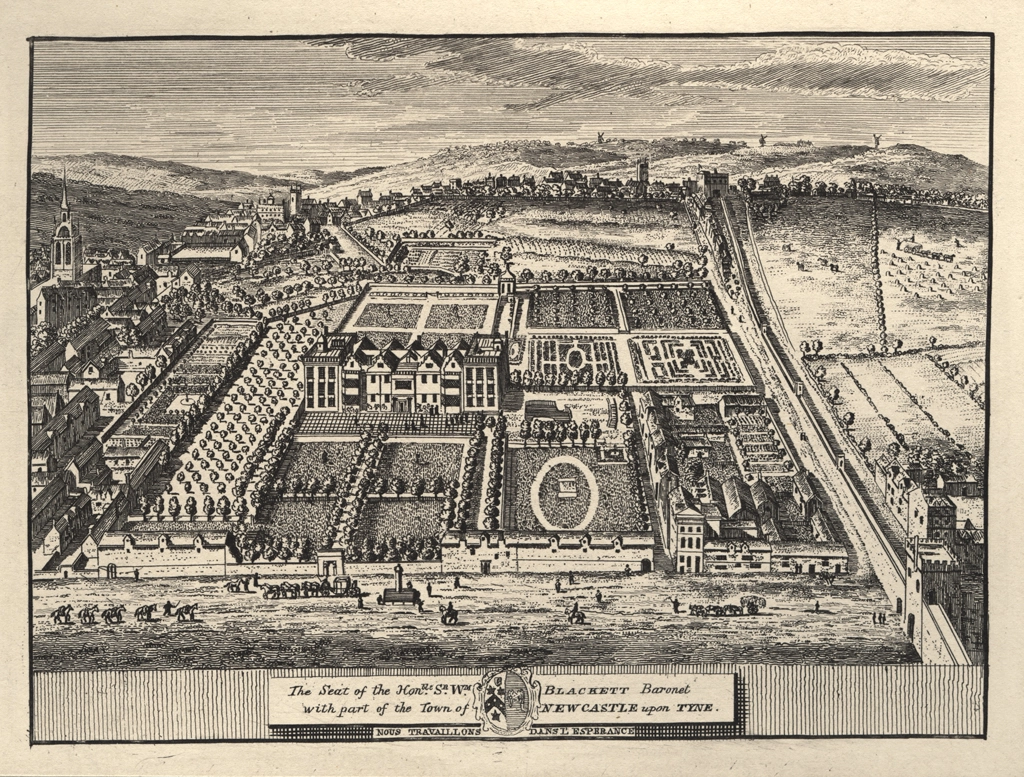
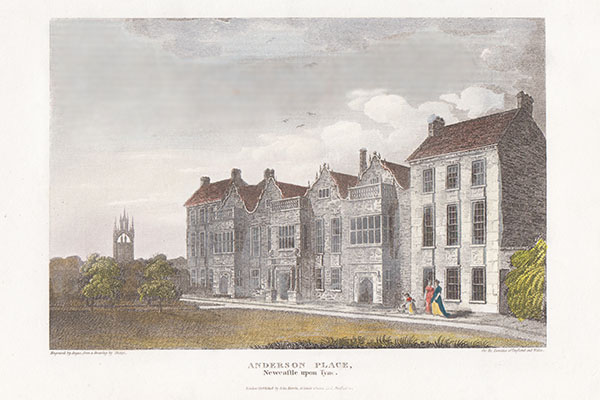
Passing the time
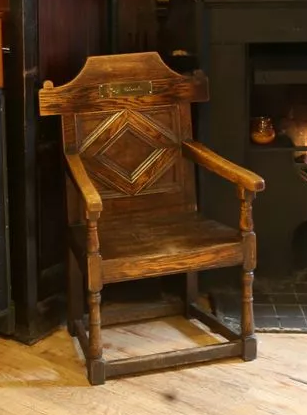
Though guarded daily in his movements, it was said that the King was given a reasonable degree of freedom. Being a Scot, Charles played a daily game of “goff” in Shieldfield (when it was a field). He would also partake in games of bowls, and on inclement days, chess. Charles also drank in the Old George Inn, which has a replica of chair on show (the orignal may be with Trinity House). Altogether, the King spent nine months at Newcastle while negotiations raged regarding what to do with the fallen monarch.

Botched Escapes
These privileges enjoyed by King had to be curtailed following a plot to escape. The antiquarian John Brand in his History of Newcastle (1789) relays the story:
“Soon after this, mention occurs of the King’s having been prevailed upon to think of an escape from Newcastle: false friends are said to have been in the secret, so that plot was divulged [1] before the appointed time: on which a guard of soldiers was placed at the door of his majesty’s chamber, both within and without, that not only deprived him of his former liberty, but destroyed also his future quiet and repose.”
- The MS Life of Alderman Barnes, p. 16, says, “King Charles was no where treated with more honour than at Newcastle, as himself confessed; both he and his train having liberty every day to go abroad and play at goff in the Shield-Fields without the walls, till a design for his escape was discovered, which occasioned stricter orders to be sent down concerning his person.”
Brand continues intriguingly:
“There is a popular tradition, that the King attempted his escape from this house by the passage of Lortburn, and that he had got down as far as where the grate is at present in the middle of the Side, where he was apprehended. A ship was said to have been in readiness to transport his majesty beyond sea. — The King had disguised himself when he was taken.”
It has also been rumoured that a Christmas escape was planned for the King after a Dutch ship docked at Tynemouth. The King, apparently in Tynemouth for negotiations about his transfer, was again unable to slip his guards and make it down to the Haven in the dead of night…
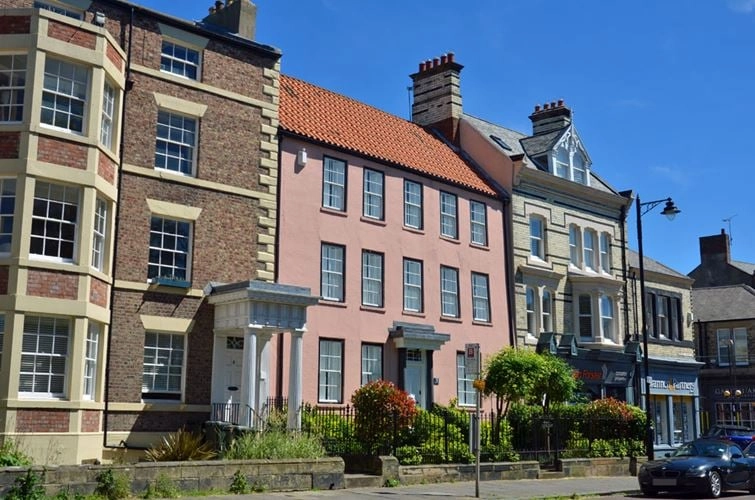
A further piece of folklore claims that during this brief period Tynemouth he was confined in the cellar of No. 9 Front Street.
Traded to England
While technically allied to the English Parliament, the Scots had their own separate designs in which Charles was a great bargaining chip. We might not realise it today, but there were many Parliamentarians who still proclaimed loyalty to the King, even if they had fought against his specific actions. The Scots too, despite their religious disavowal of Charles, believed that the monarchy was a fundamental part of their Constitution.
Therefore, it was not yet assumed that Charles would be deposed from his throne, much less executed, and instead it was widely expected that he would remain King, though heavily stripped of his powers and prerogatives.
Of course, Charles did not intend to acquiesce to these measures and, by devious calculation, aimed to play off the diverse sympathies and antagonisms held between the Scots and English against each other. The Scots distrusted the English Parliament and would not readily give up the King without an incentive.
However, unfortunately for Charles, it was eventually agreed that the Scots would trade him to the English Parliament for a payment of £200,000, as a supposed reimbursement for their efforts during the war. The offer was duly accepted, although the King himself felt he had been sold at too cheap a rate…
With that, Charles ended his eight-month Newcastle-based exile and the Scottish army retreated north of the border.

A Dismal End
Exactly two years later he was beheaded outside Whitehall in an act of regicide that was condemned across Europe, and for all his faults, he was made a martyr.

Turbulent times in Newcastle, Anglican priests were forced out of their livings, three brothers had appeared in the North East from Giggleswick in North Yorkshire; Thomas, Stephen and Josias Dockwray, although all had been educated, trained and ordained Anglican they could not preach their faith. Stephen appeared in Newcastle and passed himself off as being Presbyterian, as Newcastle was controlled by Scotland the Puritan commonwealth tolerated Presbyterianism so Stephen was made Minister of St Andrews, Newgate St, Newcastle and remained in that post till his death in August 1660
His brother Josias also adopted presbyterian faith abd was curate of Lanchester then vicar of Newburn
Thomas had first been minister of Newburn, then Heddon on the Wall before becoming Anglican again to be first Vicar of Christ Church in Tynemouth. He was also chaplain of the Kings Fleet and died at sea while aboard the Royal James along with the Earl of Sandwich when that ship was burnt during the 3rd Dutch War 28 May 1672
https://amzn.eu/d/6qq6ZsG