
By Crasterfarian
One of the earliest written works still available to us today is The Ecclesiastical History of the English People. It was written by the Venerable Bede at his home in the Monastery of St Paul, Jarrow, in 731 AD.
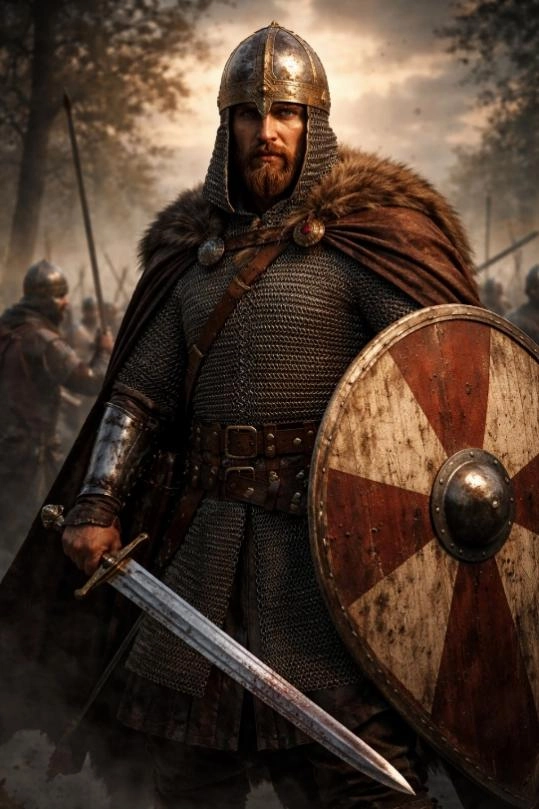
Created in what was later called the Dark Ages, this book became an invaluable insight into the lives and times of the people who inhabited Britain in the early medieval period.
Within this almost unique survivor, facts are vague, locations are difficult to match to modern maps, and individual names are rare.
Individuals of this time are largely faceless numbers in the shield wall, fodder for slaughter in the service of God and the hopeful victory of their king.
Kings, bishops and saints are mentioned in almost every paragraph, yet individual warriors and the lower classes are conspicuous by their absence.
With one exception…
Bede records the name of a single individual, a man of warrior status. He must have been a canny scrapper and a gadgie of good heart for his name to reach down across the hundred years between the events at Elmet in 633 AD and Bede’s writing.
He was a man of honour and strength, a man of legend, who would come to symbolise the working warrior of his time: a fighter of renown, a skilled swordsman, and a man not only of physical power but of deep loyalty and a clear sense of right and wrong.
His name? Bassus, fortissimus miles, the king’s toughest and most dependable warrior, quite possibly Edwin’s own champion.
As ever with the mud-clouded Dark Ages, there are tantalising and frustrating omissions where detail is most desired.
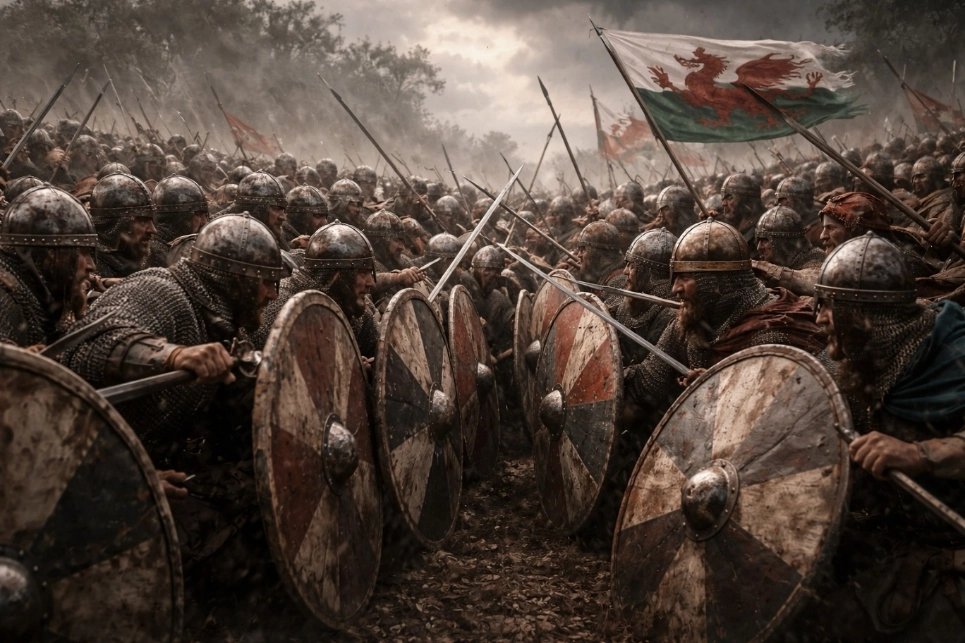
The Battle of Elmet — Hatfield Chase
To understand why this individual is named, and why that matters, we must stand on the field of Elmet and witness the breaking of the Northumbrian shield wall: the crack that heralded massacre, rout, and the murder of King Edwin and his army.
In 633, at what Bede later calls Hatfield Chase, Elmet in older tradition, Edwin of Northumbria faced the allied forces of Cadwallon ap Cadfan and Penda of Mercia.
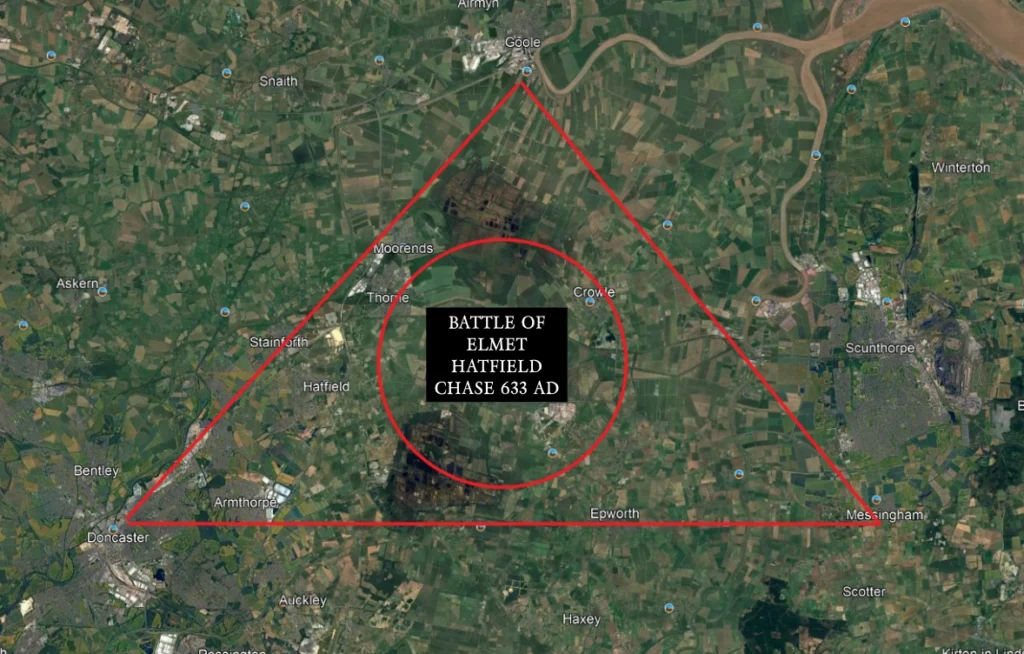
The exact site of the battle is unknown, though it is generally thought to have taken place somewhere within this triangular region.
The two armies would have come together along the western edge of Hatfield Chase, where the land itself dictated how men could move. Both sides would have relied heavily on scouts, constantly adapting to changes in direction and ground.
Cadwallon and Penda, advancing north from Lincoln, likely began on the old Roman road but avoided the exposed Humber crossing, especially in poor weather. Instead, they would have edged west, using rivers, causeways and fragments of Roman ground that offered firmer footing along the marsh edge.
Edwin, marching south from York, would have followed the same Roman lines of movement, aiming to block their entry into Deira. The encounter did not occur on a single road or neat crossing point, but across the wider Hatfield landscape, where wet ground, narrow approaches and limited escape routes quickly turned defeat into rout.
This was not elegant warfare.
It was horrific, unbelievably violent and unforgiving.
It was based on sheer strength, pressure, weight, breath and pain.
Shield walls met and locked.
Linden-board shields slammed together, edges biting into flesh.
Men were packed so tightly they could not fall even when wounded.
Spears stabbed blindly over shield rims, swords hacked into exposed faces, seaxes slashed beneath the boards, thighs and necks easily torn open.
This was killing at the distance of intimacy, as close as two friends embracing, as close as lovers, but with terror and hatred between them.
Men screamed at each other, focused on one simple goal: to take down the man in front of them. The stench of split bowels, shit, piss and iron-rich blood filled the air as they gasped for breath, slipping in gore beneath their feet.
By modern standards, we can barely comprehend what standing in a shield wall must have been like. Imagine the first fifteens of the All Blacks and England driven straight into one another, but armed to the teeth with close-quarter weapons.
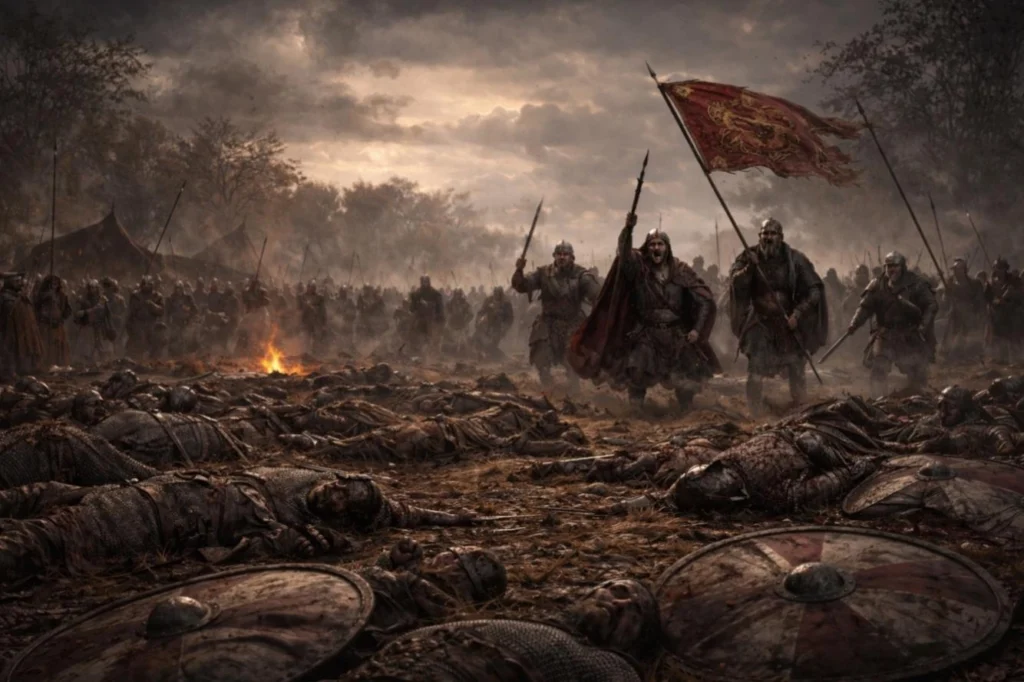
The Breaking
But at Elmet, Edwin’s shield wall broke.
When one shield went, another followed. Space appeared where none should have existed. Panic spread as the Welsh surged through the gap. Carnage followed. The King fell.
As the wall collapsed, Edwin knew the outcome. All was lost.
The Last Order
“The affairs of the Northumbrians being thrown into confusion at the moment of this disaster, when there seemed to be no prospect of safety except in flight, Paulinus, taking with him Queen Ethelberg, whom he had before brought thither, returned into Kent by sea, and was very honourably received by the Archbishop Honorius and King Eadbald. He came thither under the conduct of Bassus, a most valiant thegn of King Edwin, having with him Eanfled, the daughter, and Wuscfrea, the son of Edwin, as well as Yffi, the son of Osfrid, Edwin’s son.”
Bede, Historia ecclesiastica gentis Anglorum, Book 2, Ch. XX
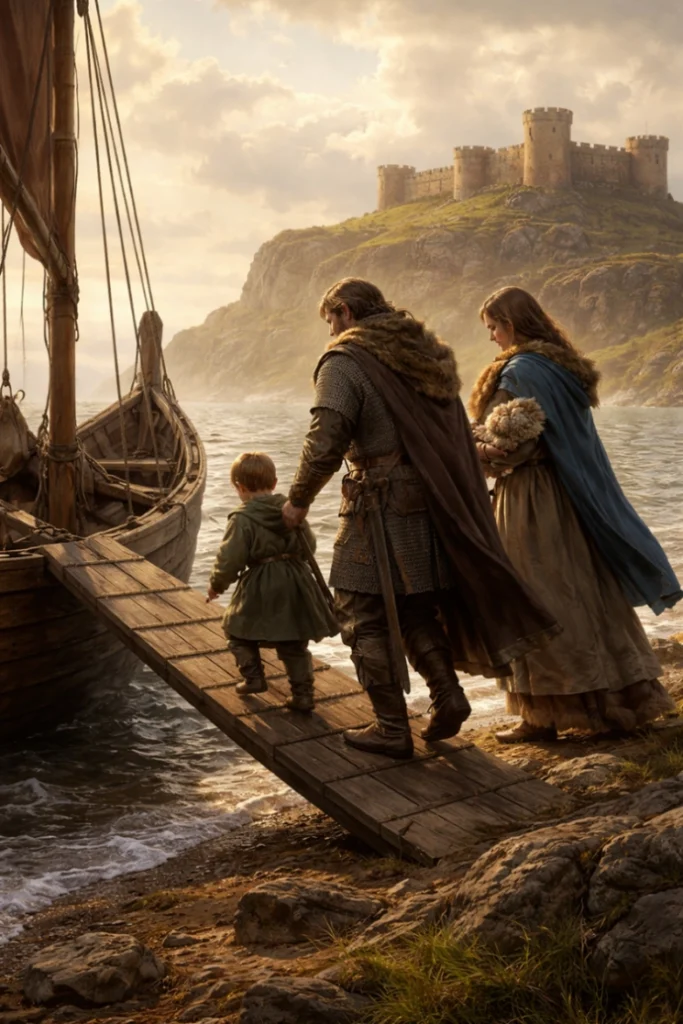
Bede introduces Bassus only after the disaster, escorting Edwin’s widow Æthelburh, their children, and Bishop Paulinus to Kent via Bamburgh.
That, paradoxically, is the point.
As the tide turned and the shield wall imploded, Edwin did what kings sometimes must: he detached a man he trusted utterly and gave him one final command.
“Leave this place, Bassus, my most trusted warrior. Ride to Bebbanburh and take my family to safety. Go with God’s speed and my blessing. Do this one last thing for me, my old friend.”
Bassus obeyed.
He left his king, the man he was sworn to protect, to carry out that final order. One last act of love and loyalty.
How’s it Gannin at the Gym?
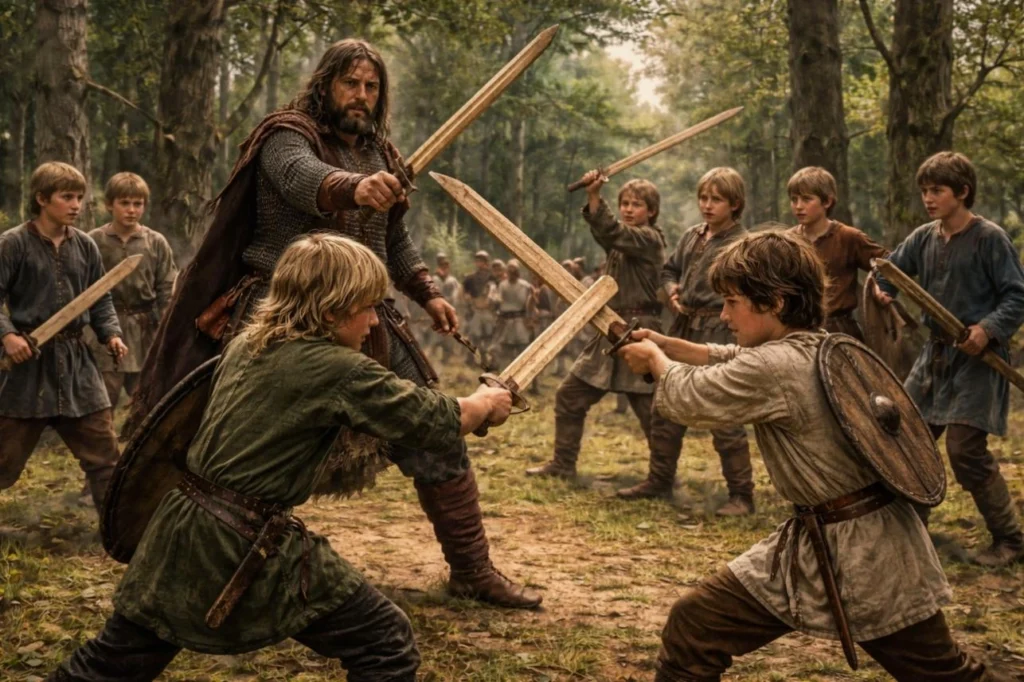
These men were not just “fit” in the modern sense.
They were trained from youth — like Spartans.
Conditioned by hard labour, hunger, cold and repetition, strength and muscle memory were second nature. They were elite fighting machines, closer to the samurai of Japan than to any modern soldier.
Every January our gyms fill with good intentions. Mirrors. Music. Heated rooms. We lift weights designed to be put down again. We chase strength we can switch off at the door.
Bassus lived in a world where strength was never optional.
There were no rest days. No supplements. No recovery sessions. Fitness was survival. Skill was the difference between standing in the shield wall and vanishing beneath it.
These men could march all day and fight at arm’s length for hours.
We can train. We can improve. But we can only imagine what bodies and minds shaped entirely by necessity must have been like.
Being Seen
We live in an age obsessed with being seen.
Likes. Clicks. Followers. Carefully curated lives played out on glowing screens, most of them hollow platitudes designed to impress peer groups. Everyone smiles in photographs… Well, except my son Jack, who never did, purely as an act of rebellion.
Posh cars, big houses, flash holidays, often paid for with debt, broadcast as proof of worth.
Attention-seeking masquerading as meaning.
Bassus had none of this.
His name appears once, briefly, in a monk’s chronicle, and yet that single mention, echoing down through the millennia, speaks louder than a million Facebook posts.
He did not seek to be known. He was not a brand or a trend. His legacy is a few words in an old manuscript, and that should unsettle us.
After Silence
Bede falls silent once Bassus reaches the safety of Cantwara (Kent) with his precious human cargo.
He does not tell us what became of him, and that silence is fertile ground.
Did Bassus remain as a bodyguard to Edwin’s widow in exile, an old war-dog standing watch in quieter lands, honouring his lord’s last command until his own end?
Did he turn mercenary, another hardened veteran unable to live any other way?
Did he find love? Raise children of his own?
No one will ever know, unless I finally finish that bloody time machine.
What is recorded is this: in a chronicle obsessed with kings and salvation, Bede names a warrior once, briefly, and without fanfare.
That tells us Bassus mattered.
He stood in a shield wall that failed.
He lived when all his comitatus, or warband, were dying.
He obeyed one last order when obedience meant survival.
And somewhere, sometime, long after the carnage of Elmet, duty done, he laid down shield and sword, a loyal, hard-nosed scrapper, fading into the ether, perhaps reunited at last with his lost comitatus in Thunor’s feasting halls.
Who knows? Maybe they are watching down on us now, laughing at our pathetic machinations in our comfortable world.
Bassus, a name that outlasts the trappings of modern life, and quietly reminds us just how utterly insignificant we all are in the long sweep of time.
With love from The Crasterfarian xx
See also:

Echoes of T. Pullo and L. Vorenus being the only rank and file soldiers named by J. Caesar in The Gallic Wars, for their gallantry.
Interesting. One must wonder if Bassus ever returned to Northumbria after the Battle of Heavenfield, or was he tied to his duties protecting Edwin’s widow and children down south?
Its one of those Mick, we will simply never know but for a fertile imagination like mine it opens loads of scenarios thank you for reading my article
Thanks for that. As a Shields lad who used to work in Hatfield and spent 7 months right in that zone, it resonates.
I don’t trust Bede as an historian – rather a propagandist for the Romans, who requires careful translation. But he is all we’ve got, I suppose. If it weren’t for Hatfield, and its consequences, history would not be the same. If it weren’t for the actions of individuals lost to the mists of the past, where would we be?
Never let it be said that individual efforts cannot change history. They are the only things that have.
Cheers
Ivan
“a propagandist for the Romans”
This is well wide of the mark. Bede didn’t write much about the Romans. He was primarily concerned with the Church and the Anglo-Saxon kingdoms.
Bede was in direct lineage from Rome using Roman notes. What emerged was hagiographic miracles and constructs in accordance with who and what the Roman Church wished to align with orthodoxy. Hence a Constantine-esque Oswald, for example.
If you dig deeply, there is surprisingly little archaeological evidence to support a lot of Bede’s framing – good Christians v nasty pagan propaganda throughout.
Wide of the mark? Hardly. Most Roman writers were famous for fraudulent claims, the entire Christian Church – and what we accept as ‘history’ is based on people writing in the employ of Rome.
Do you think if Bede, employed by Rome, did not say what Rome wanted, his work would have endured?
Do you think Bede was an unbiased historian? Like maybe Eusebius?
You’re conflating two very distinct organisations, separated by hundreds of years.
No I’m not. Are you saying Rome was nothing to do with the Bible? That it was a different Rome that created the religion, and then enforced it onto its empire, then transformed into something else that wasn’t centred in Rome? That the entire religions wasn’t Roman? That the Romans did not originate and perpetuate it and install it in vassal states?
Where is the conflation? You cannot silo Roman Catholicism and Roman Empire. They overlap fundamentally. The latter created the former, and the former continued under its emperors. Popes then assumed authority. Using the very organisation the former emperors imposed. Same culture, same country, same capital, same religion, same lineage, continuous once the empire could no longer be imposed militarily, changed tactic, and became religion – rule by theology rather than army.
I cannot see the ‘conflation’. Please explain what you mean by it.
There was some continuity between the Rome and the Church in terms of preserving Western civilisation, but to pretend that the Church was the Roman Empire in disguise is false.
Politically and militarily the Empire had long since collapsed in the West by Bede’s time. The Church that replaced it in terms of influence was based on entirely different values: charity, humility, salvation instead of civic virtue and imperial glory.
A lot of Bedes’ writing was translated from letters he sent to the Pope so i would imagine there was a canny bit of arse licking in there too 🙂 The Ecclesiasticl History was written in 733, a hundred years after he event detailed. The location of the battle is much debated but MOST scholars seem to have settled on Hatfield chase. There is another school of thought about it being further south and west at Cuckney as it had the older name of Cuckney On Hatfield. There was a mass grave discovered at St Marys Church by workmen that predated the 10th C building. As with most things in the dark ages its mainly guesswork ad common sense. People are free to draw their own conclusions, thanks for reading my article
Good point Peter. I took a deep dive into this subject over many years. My conclusion is that apart from what was later written by those employed by the Roman Church, there is no evidence that Roman Christians were ever a part of the Celtic Church, until the Synod of Whitby.
Bede’s ledgers give apparent evidence, but were retrofitted according to Church Theology. Just as it was Roman Church employees who converted pagan icons into historical Christian Saints, so Bede converted key pagan figures (some of whom we have no evidence otherwise even existed) in pre-Christian saviours. This placed the Church into Celtic Northumbria – before the Roman Church entered it and began its church building and conversion of pagan sites to Christian ones.
At the stroke of a pen, within a couple of generations, the indigenous forgot and were entirely saturated by the Roman version of their own history.
Historians have assumed it is legitimate history to take one man’s version – a single employee of the Church, as all the evidence required through which to view this dark age.
History is always written by the winners. Rome has always been an empire. It is well-known for its narratives curated to control its subjects.
North of Tyne was a stronghold against Romanization and Churchianity. It bore kinship with the Celtic culture. Rome then retrofitted crucifix on Celtic solar cross, saints onto pagan gods, Mary onto goddesses of springs and lakes, Jesus onto solar gods, etc. So ‘history’ had to be re-written to prove it was always Christian. Nobody alive then could dispute it. All roads led to Rome, along with all the wealth and obedience of the satellite nations, without the need to station massive armies. Just men with books.
Hence, Bede was not an unbiased historian and must be carefully considered. Part historian, part propagandist in a long line of propagandist historians in the employ of the Church.
https://ivanfraser.substack.com/p/return-of-the-storm-god-appendix-5c6
“There was some continuity between the Rome and the Church in terms of preserving Western civilisation, but to pretend that the Church was the Roman Empire in disguise is false.
Politically and militarily the Empire had long since collapsed in the West by Bede’s time. The Church that replaced it in terms of influence was based on entirely different values: charity, humility, salvation instead of civic virtue and imperial glory.”
I think this is naive and comforting reading of history. It conveniently forgets that Church and State fused in the Byzantine empire, that the ‘Roman’ empire did NOT disappear with the decline in the West. It forgets the Church of love and peace asserted itself through the sword and torture, genocide and robbery of indigenous wealth, behind the mask of the Prince of Peace.
It conveniently misrepresents history as Church propaganda.
Roman was initially used by me as being ‘of Rome’, and did not delineate 2 Romes or even the 3 that existed. It is based on a continuity based in Rome created and maintained by Rome, and reasserted by Rome in Britain after oswy’s accession to the Roman Petrine system. From which point Rome (the Church) began to overwrite British history via a handful of agents in their employ. Building on indigenous sites, converting by hook or by crook anything that was not on-message. If they obeyed they were rewarded with heaven, if not, the Orwellian ‘boot’. Whatever worked, carrot or stick. As long as they controlled Britain – this time all of it – beyond the wall and now in Ireland and Scotland.
This is my reading of history. Hopefully it is not biased towards the illusion that the Church was inherently pious – history does not bear that out at all.
I can understand a religious person requiring such things to be ‘true’ – the Protagorean sophist approach that ‘man is the measure of it’ whilst abandoning Platonic insistence on objective truth and demonstration. But when ‘man’ is the winner, the victor, the elite power holder and writer of its own history, we have to be sceptical.
Northumberland’s flag is based on a tale so sparse and loaded with doubts that indicate the Roman Church controlled the show, and represent a continuity that began in the Western empire, continued in the Eastern and emerged using the Bible as a tool of conquest in the age of its sole chronicler, Bede.
I did not ‘conflate’ 2 Romes, I am illustrating that Rome adjusted its method from force to persuasion, as it adjusted according to its own pressures. It remained the world power even after its military might had been overcome and required its withdrawal and submission to the European powers.
My point is more that we should ‘conflate’ the 2 Romes – or 3 – in the sense that Rome is the commonality and the Church is its continuity that spans it. One a continuation of the other, which ultimately conquered those the previous incarnation could not. This is why our region is so interesting, as we were the vanguard against the former Roman empire, but submitted to its Church after the Synod of Whitby.
This is a debatable and falsifiable position to hold, on my part. But it cannot be dismissed nor falsified by what you have offered in refutation. At least, I cannot see it. I offer my rationale and my further analysis here: https://ivanfraser.substack.com/p/return-of-the-storm-god-chapter-6e
Certainly it is a contentious thesis and is open to criticism and correction.
But thank you for responding.