By Crasterfarian
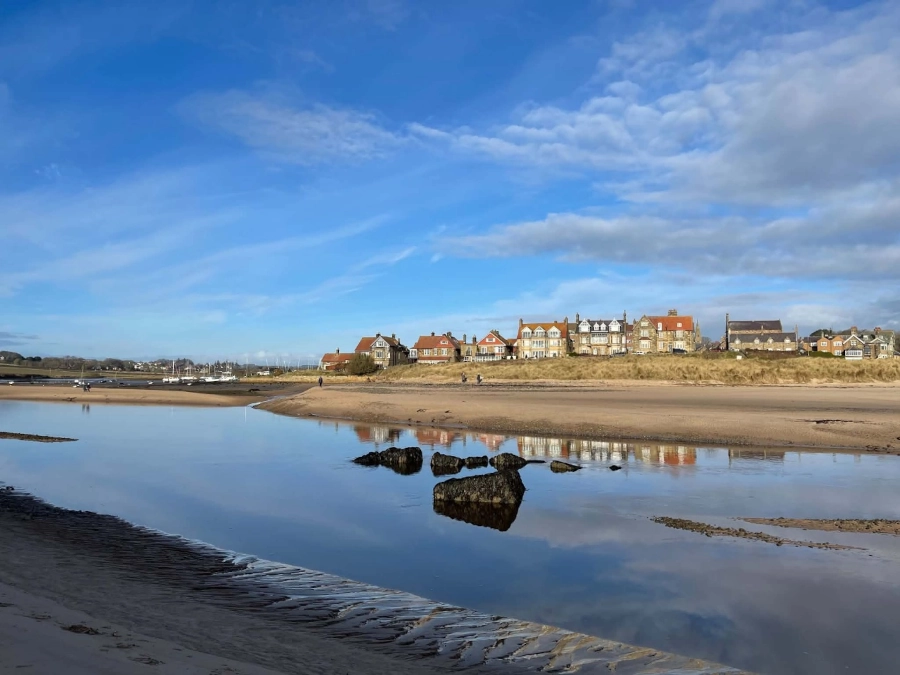
Many people who visit Alnmouth and walk the river’s edge by the old Ferry hut have no idea of the cataclysmic events that happened here over 200 years ago.
On Christmas Day 1806, a storm of ‘hurricane’ proportions swept across large parts of the North Sea.
I hadn’t really appreciated just how violent that storm must have been until I started looking at what was happening elsewhere on the very same day and the geography-changing impact this cataclysmic event would have not only on the village but on the port of Alnmouth itself.
Before the storm of 1806, Alnmouth was effectively the seaport for Alnwick and a surprisingly busy little harbour in its own right.
A port and fish market had been formally established there as early as 1207, and by the eighteenth century its trade had grown substantially.
Northumbrian grain was brought down through Alnwick and Lesbury to be stored in the village’s numerous granaries before shipment to London, Leith and elsewhere. Wool, coal, eggs, pork and pickled salmon were also exported.
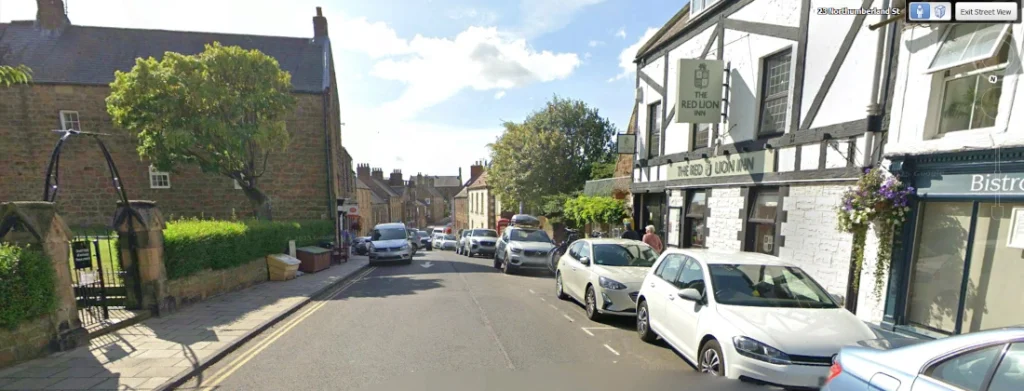
Many of those granaries have now been repurposed into modern housing and can be seen dotted up Northumberland Street, the main drag of the village.
Incoming vessels brought Scandinavian and Dutch timber, Scottish slate, wine and a whole miscellany of manufactured and colonial goods, while herring fishing, shipbuilding, a sawmill and rope-making all supported the harbour economy.
With sailors, merchants and labourers constantly passing through, Alnmouth also had numerous inns and alehouses, and appears to have had the usual less respectable side of a working port, including prostitution.
Its reputation was such that John Wesley described it as “a small sea-port town, famous for all kinds of wickedness.”
Howld ern nuw, knocking shops in Alnmouth, how very dare you! Whey, they were, so there ye gan.
However, let’s not judge. It was of its time, and the sailors, stevedores from the docks and wharfs, along with the traders bringing grain and goods to be shipped, would drink and womanise here as they did in every other port in the world.
I often wonder if some of the people who have moved to this beautiful idyll of a Northumbrian village know of its working and salacious past as they spend fortunes on properties.
I can remember in the 70s and 80s in Craster, property could often not be given away due to its remoteness from civilisation and, after some of the nights in the Jolly and many excursions to the Club and pubs of Alnmouth, I can attest to the ‘far from civilisation’, as unrest and scraps in bars were as common then as they were back in the 16th century.
It is, in my opinion, one of the best villages on the coast, relatively unspoilt by the hand of new housing and tourism other than the footfall its beauty creates.
Thriving businesses, both retail and hotels, capitalise on the attraction of the village and its beaches. I prefer the southside beach down to Amble as it’s always quieter.
At its busiest, as many as eighteen vessels could lie in the harbour at once, making Alnmouth an important maritime outlet for Alnwick and the surrounding district.
Before 1806, Alnmouth looked quite different.
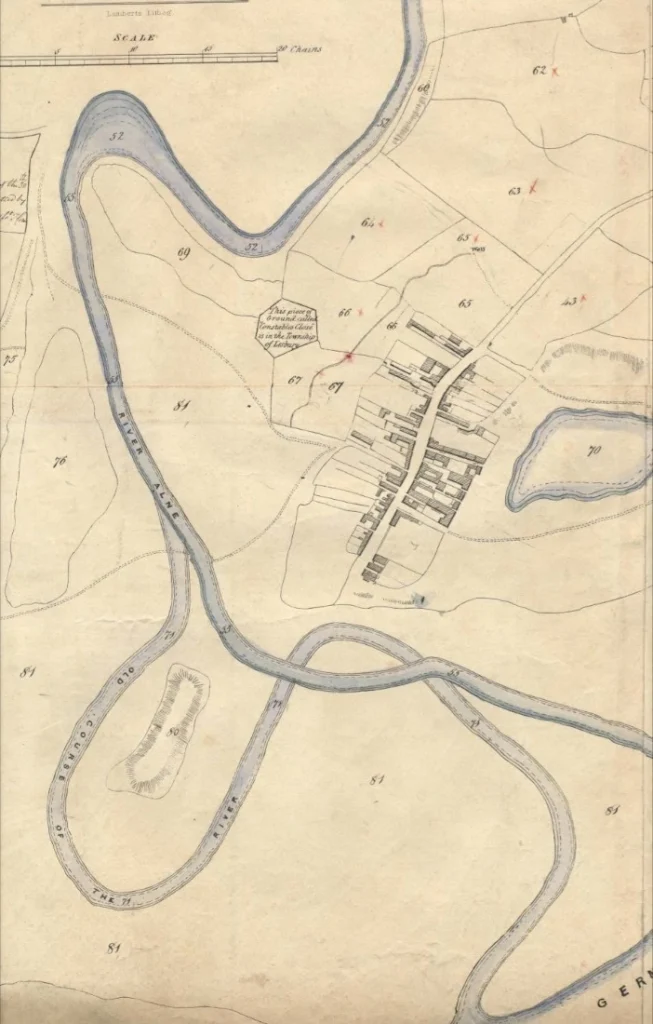
The River Aln did not run directly between the village and Church Hill as it does today.
Instead, it continued southwards before looping around Church Hill and making its way to the sea.
Church Hill was therefore still physically connected to Alnmouth, and the old harbour occupied part of that former river channel.
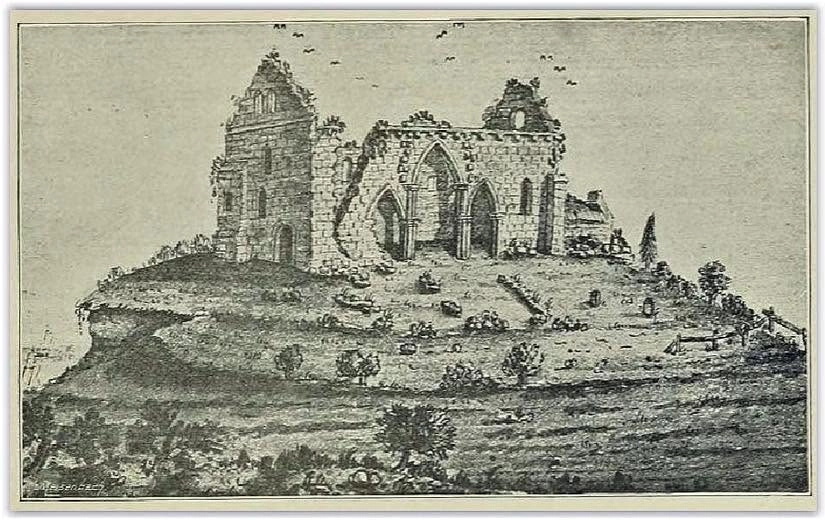
The old church of St Waleric was already a picturesque ruin by then.
Drawings survive from 1771, 1783 and even 1804, showing what remained of it only two years before its complete destruction.
Then came Christmas Day. At the height of Yuletide joy and togetherness, it arrived.
A tremendous storm battered the coast, and the sea broke through the low spit of land connecting Church Hill with Alnmouth.
The onslaught of the storm smashed its way through the lower ground, changing the meander in the river and cutting the Church Hill area off forever.
The Aln found itself a new, shorter route to the North Sea and river water poured through the breach, widening and deepening the chasm until the water flowed freely, leaving the old meander as an oxbow.
From that day, the geography of Alnmouth was permanently altered.
Church Hill had effectively become an island at high water, the old southern loop of the river began gradually silting up, and the remaining ruins of the ancient church were brought down in the storm.
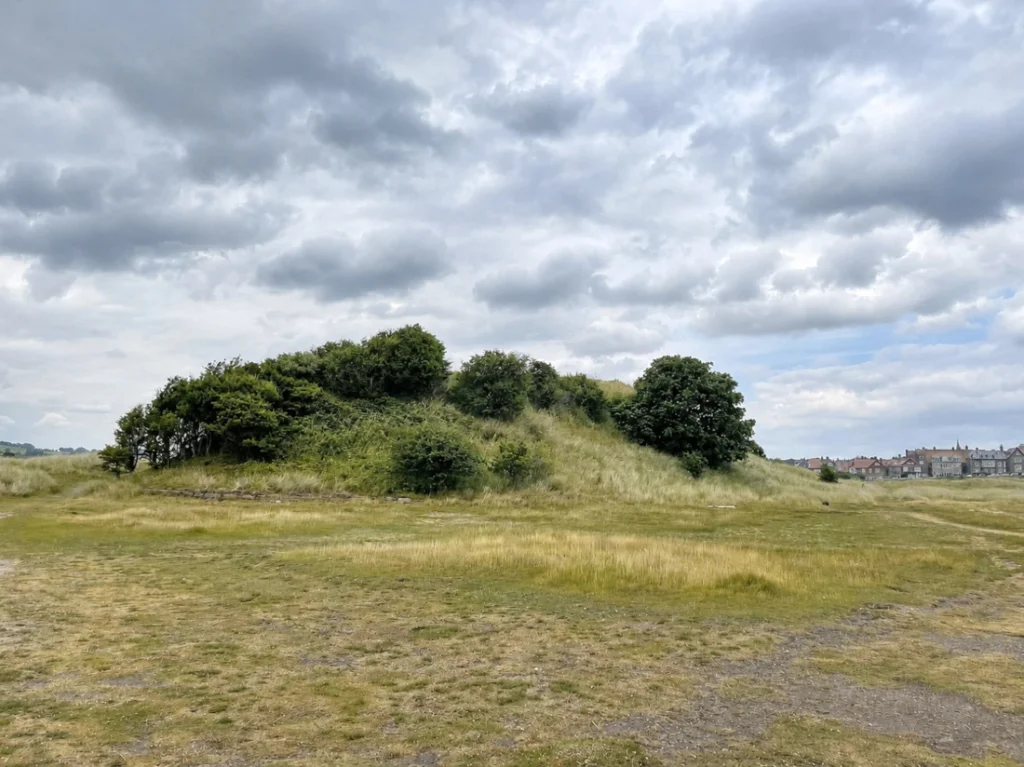
The image above is taken from what would have been the pre-storm riverbed.
The old harbour suffered badly as a consequence.
It is tempting to say that the storm killed Alnmouth as a port overnight, but the real story is a little more complicated.
The port was already facing difficulties before 1806, and vessels continued trading at Alnmouth for much of the nineteenth century, but the altered river and increasing silting certainly didn’t help.
Shipbuilding was no longer practical, parts of the harbour were cut off and, with the later arrival of the railway only a mile or so away, Alnmouth’s days as an important working port were numbered.
By 1896 commercial trade had ceased.
What really struck me was that Alnmouth wasn’t experiencing some freak little local storm.
This thing was huge and affected places hundreds of miles apart.
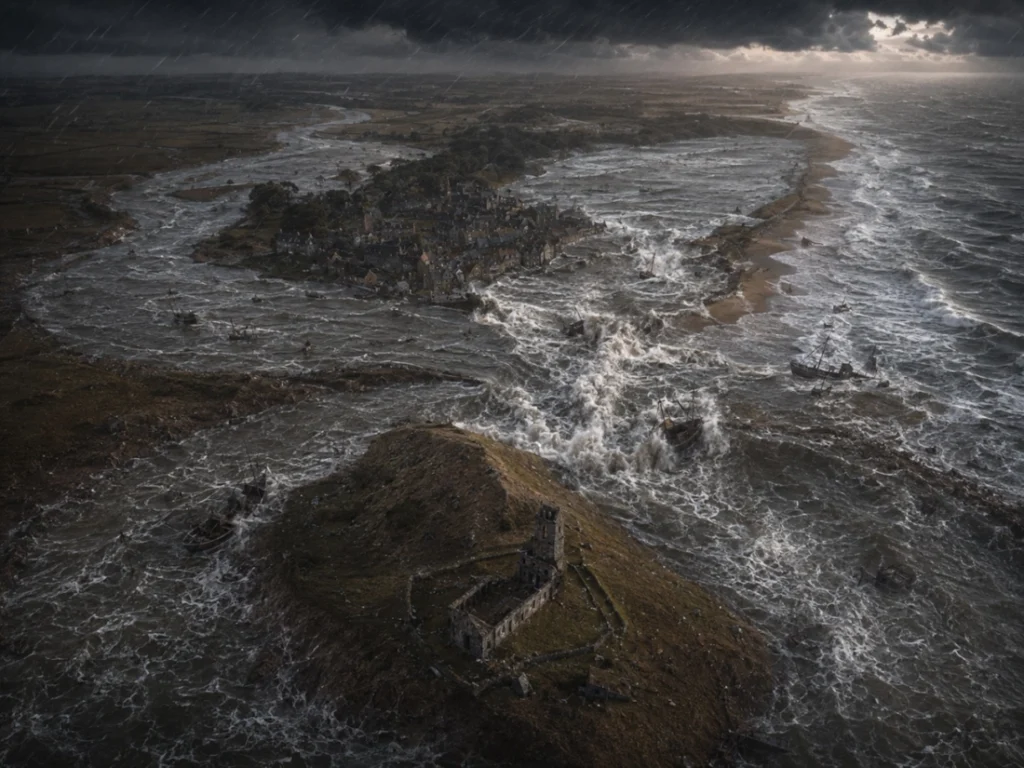
[In PenBal articles, AI imagery is sometimes used where an appropriate historical photograph or illustration doesn’t exist.]
On that same Christmas Day, a furious westerly gale struck Newcastle and the surrounding district.
A nineteenth century historical record describes the wind around noon as becoming an “absolute hurricane”. Trees were uprooted, chimney stacks came crashing down and buildings were damaged.
We can only imagine the damage to other places in the village: thatch and roofs torn away, smaller fishing boats wrecked by the onslaught. All this on Christmas Day, when people would have been at home. Perhaps it was a blessing that it was a holy day, as many men might otherwise have been at sea fishing or in the fields working. However, the same could not be said for the fishing folk of Stotfield, beside present-day Lossiemouth, where Christmas Day was still an ordinary working day.
It became one of the blackest days in the history of the Scottish fishing communities when three fishing boats were caught by the gale.
All three were lost with all hands. Twenty-one fishermen and boys died, effectively wiping out the working male fishing population of the little settlement and leaving behind 17 widows and 47 orphaned children. Moray’s local heritage records still simply describe it as the loss of the complete fleet.
At Acomb near Hexham, a spark blown from a chimney set fire to a stack.
The wind spread the flames through the stackyard and then into the neighbouring houses, leaving around ten cottages reduced to ashes.
At Shields, the great west window of the church was actually blown in while Christmas Holy Communion was taking place.
The storm was equally murderous to shipping. The schooner Traveller had sailed from Orkney on Christmas Eve. By Christmas morning she had reached Kinnaird Head and appeared to be making good progress south, when the wind suddenly changed and increased into what lighthouse engineer Robert Stevenson described as a tremendous gale.
The vessel was forced to turn back towards Orkney. She eventually reached the waters around Flotta, but her anchor cables parted and she was driven onto the rocks. Darkness, freezing water and tremendous seas prevented those aboard from reaching safety.
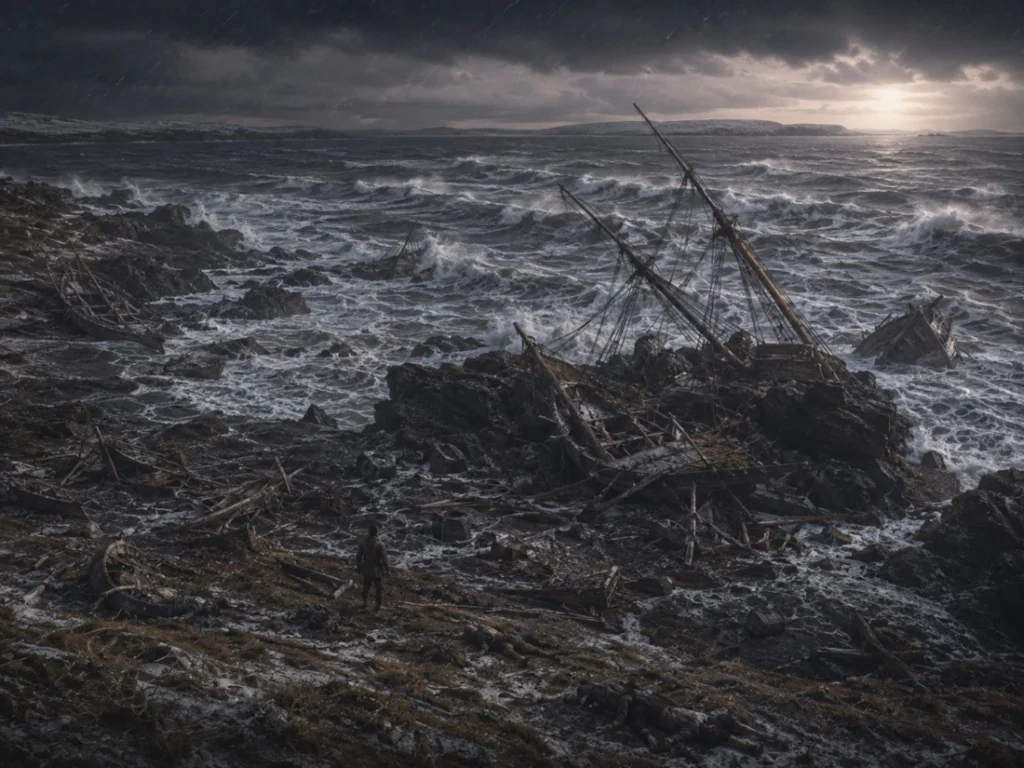
[In PenBal articles, AI imagery is sometimes used where an appropriate historical photograph or illustration doesn’t exist.]
Having been brought up in a fishing community and being a member of the RNLI, the horrors of meeting your demise in this manner are the stuff of nightmares: freezing cold, trapped in a ship’s hull, gasping for breath as the claws of the sea consumed you.
By morning the Traveller was wrecked. According to Stevenson’s account, only the cabin boy survived.
The shore around him presented an appalling sight, the remains of five wrecked vessels and the bodies of those who had been lost during the night.
Among the dead was George Peebles, who had been chosen to become foreman during the construction of the famous Bell Rock Lighthouse.
Looking at these old maps of Alnmouth, we see that strange, abandoned loop marked as the “Old Course of the Aln”. It is worth remembering what created it, the sheer, unadulterated fury of nature and its tempest.
This wasn’t simply a river gradually wandering across its floodplain over millennia creating the oxbow lakes we all learned about in Geography. The change of course happened overnight.
One extraordinary Christmas Day storm tore open the coast and gave the River Aln a new way to the sea.
Elsewhere that same day, houses burned, roofs disappeared, ships were wrecked and fishing families were devastated.
At Alnmouth there was thankfully no comparable loss of life recorded.
Instead, the casualty was the landscape itself.
The ancient church disappeared, Church Hill was cut away from the village, the old harbour began to die and a river that had followed one route for centuries woke up on St Stephen’s Day 1806 flowing somewhere else entirely.
And more than two hundred years later, it still does.
With Love from the Crasterfarian XX
Never miss an article. Enter your email or give our FB page a like