By Crasterfarian
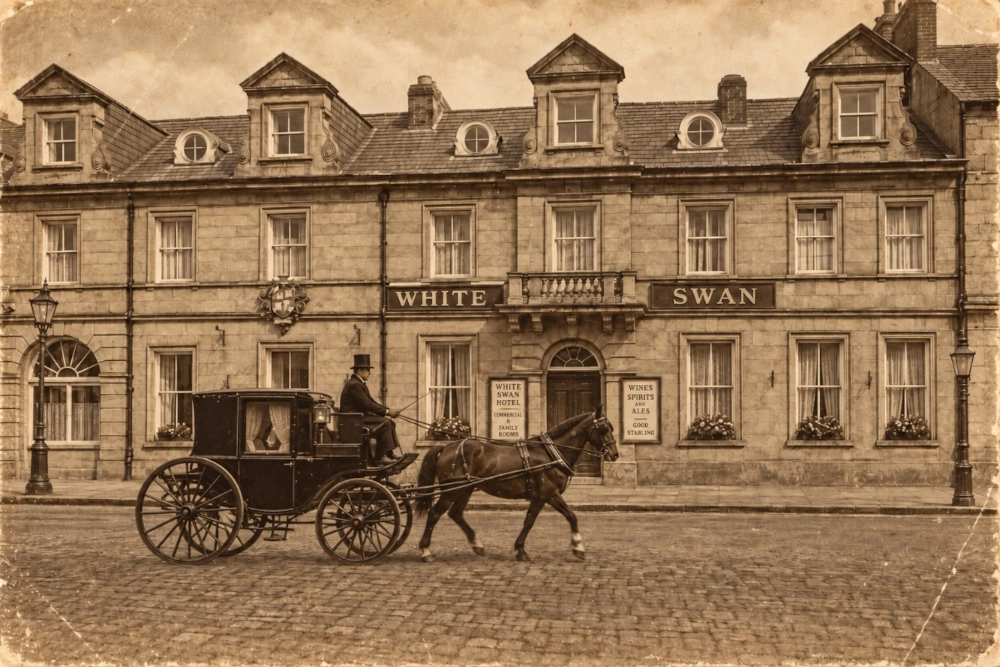
Imagine, you’re on the lash in Alnwick. You’ve visited several of the town’s many pubs and you’re a little worse for wear, a bottle of deurg in the Cleurb, a bottle of deurg in the Bell and the Queens, you’ve been in the George for a pint of snakey and now you fancy a little bit of class.
You step into the White Swan Hotel and suddenly think you’ve travelled back in time to an opulent age of extravagance.
You pinch yourself to make sure you’re not dreaming.
But no, what you’re looking at is real.
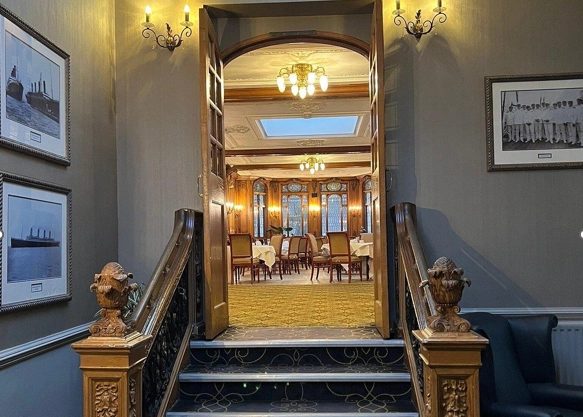
You climb the low staircase and step into another world, the world of classical design from 1910, an Edwardian masterpiece in English Oak.
This is the Olympic Suite, built using fittings from the First-Class Lounge of RMS Olympic, sister ship of the Titanic.
She was built between 1908 and 1910 at Harland & Wolff in Belfast.
Her keel was laid on 16 December 1908, she was launched on 20 October 1910 and entered service in June 1911.
Olympic was the first of White Star Line’s three great Olympic-class liners, followed by Titanic and Britannic.
Unlike her two ill-fated sisters, she enjoyed a long career, crossing the Atlantic for more than two decades.
The magnificent panelling, fireplace and Louis XV-style decoration now inside the White Swan once formed part of that world of First-Class ocean travel.

The story of how Olympic ended up here is every bit as interesting as the room itself.
By the 1930s, Jarrow had been devastated by unemployment following the collapse of its shipbuilding industry.
In 1935, Sir John Jarvis, a wealthy businessman and MP, became involved in efforts to bring work back to the town.
He bought Olympic for around £100,000 and arranged for her to be broken up at Jarrow, creating badly needed work for local men.
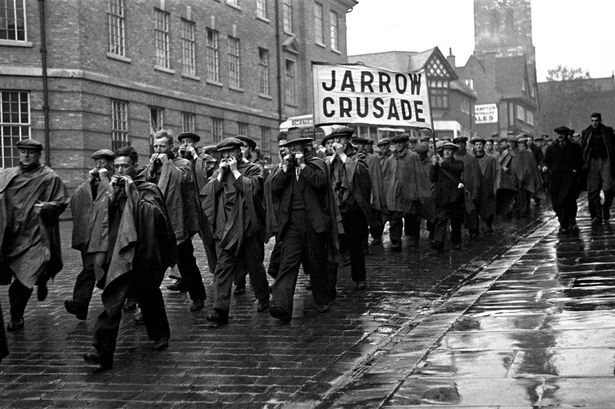
This is where her story links with the Jarrow Crusade.
The famous march to London took place a year later, in October 1936, so Olympic wasn’t bought as a direct response to the march itself.
However, both stories came from the same desperate situation, mass unemployment and poverty in Jarrow.
By the mid-1930s, many families in the town had been living for years on unemployment benefit, public assistance and whatever help relatives or charities could provide.
Money was stretched as far as possible on basic food, and contemporary accounts tell of families short of proper clothing, boots and, in some cases, enough to eat.
Breaking up Olympic was therefore about far more than dismantling an old liner. It was an attempt to bring hope, dignity and much-needed paid work back to the Tyne at a time when many people were living in dreadful poverty.
Before Olympic finally disappeared under the breakers’ torches, her contents were auctioned off.
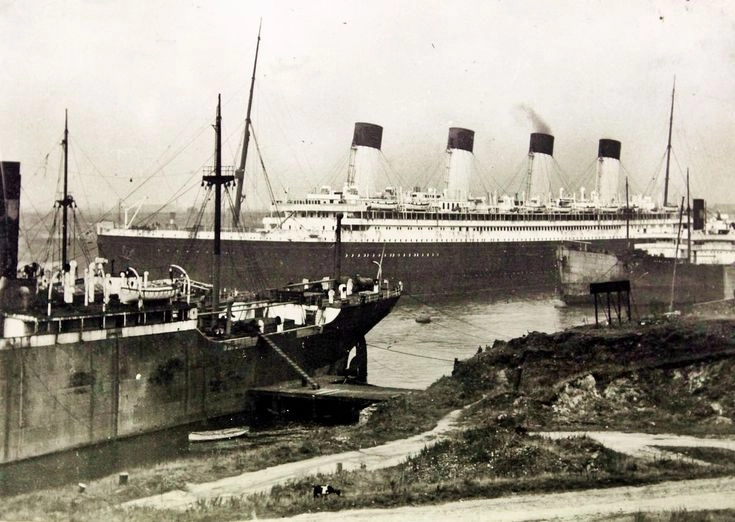
Thousands of items went under the hammer, furniture, panelling, machinery, lifeboats, fittings and even the ship’s bell.
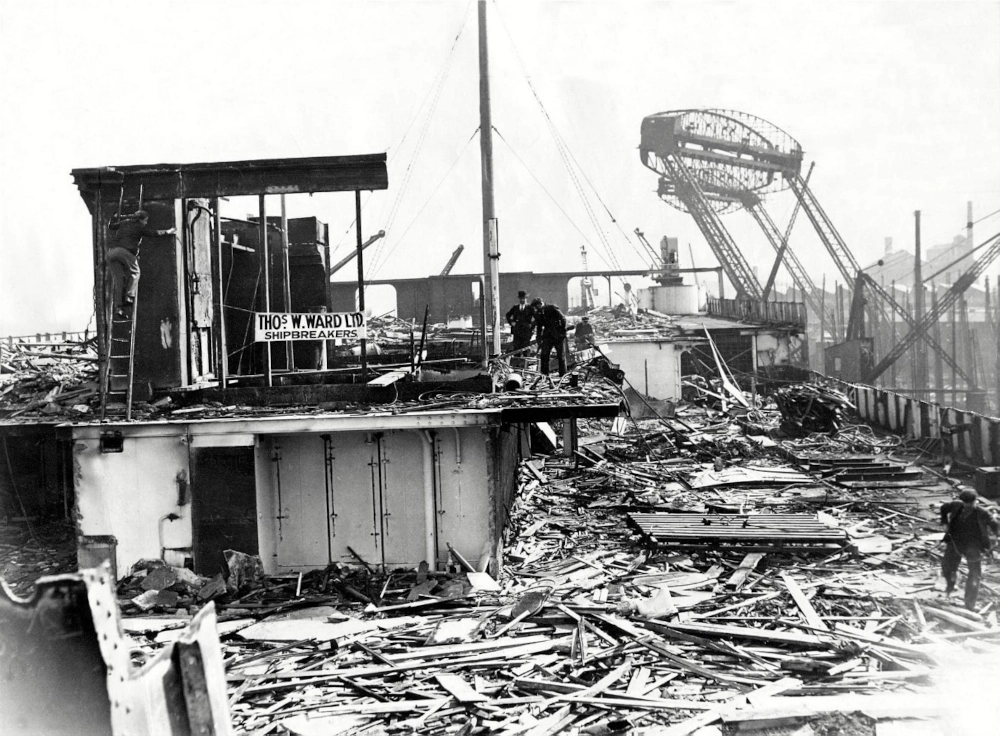
Some of those magnificent interiors eventually found their way to Alnwick and the White Swan Hotel.
And there they remain today.
The room it sits within was purpose built on the back of the existing hotel to accommodate the fixtures and fittings; winnows and floor layout are identical to those onboard the ship, so the precious purchase fitted perfectly into its new home
I’ve personally spent many nights in that very suite.
Hardy Bros, where I served my apprenticeship as a toolmaker, used to hold their annual Christmas party there, back when the White Swan still had the Hardy Bar.
I’ve also been to weddings, engagements and birthday parties in that room, so it holds a lot of memories for me personally.
That makes it even more fantastic to think that, long before any of us were celebrating there, the same surroundings had played host to wealthy First-Class passengers and some of the most privileged people of the age, through the years of the First World War and well into the inter-war period, almost reaching the Second World War.
So next time you’re in Alnwick and happen to wander into the White Swan, have a proper look around, the receptionist will be more than happy to show you or direct you to the room.
You’re not standing in a Titanic-themed room or looking at a modern recreation.
You’re standing among genuine fittings from RMS Olympic, a ship built alongside Titanic at Harland & Wolff and once used by First Class passengers crossing the Atlantic.
Quite a thing to find after a few pints in Alnwick.
With love from the Crasterfarian XX
Never miss an article. Enter your email or give our FB page a like
In PenBal articles, AI imagery is sometimes used where an appropriate historical photograph or illustration doesn’t exist.