By Crasterfarian
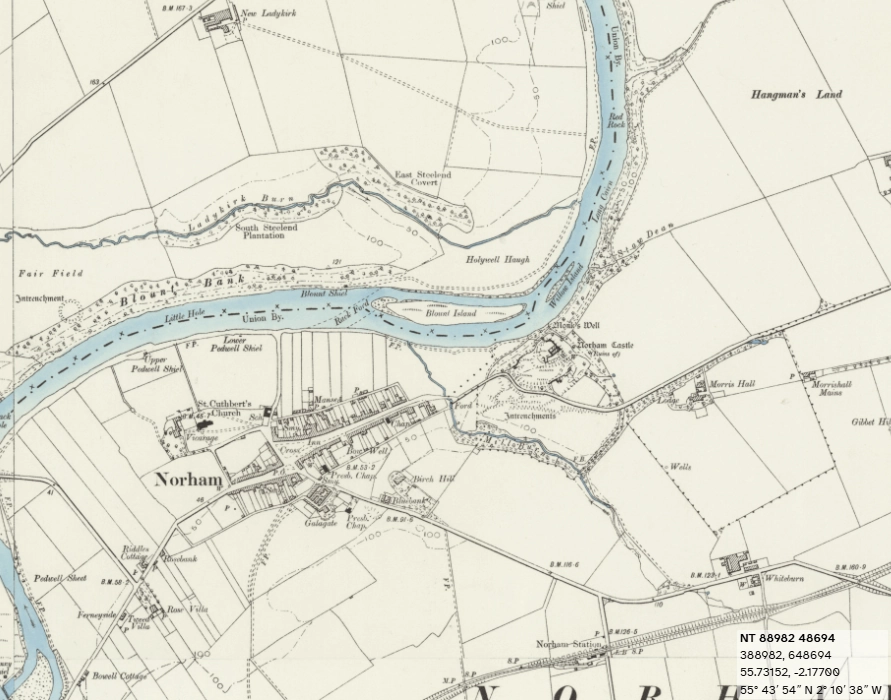
Ubbanford, or Norham as it is now known, owes its existence to one simple, decisive fact: this is the closest reliable ford on the River Tweed to the sea. It lies around six miles upstream from Tweedmouth.
Below this point the Tweed becomes tidal, deeper, and unpredictable. Here, for the first time inland, it could be crossed with confidence.
That single geographical reality made Ubbanford a gateway, controlling movement between coast and interior, sea and land, north and south, for millennia.
It is thought that the Roman road known as the Devil’s Causeway crossed the Tweed at or near its estuary, close to where the later medieval bridge stands today. A metalled surface has been observed in this area at times, crossing just upriver from the old bridge.
However, with storms, tidal surges, and shifting sands, this would have been an unreliable crossing, particularly during the winter months.
The site at Norham shows evidence of prehistoric occupation, and its strategic value continued into the Roman period, when control of river crossings was essential.
Romano-British activity in the area is well attested, and the ford itself would have been a natural point to monitor trade, troop movement, and communication across this frontier zone.
Long before the later stone fortress, the site is traditionally thought to have held an earlier high-status early medieval hall, possibly dating to the 6th century.
While firm archaeological proof remains elusive, the location alone makes such an occupation entirely plausible; this was where power needed to sit.
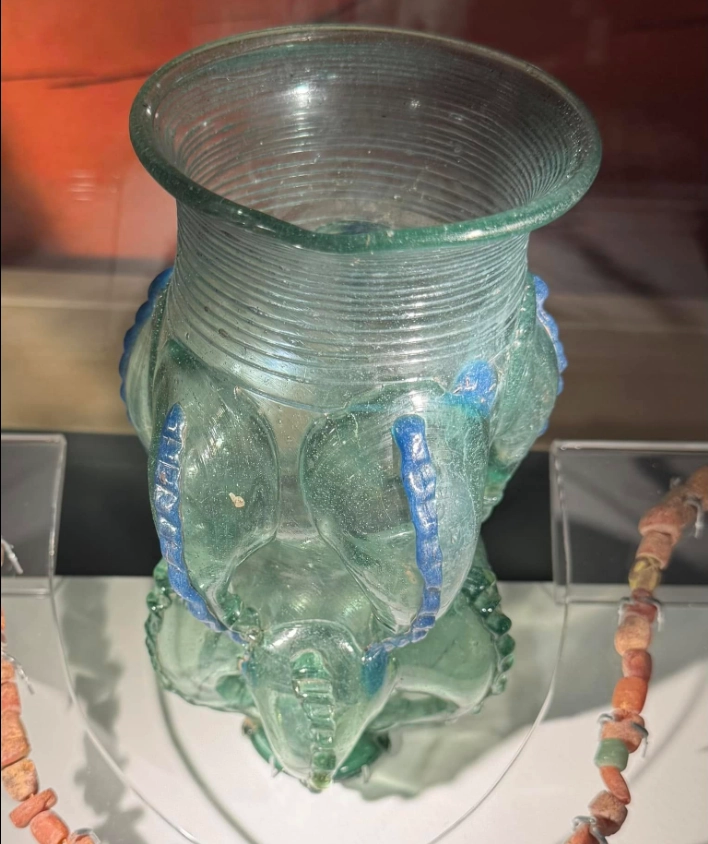
Pictured above is the Castle Eden Claw Beaker, normally held by the British Museum but currently on loan to the Ad Gefrin Museum at the distillery in Wooler.
This extraordinary 5th-century glass drinking vessel, sometimes described as a wassail cup, would have been used in elite halls to welcome guests and cement bonds of loyalty.
Made from reused Roman glass, it was deliberately crafted without a base, meaning it could not be put down until emptied and passed on.
This enforced a ritual of hospitality, obligation, and status, echoes of which survive in drinking traditions still found in parts of Europe today.
The beaker was discovered in 1775 in a grave near Castle Eden, buried with a single individual. It was the only grave good, and its survival in near-perfect condition is nothing short of remarkable.
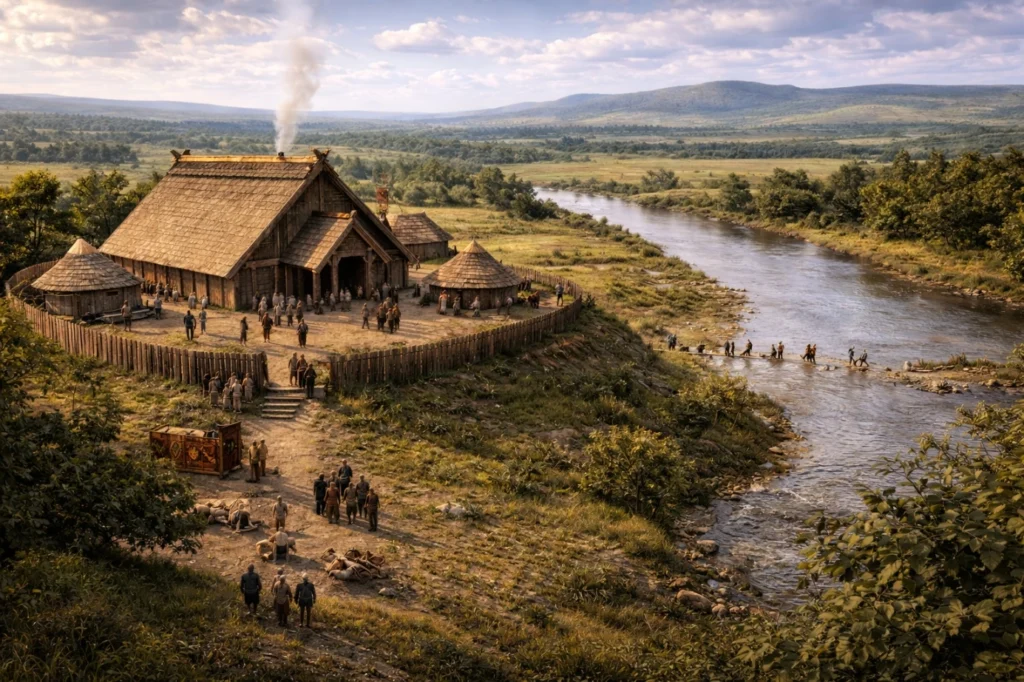
Ubbanford sat firmly within the power network of Bernicia, with close links to Lindisfarne, Bebbanburh, and Ad Gefrin, the summer palace of the kings of Northumbria.
This was a time of warlord kings, with communities caught between the old gods and the new Christian ideals carried north by Rome’s envoy Paulinus.
For ordinary people it must have been a deeply turbulent period, as belief, loyalty, and power were all in flux.
Cadwallon ap Cadfan of Gwynedd and Penda of Mercia were on the march, powerful rulers who still embraced traditional belief systems and who sought to dismantle the emerging Anglo-Saxon kingdoms of the north.
Their campaigns were brutal and destabilising, aimed squarely at breaking the power structures of Bernicia.
Around 633, Ad Gefrin itself was destroyed by Cadwallon, deliberately targeted as a royal and symbolic centre of Bernician authority in an attempt to shatter the local power base and erase the kingship rooted there.
In the aftermath of this devastation, Ubbanford remained part of the same contested landscape.
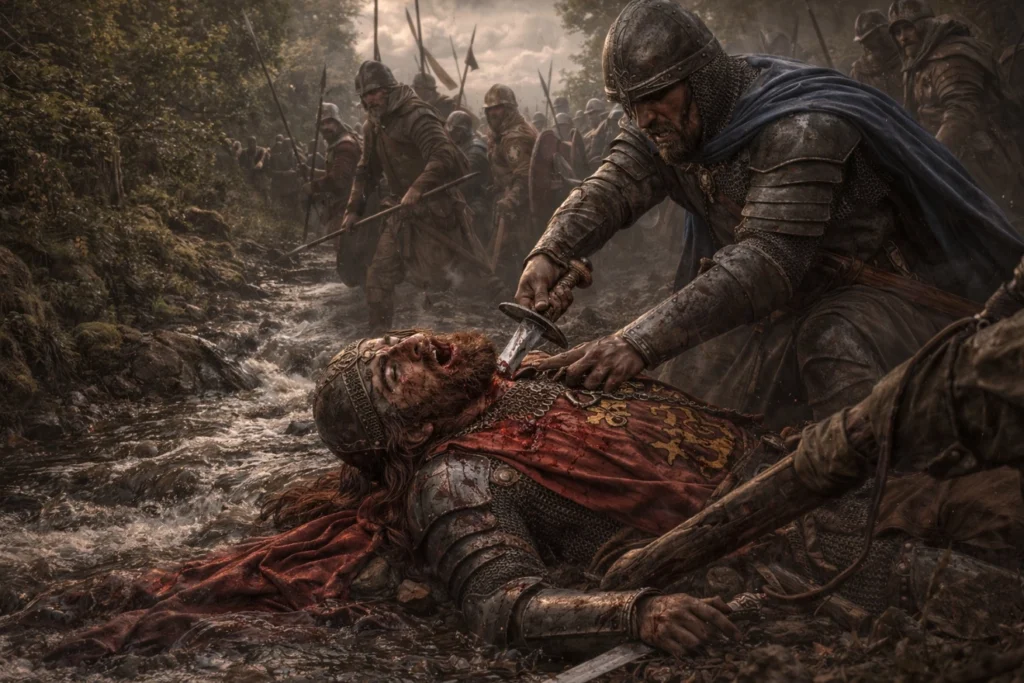
Its local elite may well have owed allegiance to Oswald of Northumbria, and it is entirely plausible that the lord of Ubbanford fought under him at the Battle of Heavenfield in 634, where Oswald reclaimed his kingdom and Cadwallon was slain after pursuit and was finally killed at the Rowley Burn.
Early tradition records that St Aidan crossed the Tweed here in 635, travelling from Iona at Oswald’s request to found the monastery on Lindisfarne.
Once again, the ford dictated the route; this was the natural crossing point for anyone moving inland from the coast, whether king, monk, or messenger.
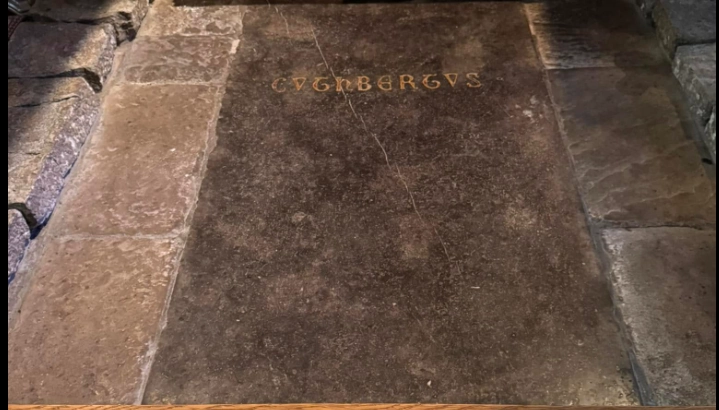
Around 845 AD, a stone church dedicated to St Cuthbert replaced an earlier wooden structure.
It was commissioned by Ecgred, Bishop of Lindisfarne, to mark the place where Cuthbert’s body was rested during its long journey before final burial at Durham Cathedral.
Norham’s strategic importance did not fade as time rolled on.
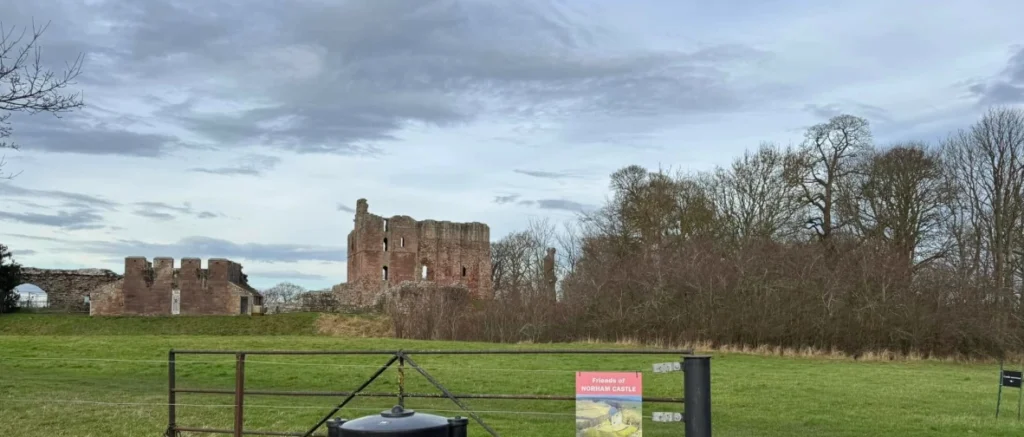
The castle was besieged and captured by James IV of Scotland in August 1513, its medieval defences pounded by some of the most advanced artillery of the age.
Norham fell after sustained bombardment, a stark demonstration of how gunpowder warfare had begun to render even the strongest Border fortresses vulnerable.
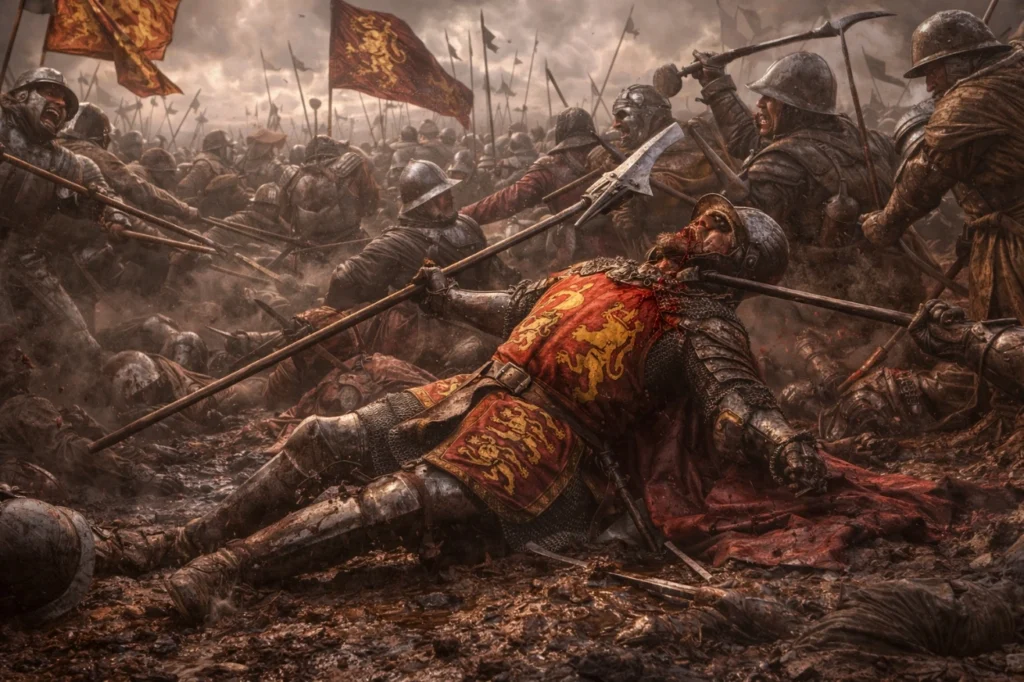
Just weeks later, on 9 September 1513, James would meet his death at the Battle of Flodden, one of the most devastating defeats in Scottish history.
The Scottish army, estimated at around 30,000 men, faced an English force of roughly 20,000 under the Earl of Surrey.
By the battle’s end, Scotland had lost its king, much of its senior nobility, and an estimated 8,000–10,000 men, including bishops, earls, and clan leaders. English losses were significantly lower, commonly estimated at around 1,500–4,000.
Flodden sent shockwaves through Scotland, leaving a kingdom leaderless and in mourning.
For Norham and the wider Border country, it was yet another reminder that this landscape, shaped by rivers and crossings, had always been a place where power was contested, fortunes turned, and history was written in blood as often as stone.
Norham became the focus of these events because of the ford, a focal point, an oculus, through which power, conflict, faith, and history repeatedly passed.
The name ‘Tweed’ derives from an ancient Brittonic word meaning strong or powerful — an apt description for a river that shaped borders, kingdoms, and centuries of conflict.
Ubbanford stands where it does because it had to.
This was the river’s first true crossing from the sea, Northumbria’s gateway, and the reason power, faith, war, and kingship all passed this way.
Norham is one of the most northerly villages in Northumberland, a true Border place. It is well worth a visit: explore the castle, call in at the Mason’s Arms for a pint, or stay at the Victoria Hotel and soak up the history of this remarkable place, the gateway to Northumbria.
With love from the Crasterfarian xx