By Thomas Bainbridge
Sunderland-born Founder of Wanderers and the F.A.
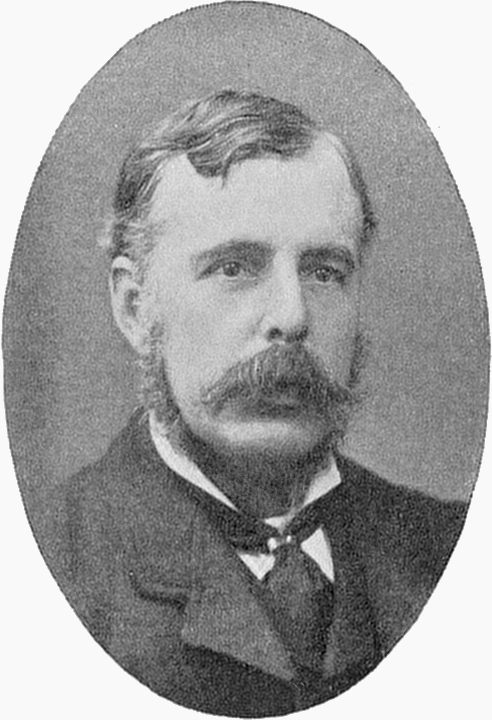
Charles Alcock was born in the Sunniside area of Sunderland, at 10 Norfolk Street, and would later move to nearby John Street. He was the son of a local marine insurance broker, but it was unknown in those early years on Wearside that he would go on to become a crucial figure in bringing the game of association football to the masses, including to those of his hometown, to whom it would almost become a religion.
A Protean Game
It was at Harrow that Alcock was introduced to football. There were many different codes throughout the public schools and towns of England. These were a hodgepodge: the use of hands, forms of tackling, the shape and size of the ball, the dimensions of the pitch, the size of teams, all differed according to which rule-set was adopted.
To reduce the confusion, many of the codes were brought together and simplified in the Cambridge Rules of 1863, embryonic to association football. Still, there was not yet a governing body to regulate the sport and provide cohesion on the pitch. Alcock no doubt saw the potential for a unified sport, already envisioning the great competitions that could be played by so many teams acknowledging one set of rules. He hoped that it could be transformed from “the rough and semi-barbarous sport” of the previous century into a gentlemanly contest of strength and wit.
Upon leaving Harrow and joining the family business, he devoted as much of his time as he could to football, on and off the pitch. In 1859, he helped to found Forest Football Club, later renamed Wanderers F.C., which competed against clubs in and around London, most notably Crystal Palace, who they defeated in 1862.

Alcock was a more than passable player. Known for his robust frame and dominating presence, he was described as “an excellent dribbler and goal getter, very hard to knock off the ball, and as hard a worker as he was enthusiastic.” But it was in his role as an administrator where he would truly make his name.
Though he was not present at the founding committee of the FA, which took place in the Freemason’s Tavern in London in 1863, his brother, John, was a member. Within a year, at only 23, Charles too was elected to the committee, and four years later was made its secretary, a position in which he would take many formative decisions for the future of the game.
One of these early ventures was to organise the first international match between England and Scotland, though both teams were made up of players local to London. The game was played at the Oval in 1870 and ended in a 1-1 draw, though it drew large crowds fascinated by the spectacle. Five years later, an official international was organised between the two nations, in which Alcock captained England, resulting once more in a draw.
In a further bid to attract attention to the burgeoning game, Alcock organised a challenge cup to be played by the few teams that existed around the country. The first F.A. Cup was held in 1872, and the teams which competed were: Barnes, Civil Service, Clapham Rovers, Crystal Palace, Hampstead Heathens, Harrow Chequers, Harrow School, Lausanne, Royal Engineers, Upton Park, Wanderers and Windsor Home Park. With Alcock as captain, Wanderers won the competition after beating the Royal Engineers 1-0 before a crowd of 4,000 at the Oval.
Spread of the Sport
As a result of these efforts, the game slowly drew interest and newer teams sprang up in distant corners. In 1879, a team was formed in Alcock’s childhood hometown, with the unassuming name of Sunderland and District Teachers Association Football Club, with their first game being played a year later, wearing an all blue kit, against Ferryhill Athletic. Soon they would change their name to Sunderland A.F.C..
Schisms
Yet another fundamental question that arose during Alcock’s stewardship was the growing division between amateur and professional status within the sport.
In Rugby, this issue was so large that it had caused a split between Rugby Union, which favoured gentlemen amateurs, and Rugby League, which had many professional players in northern industrial towns.
The FA faced a similar situation, brought on by the controversy in which Preston North End hired “Scotch professors” to bolster their side, leading to the team’s temporary ban in 1884. In response, a British Football Association, headed by William McGregor, proposed to breakaway from the FA.
Without Alcock at the helm, this issue could have perhaps stunted the sport’s growth. However, he took a more enlightened view. While cherishing amateurism, he saw professionalism as a boon to football that could attract greater and more varied talent, therefore increasing the quality of the game for spectators. In his own words, to ban professionalism would be “a short sighted policy to attempt to repress a system which would to my mind tend to remove many of the impurities which at present are seriously injuring the game.”
However, still under the influence of his fellow Old Harrovians on the FA committee, professionalism was only allowed in 1885 within strict limits, though thankfully a rupture along the lines of Rugby had been largely avoided.
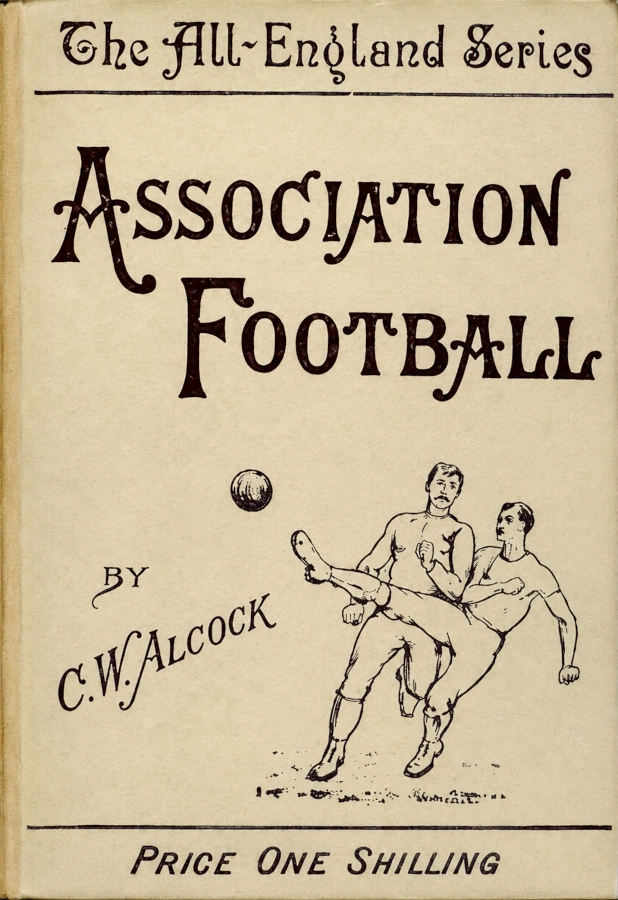
Alcock stepped down as Secretary in 1895 but continued as Vice President of the FA until his death in 1907. During this time he continued to write about football, extolling its virtues and publishing updated guidelines on its rules. *
Football for Export: Italian Clubs Founded by Shieldsmen
The game which Alcock fostered in England subsequently sent out its missionaries to the distant corners of the globe. Businessmen, engineers and expatriates brought football to Italy, Spain and South America, and more than a few of these evangelising figures hailed from the North East.
This site has already dealt with George Fawcus, of North Shields, who in 1898 founded Italy’s first club, Genoa FC, to this day a Serie A stalwart.
Yet, another Italian giant owes its inception to a man from the other side of the Tyne.
William Poths from South Shields was likewise enthused by the Association Game which had gripped England. As an employee of the Cunard Steamship Company, he had relocated to Naples and in this foreign land, separated from the game he loved, he sought to recreate it on Italian soil.
Alongside some fellow expatriates and Neapolitan locals, he formed the Naples Foot-Ball and Cricket Club in a pizzeria on Via San Severino.
Another crucial figure in the founding, and the first captain of the team, was the Tyneside Scot, Peter Jackson. Born in Glasgow, at a young age he had been taken on as apprentice at the Armstrong Munitions Factory in Elswick and subsequently transferred to their Naples subsidiary.
Under the guiding hand of the duo, the club slowly improved. However, though crucial in the early training of the team, Jackson returned to Newcastle in 1907, never to see the fruition of his efforts. His going was deemed a ”heartfelt loss”.
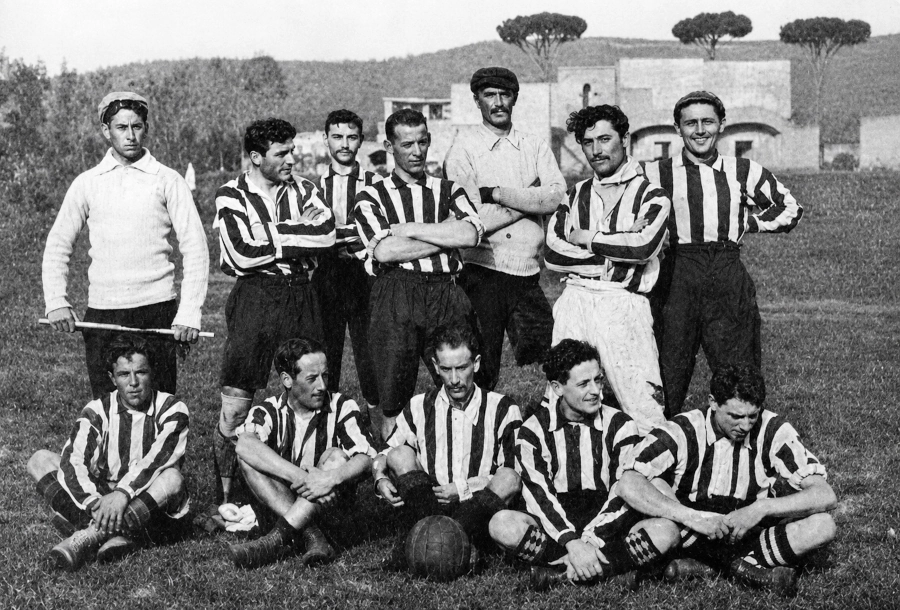
The early days of the club were expectedly uneventful. After dropping the cricketing aspect (perhaps too reserved a game for Italian sensibilities), it was not until 1909 that they proved their mettle by winning the Coppa Lipton.
This tournament had been devised by another Briton, Thomas Lipton, of ice-tea fame, to generate interest for the game, with Poths playing in the final against Palermo.
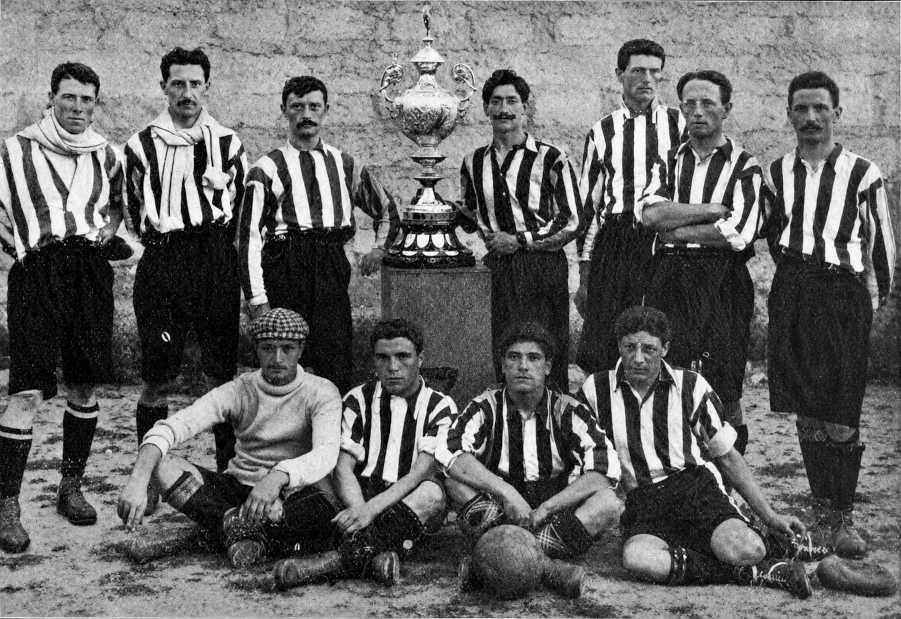
Further games were organised by Poths through his Cunard connections, with visiting merchant vessels and liners offering to play the fledgling club. One game was against the crew of the British ship Arabik in 1911, which had defeated Genoa FC (Fawcus’ own creation) two days earlier. Naples defeated the Arabik’s team 3-1, with Poths playing centre-forward.
In time and after an internal split and a name change to Associazione Calcio Napoli, the team would become SSC Napoli, a mammoth of modern Italian football.
Spanish Clubs with Wearside Roots
Across the Mediterranean, more seeds of football were planted by men from the North East.
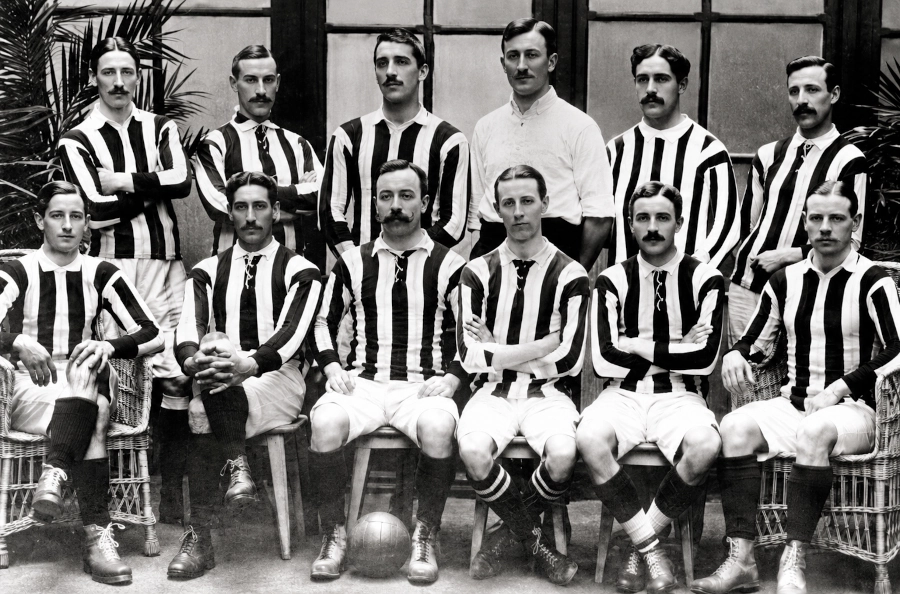
The first football game to be recorded in Bilbao was in 1889, played by the crew of the Barmston, against those of the Abydos, Harven, Nina and Dawdon. Three of these ships had been built on Wearside, and were largely manned by men from Sunderland and surrounding areas. Such was the connection that the game was covered in the Echo.
Before long, the inhabitants of Bilbao, alongside British marine and mining engineers, sought to create a club for the town. Among these efforts were Bilbao FC and ‘Athletic Club’, both of which contained members of the local British colony.
Though the former team was short-lived, it included the sporting all-rounder, William ‘Luke’ Dyer of Sunderland. Much like George Fawcus at Genoa, Dyer was the son of the British consul, and heir to a coal and steel shipping firm.
In the early days, Bilbao FC often played the Athletic Club, with the games developing a deeply heated rivalry which fuelled further interest for the game. In 1903, to remain competitive nationally, Bilbao FC and the Athletic Club fused into one. As a testament to his skill, Dyer remained a fixture of the new team. He was part of the side that won the Copa del Rey in 1904, though having not played a single game after the other teams had forfeited. Still, a year later, Dyer and the squad reached the final, only to lose 1-0 against the precursor to Real Madrid.
Another key figure was Juan Arzuaga. Born in Bilbao, he studied naval engineering, living at Balmoral Terrace, Gateshead, and became engaged in the local sporting culture of the region. Rather than football, Arzuaga’s first love was rugby, and he had competed for North Durham. He then continued his career at Whitley Bay, playing for Rockcliff RFC, among the best clubs in England at the time. Upon returning to Spain, it was the association game that filled his time, and he played for the Athletic Club in his hometown. Through his connections, Arzuaga would be responsible for bringing Sunderland’s colours to Bilbao…
During one game, the English goalkeeper for Bilbao, curiously named Crawford, protested that he was unable to distinguish between the kits of the two teams. After failing to convince the other club to alter their kit and following the heated discussion that arose, Bilbao sought their own solution.
Recalling his days in England, where he had watched the famous Sunderland side of the time, Arzuaga recommended the adoption of their colours as a homage. No doubt aided by Dyer, the idea was accepted and Arzuaga contacted Henry A. Murton Ltd., of 27 Fawcett Street, to order a shipment of jerseys. These arrived in January 1910, and were worn days later, beginning a tradition that remains to this day.
Los Rojiblancos
But would you believe that two more top-flight Spanish teams also adopted Sunderland’s colours?
Atlético Madrid had begun as a youth branch of Bilbao, and Arzuaga had played for the former in 1908. Following Bilbao’s acquisition of their new jerseys, the president of Atlético, Ramón Pastor, contacted the club to order the kit for themselves. Arzuaga ordered a further shipment which, upon arrival, he forwarded by rail. From that day on 27th November in 1910, Atlético de Madrid played in the red and white of Sunderland AFC. They too, like their parent club, would incorporate these colours into their badge, which adorn it to this day.
Yet, incredibly, another Spanish club had already beaten both clubs to it and adopted the red and white to honour their own Sunderland connection.
In Seville, Hugh MacColl, a Scot from the banks of the Clyde, was a skilled marine engineer and member of the local British colony. After arriving in Andalusia, he was pleased to find many of the traditions he was accustomed to back home, including Burns Night, which he and his compatriots celebrated in a local cafe. During the ensuing drinking bout, they undertook the formation of a new club, naming another Scot, Edward Johnson, as the president. In March of that year, the newly formed Sevilla FC played a game against Huevla — the first ever football match in the country, with MacColl captaining the team to victory.
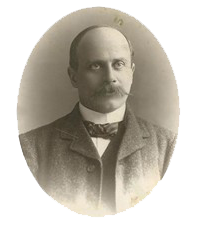
In 1896, MacColl returned to the UK, where he would settle on Wearside. However, he had not entirely abandoned his Seville connections. His partnership with another Seville Scot, Gilbert Pollock, the first man to have scored an away goal in Spain, saw the creation of an engine firm situated at Wreath Quay, a stone’s throw from the current location of the Stadium of Light. MacColl & Pollock soon became a prosperous firm, outfitting hundreds of ships with engines, and at one point employing over 500 men. The company became entwined with Sunderland AFC, as many of their workers were supporters and even players.
In 1908, Sevilla FC, two years before Bilbao, chose to procure their red and white stripes from Sunderland. A shipment of jerseys was organised by MacColl through John Wood, the captain of the SS Cordova, a Sunderland collier which made regular voyages to Spain.
How this idea came about is not entirely clear. Perhaps in deference to their founder, or in homage to the English club. Another claim is that it was in honour of Ferdinand III’s liberation of Seville from Muslim rule in 1248, when his banner bore the same colours. Perhaps it was a combination of these: that the colours of Ferdinand happened to be those of Sunderland, making the choice to adopt them an easier one.
Seville, though, would not keep up the tradition of wearing Sunderland’s colours as their first kit, yet the red and white did find its way onto the crest in 1921, a permanent reminder of MacColl’s legacy to both Sunderland and Seville.
Notes
- It was not only in football that Alcock made his mark. While FA secretary, he was also the Captain of Middlesex Cricket Club and played for the MCC in 1862. He subsequently became the secretary for Surrey. It was in this role that he was responsible for the origin of another great competition: the Ashes.