By Thomas Bainbridge
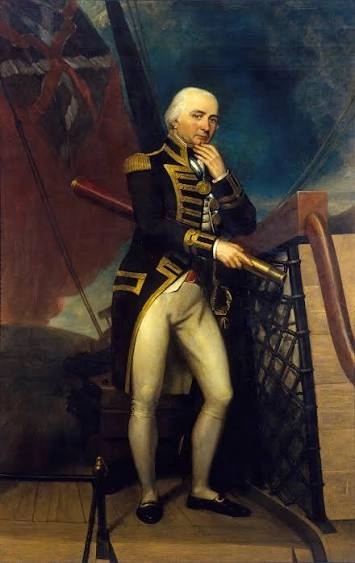
The figure of Horatio Nelson has perhaps cast the greatest shadow in all of English history. His leadership during a period of peril for the Britain against the predations of France and Spain led to the wholesale destruction of their combined fleet at Trafalgar. However, equally deserving of the honours of that great victory was his second-in-command, Vice-Admiral Cuthbert Collingwood (1748-1810).
Minor Gentry
Collingwood was born in Newcastle, one of the six surviving children of Cuthbert and Milcah (née Dobson).

Ironically for one remembered as a Geordie hero, the Northumberland estate of Collingwood’s great-grandfather, Eslington Park, was confiscated for his support of the Jacobite cause during the rising of 1715. Instead, the Collingwoods went into business on the banks of the Tyne, becoming well-to-do merchants amid the burgeoning trade networks that sprang up across the globe.

Chirton House (centre map) was sold to Edward, who passed it Cuthbert. In 1791 Cuthbert married Sarah Blackett, daughter of John Blackett, the wealthy coal baron, who also owned extensive land in the area.
Maps:
1. https://www.penbal.uk/2024/03/13/a-250-year-old-plan-of-land-ownership-in-north-shields/
2. https://www.penbal.uk/product/armstrong-map-1769/
3. Wood’s 1826 Map of North Shields
It was not surprising that the young Cuthbert Collingwood should look to the sea as the scene of his future exploits. After attending the Royal Grammar School, he was apprenticed at age twelve aboard HMS Shannon, then captained by his cousin Richard Braithwaite. Onboard, Cuthbert received the most advanced technical training in the world, and was tutored in the naval arts of navigation, mathematics and gunnery.
Though Collingwood was zealous and conscientious in his duty, there was nothing yet to mark him out as an extraordinary figure. His career progression was slow and steady. At eighteen he was a midshipman, then at twenty-two a master’s mate. This can be explained by the relative peace that reigned throughout the world, leaving him without an opportunity for advancement. The Seven Years War had been concluded and the Empire seemed to have been secured.
Colonies
Yet, soon rumblings were heard within its very boundaries as the thirteen colonies of North America rose in rebellion with the cry of “No Taxation Without Representation”. In 1774, Collingwood was posted to Boston, the epicentre of the revolt, and was engaged a year later in the battle of Bunker Hill, commanding landing-craft for the second wave of troops, with the battle resulting in a costly British victory. For his actions, Collingwood was gazetted lieutenant. Nelson, albeit uncommonly, had been a lieutenant at only nineteen.
The next episode of Collingwood’s seafaring career took place in the Caribbean. It was here that he would meet, if a little inauspiciously, the man who would become his greatest friend, Horatio Nelson. The two formed an uncommon early bond, each oddly pining over the same woman, the wife of a British colonial governor, and drawing each other’s portraits during a short leave from duty.
In 1780, Nelson, accompanied by Cuthbert, led an expedition to discover a route to the Pacific through central America, in the region of modern day Nicaragua. However, Nelson was stricken with tropical fever and was invalided home, leaving Collingwood command of his ship, in which 180 out of the 200 man crew would die of the same affliction.
A year later, in command of HMS Pelican, Collingwood was hampered by more ill luck. Shipwrecked in a hurricane, it was only through his leadership that he and his crew were able to be rescued after being stranded. He was subsequently cleared of all responsibility for the loss of the vessel at the resulting court martial.
Home At Last
After a stint in London, then another in the Caribbean, Collingwood was finally able to return to Tyneside in 1786 after twenty-six years at sea.
In this period of peace, he met and married Sarah Blackett, the daughter of John Blackett, then Mayor of Newcastle and a family acquaintance of the Collingwoods. In 1791, the ceremony took place in St. Nicholas’ Church. The couple soon found an idyllic home at Oldgate in Morpeth. Within two years, they had two daughters, Sarah and Mary.
For Cuthbert, little then might have seemed amiss with the world. But his domestic bliss was broken by the cries of revolution from across the Channel…
Swashbuckling
The French had again arrayed themselves for war, and Collingwood travelled to Portsmouth to command HMS Barfleur, the flagship of Rear-Admiral George Bowyer. A year later, he was present at the Battle of the Glorious First of June. Though Barfleur was not heavily engaged, the unfortunate Admiral was shot in the leg and caught by Collingwood, who carried him to the surgeon to have it amputated.
To Collingwood’s annoyance, because of an oversight, he did not receive the medal that was due to the victors of the engagement. Soon though, greater debts would be owed to him for his actions in battle.
Once more uniting with his old friend, Nelson, the duo were to become a powerful force upon the seas.
In the battle of Cape St. Vincent, Collingwood, commanding Excellent, broke away from the main line to follow Nelson’s audacious gambit, heading straight for the clustered Spanish galleons. Trading shots with the hulking Salvador Del Mundo, the British gunners made themselves felt, and the Spanish crew struck their colours in dismay. Cuthbert was almost killed by a cannonball, but fought on and forced another ship into submission. He received £4,000 in prize money, then a small fortune.
Northumberland Return
In 1799, he returned to see his wife and daughters, the latter having grown up without knowing their father but for the many loving letters he had sent them. In Morpeth, he embraced all the elements of life that had elsewhere been denied to him. With his dog, Bounce, he wandered the countryside of Northumberland, dropping acorns so that they might one day grow to mighty oaks and replenish the wood required to build the Royal Navy’s ships.
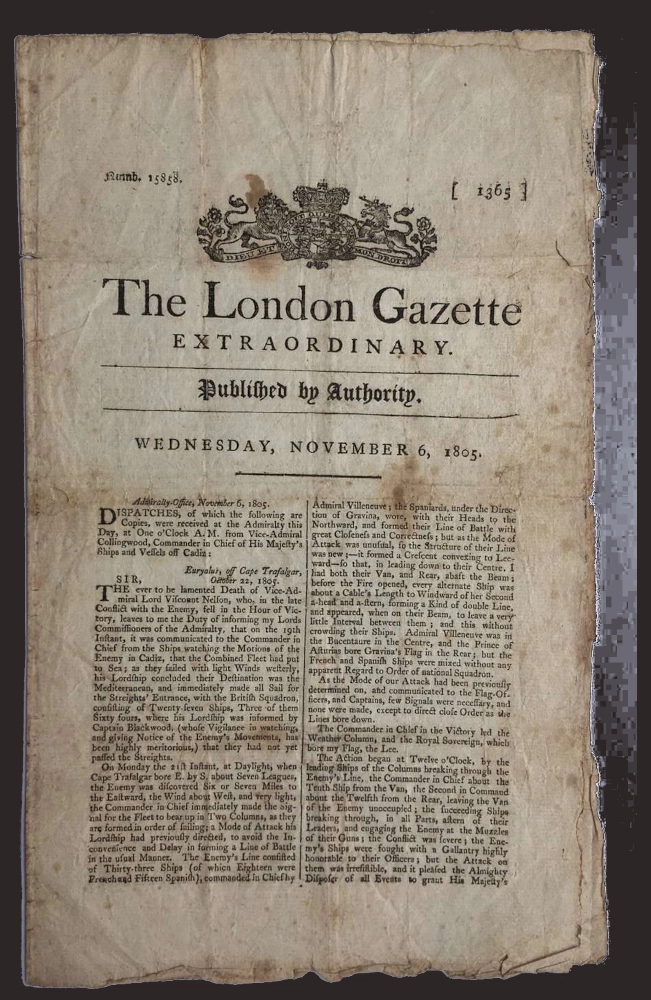
Of course, this tranquillity was not to last. Once again, war with France resumed and Collingwood was called to serve in defence of his country. His greatest test, and the greatest test for Britannia herself, would come at Trafalgar…
Battle Begins
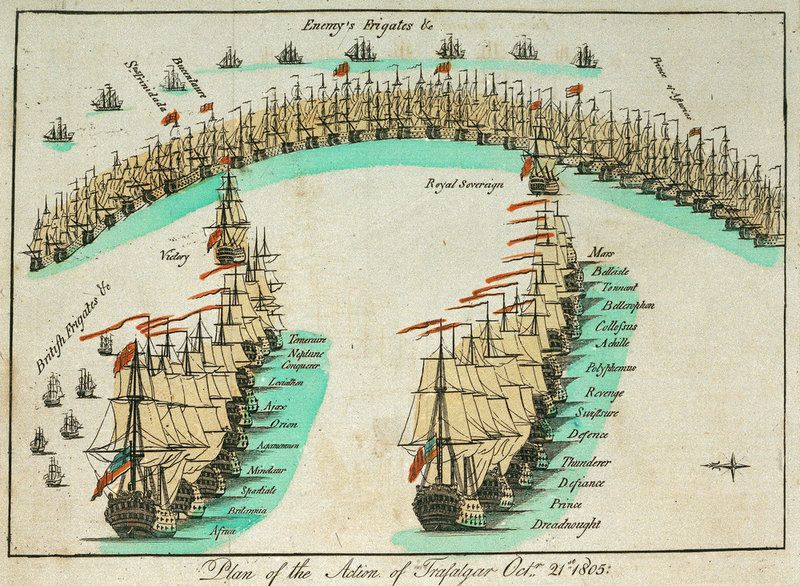
Aboard the 100-gun Royal Sovereign, manned by a gallant crew of Geordies, who Collingwood hailed as the ‘Tars of the Tyne’, the British fleet blockaded the French and Spanish at Cadiz. After attempting to break out, the disordered enemy tried to retreat to the safety of the harbour. In parallel squadrons, Nelson leading the northern line and Collingwood the southern, the British were poised to intercept.
The two comrades, even on separate ships, seemed to keep up a conversation: Nelson gave his famous signal, “England expects that every man will do his duty”. Upon seeing the flags Collingwood joked, “I wish Nelson would make no more signals; we all understand what we have to do.” As if to confirm this, Nelson exclaimed, “See how that noble fellow Collingwood carries his ship into action!” Finally, as the ships made way into the ragged enemy volleys, Collingwood remarked, “Now, gentlemen, let us do something today which the world may talk of hereafter.”
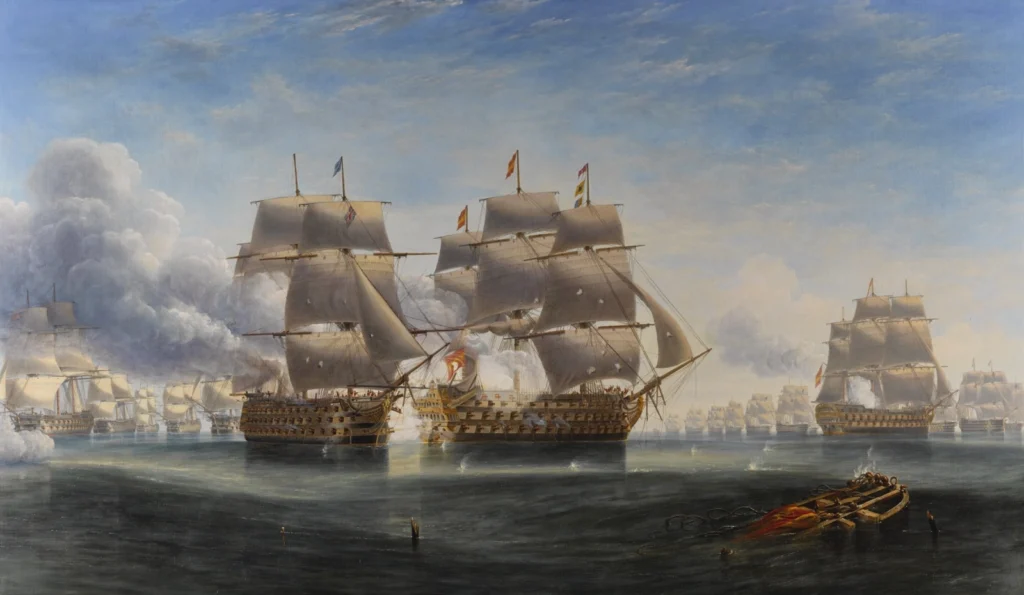
Royal Sovereign was the first to pierce the line. The principles of gunnery which Collingwood had instilled in his crew now delivered an immense double-shotted broadside on the Spanish flagship, Santa Ana, wreaking destruction by shattering her masts and splintering her timbers which flew through the air dismembering and pulverising the unfortunate foe.
Surrounded on all sides, Royal Sovereign was outnumbered but not outgunned, firing three broadsides every five minutes and slowly turning the tide of battle in her favour.
Despite the continuous fire that whirled around him, Collingwood found time to eat an apple while directing the battle. Though he was wounded in the leg by a splinter, he remained one of only three officers still alive on deck after the action. Before long more British ships had come to Collingwood’s aid and the Allied ships surrendered one by one.
Amid the clamour and smoke, it was not yet clear that they had carried the day, and the distant battle in which Victory was engaged raged on.
Then arrived the news of Nelson’s death. Cuthbert briefly shed tears for his old friend, before taking over the ongoing operations, though by this point the fighting began to subside.
In his later years, Collingwood, as Vice-Admiral, treated with sultans and kings while wielding power as His Majesty’s Envoy. Despite all the glory and fame he’d achieved, he still remembered his home. He would write with fond memories that “whenever I think how I am to be happy again, my thoughts carry me back to Morpeth.”
Bounce the Dog
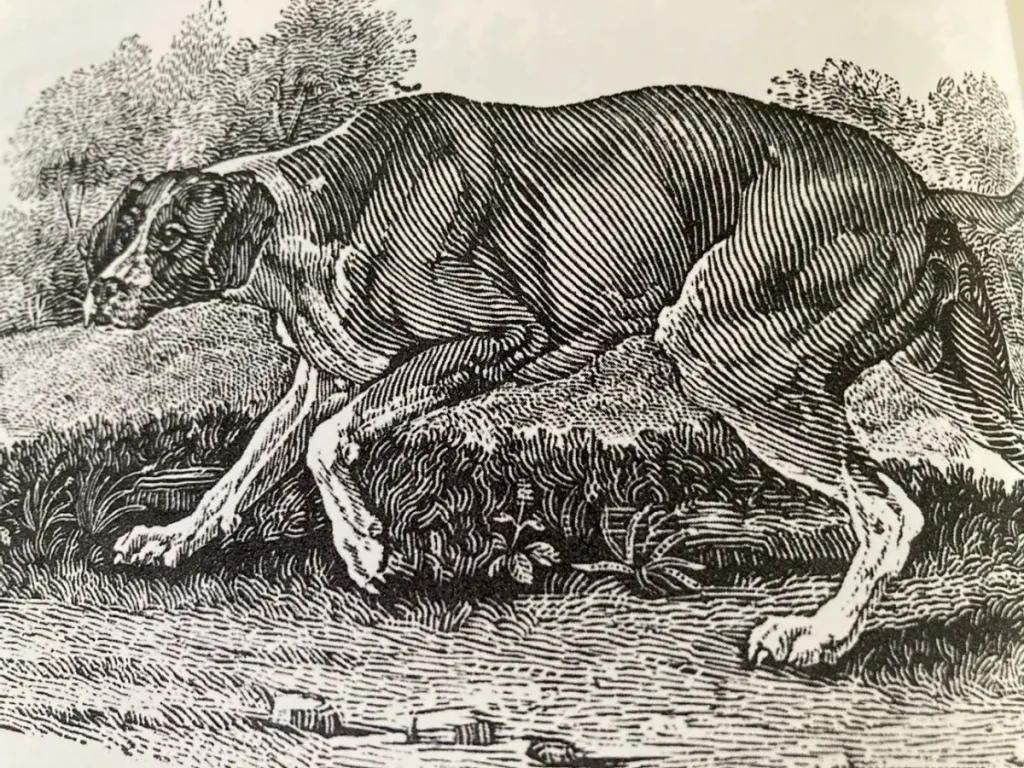
At least some cause for humour was interspersed through Collingwood’s otherwise austere existence, as his little dog Bounce always accompanied him while at sea and he constantly wrote of the canine’s exploits. In one instance he sought to reprimand the pooch for his arrogance:
”I am out of all patience with Bounce. The consequential airs he gives himself since he became a right honourable dog are insufferable. He considers it beneath his dignity to play with commoners’ dogs, and truly thinks that he does them grace when he condescends to lift his leg against them. This, I think, is carrying the insolence of rank to the extreme, but he is a dog that does it.”
Though even in this regard, sadder days overtook Collingwood, as the dog ailed from old age:
“Bounce has been confined some days with sort of rheumatic gout which threatens a general debility. He is at present on a regime.”
However, Bounce did not have long to live. In 1809, as though only second to the loss of Nelson, Collingwood wrote:
“You will be sorry to hear my poor dog Bounce is dead. He fell overboard in the night. He is a great loss to me. I have few comforts, but he was one, for he loved me. Everybody sorrows for him. He was wiser than (many) who hold their heads higher and was grateful (to those) who were kind to him.”
The funeral of Bounce was attended with all the pageantry of a hero. A small coffin was draped in the flag, given a gun salute, and buried at sea.
Not long after, his request to return home was finally granted, but within a month Collingwood himself was dead, the cause being cancer, his body having been worn out from his years at sea. He was never more to see his family and the land of his birth.
Cuthbert Collingwood left behind his family and the fortune he had amassed. He had been made Baron Collingwood of Caldburne and Hethpool, the title becoming extinct upon his death. He had spent almost his entire life at sea with the object of a lasting peace and the survival of his country, in which he played a decisive part, leaving Britain the master of the seas, to be unmatched for over a century. He was buried in state at St. Paul’s, fittingly alongside his old friend and commander, Nelson.
Thackeray later wrote of the man:
“His heroism stirs British hearts when we recall it. His love, and goodness, and piety make one thrill with happy emotion. As one reads of him and his great comrade going into the victory with which their names are immortally connected, how the old English word comes up, and that old English feeling of what I should like to call Christian honour!”