The story of two Northumbrian brothers, John William and Francis “Frankie” Douglas
By Crasterfarian
I’ve met a lot of people in my life and, being Craster born and bred, what an honour it has been to meet the characters that lived there.
Life in Craster would possibly be viewed with furrowed brows these days, but the Jolly Fisherman of old, in the 70s and 80s, where the doors never seemed to close, and a cohort of utterly unique characters converged to create a crucible of craic, the likes of which I doubt will ever be seen again.
In amongst these men and women were fishermen, quarry workers, farmers and, not forgetting, war heroes.
Men who had laid down the tools of work to pick up the weapons of war, some would never return to our quiet little corner of Northumberland.
But this bunch of utter legends didn’t just fight in World War II.
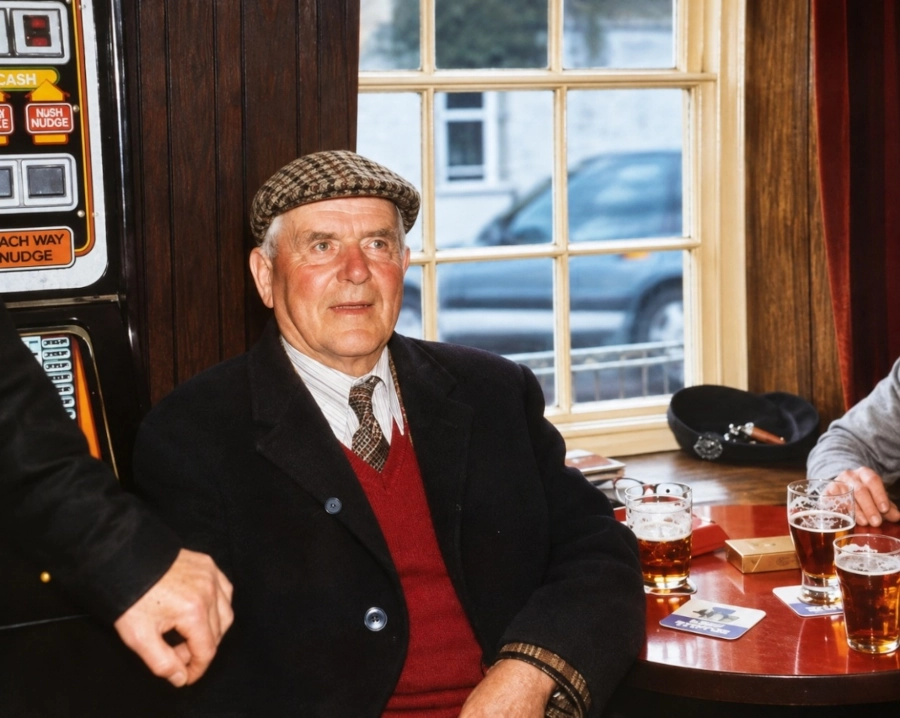
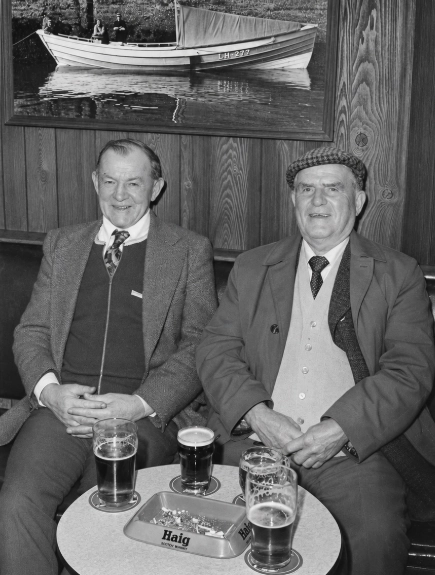
There was one who sat in the little bar at the Jolly, as quiet and as unassuming as you could imagine, who had been in World War I, at the Somme no less…
It was my utter privilege to talk to him, spend time in his presence and have a drink with him, but all along never knowing he’d served.
That information didn’t come out until I attended his funeral… which was a great honour.
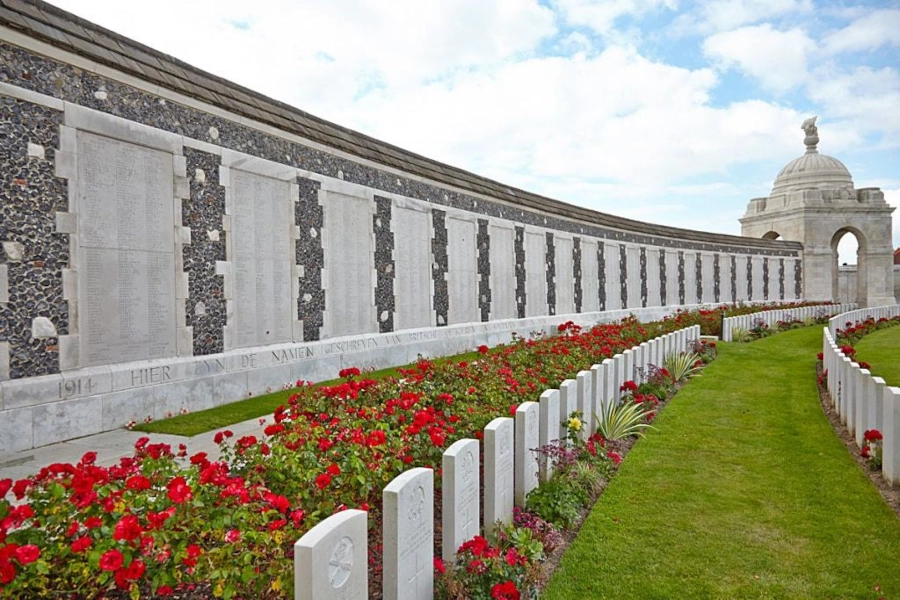
Behind every name carved on a Great War memorial was a life, a family and a future that would never be realised. Sometimes the most remarkable stories are much closer to home than we imagine.
His name was Francis “Frankie” Douglas, and his story, along with that of his brother John, is one I think deserves to be told.
Two brothers, two very different fates
John William and Francis Douglas were born in Eglingham, later growing up around Longhoughton, with connections to Howick and Craster.
John, the elder brother, initially joined the cavalry and, according to family recollections, was stationed in Dublin during the Easter Rising of April 1916, when British troops were deployed to suppress the rebellion.
He later transferred to the 7th Battalion of the Border Regiment, service number 34518.
Sadly, despite all my efforts and searching I haven’t managed to find a picture of him.
His younger brother, Frankie, born on 27 April 1899, was so determined to join up that, according to family accounts, he lied about his age, enlisting at 17 in the King’s Own Yorkshire Light Infantry, service number 39446.
Little could that young Northumbrian lad have imagined the horrors that awaited him.
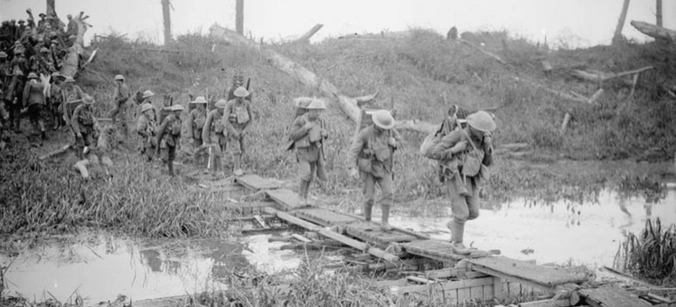
Family accounts place Frankie at the Somme, where the slaughter was almost beyond comprehension.
The family remember that at one point just 46 men remained from his battalion.
Forty-six young men from a battalion of 1,000.
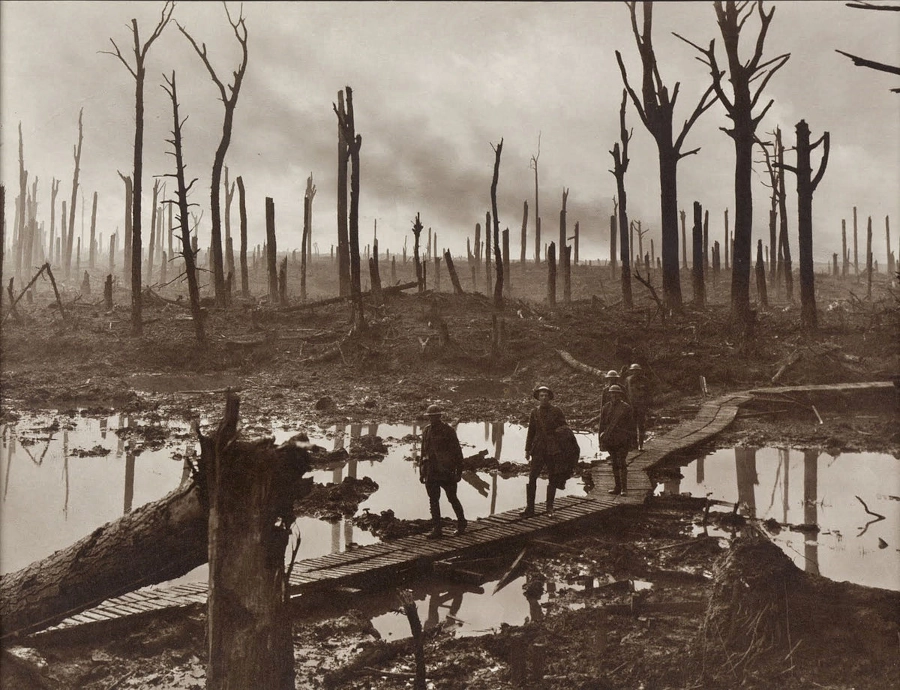
Frankie somehow survived, but during the terrible fighting in Flanders at Passchendaele, he suffered devastating injuries.
Shrapnel lodged within an inch of his spine, while another wound tore into his thigh, leaving an injury described as being the size of a dinner plate.
Meanwhile, John had arrived in Flanders. He had been there for eleven days when, on 20 November 1917, he was killed in action, aged 22.
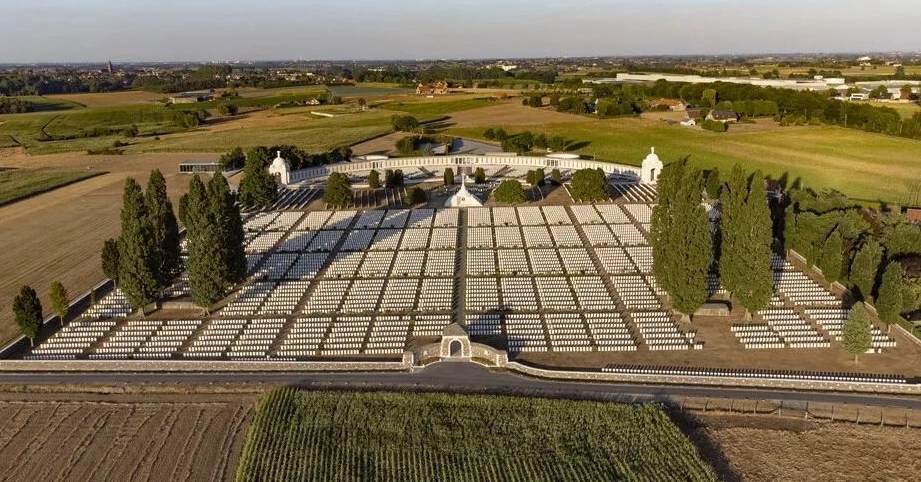
The family describe John being blown apart by an explosion. He has no known grave, and his name is commemorated on the Tyne Cot Memorial in Belgium, alongside thousands of other young men who never came home.
Perhaps the most haunting part of their story is the possibility that the brothers were fighting remarkably close to one another when John was killed and Frankie suffered his terrible wounds.
Family research has raised the possibility that they were separated by only a short distance, perhaps as little as a hundred feet.
Imagine that possibility.
Two brothers from rural Northumberland, hundreds of miles from the peaceful fields of their childhood, perhaps within shouting distance of one another amid the unimaginable destruction of the Western Front.
One would never come home. The other would survive against extraordinary odds and the utter carnage of Passchendaele (Ypres).
Perhaps fortune played a greater part in Frankie’s survival than we will ever know.
Mick recalls his grandfather telling him how stretcher-bearers were shot from under him as they attempted to carry him from the battlefield.
On another occasion, Frankie was queuing to board a hospital ship, only to be turned away because it was already full.
The ship subsequently struck a mine and sank. Missing his place aboard may well have saved his life.
And it seems Frankie’s extraordinary luck followed him home to Northumberland. During the 1970s, he came within a single point of winning the football pools, still collecting several thousand pounds.
According to Mick, he also had an uncanny knack for winning domino cards and raffles.
For a man who had witnessed so much death and destruction, fortune certainly seemed determined to keep him around.
And perhaps, after everything he had endured, nobody deserved a little good luck more than Frankie Douglas
And what of Frankie?
Following his terrible injuries, Frankie was treated in a hospital in Brighton before eventually returning home to Northumberland.
And what did this young man, who’d survived the slaughter of the Western Front, do with the rest of his life?
He became a postman.
From 1920 until 1960, Frankie was the local postie, cycling thousands upon thousands of miles around Longhoughton and the surrounding countryside, delivering letters and parcels in all weathers.
Forty years of service, carrying with him the physical scars of a war that had almost taken his life.
Just imagine that. A man with a wound at the top of his leg the size of a dinner plate, who had once lain wounded with shrapnel lodged within an inch of his spine, spending four decades pedalling his bicycle around rural Northumberland.
Mick recalls another wonderful story his grandfather told him. At the outbreak of the Second World War in 1939, Frankie was approaching 40 years of age. A fellow in Longhoughton asked him:
“Frankie, are ye not gan?”
To which Frankie replied:
“Nah, son. I’ve done me bit. Get yersel away.”
But there was far more to Frankie than his working life. According to his grandson Mick, he was a renowned tap dancer, enjoyed his whisky and was a talented accordion player, with a particular love for the music of Jimmy Shand.
Remarkably, Mick still has his granda’s accordion.
Frankie eventually saw out his days in Howick, and the Jolly, passing away on 30 August 1992 at the remarkable age of 93.
Like so many of his generation, Frankie rarely spoke about the War.
His son Clive would encourage him to wear his medals on Remembrance Sunday, but he never would.
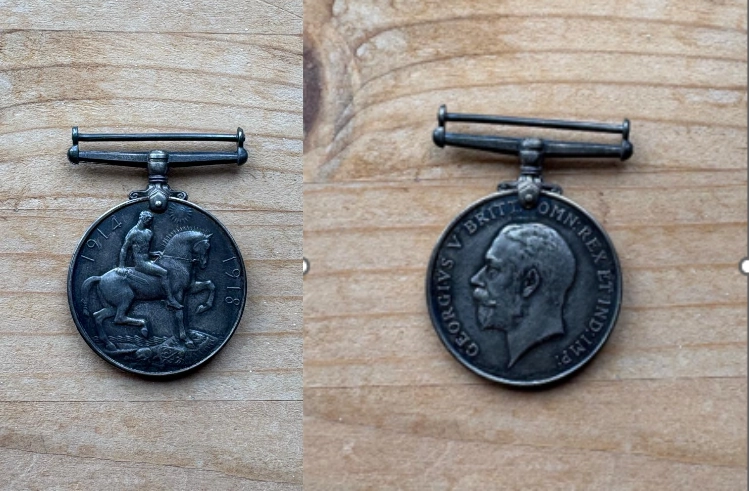
Remarkably, both his own medals and those of his brother John remain in the family, in almost mint condition.
Neither set ever had its ribbons attached.
Perhaps some memories were simply too painful to revisit. We will never truly know the utter horrors he and so many of his generation endured, or the mental scars, what we would now recognise as PTSD, that they may have carried for the rest of their lives.
The horrific wounds, both physically disfiguring and mental, stayed with many of them long after the guns fell silent at 11:00 hrs on 11th Nov 1918.
Nee PIP, nee benefits in those days, perhaps a pittance of a war pension. They just came home, were de-mobbed and got on with it.
What extraordinary things those eyes must have witnessed.
There is something rather beautiful about Frankie’s survival
Had that shrapnel struck just an inch differently, Frankie might never have returned to Howick. His son Clive would never have been born, nor would his grandson Mick, an old mate of mine, I’ve shared many drinks and good times with all three, it’s sobering to think that all those good times, beers, singing and craic may have been wiped from history with Frankie not coming home like his brother
Two lives, and the generations that follow, owing their very existence to the extraordinary good fortune of one young soldier who somehow survived the slaughter.
I find that thought incredibly moving.
John’s life ended in the mud of Flanders at just 22. Frankie was given the chance to grow old, have a family and live a life that so many of his generation were denied.
And now, more than a century later, his grandson still cherishes those medals and the memories passed down through his family.
Next time you’re in the Jolly Fisherman, spare a thought for that quiet little man who once sat in the bar.
He wasn’t just Frankie Douglas from Howick.
He was a survivor of the Great War, a brother who lost his brother, a father, a grandfather and a living reminder of just how much we owe to those who came before us.
Two brothers. Eleven days for one, a lifetime for the other.
Lest we forget.
With Love from the Crasterfarian XX
Never miss an article. Enter your email or give our FB page a like
