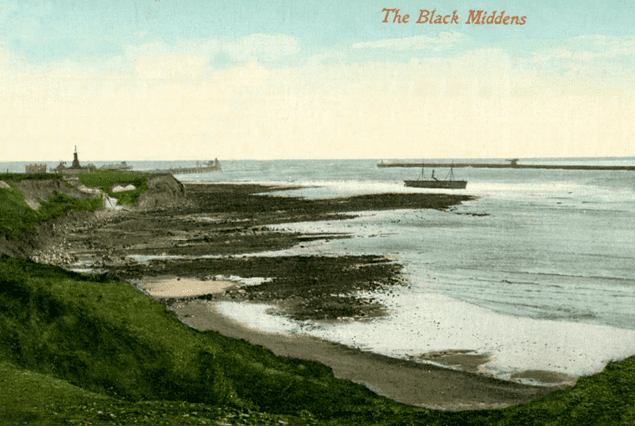
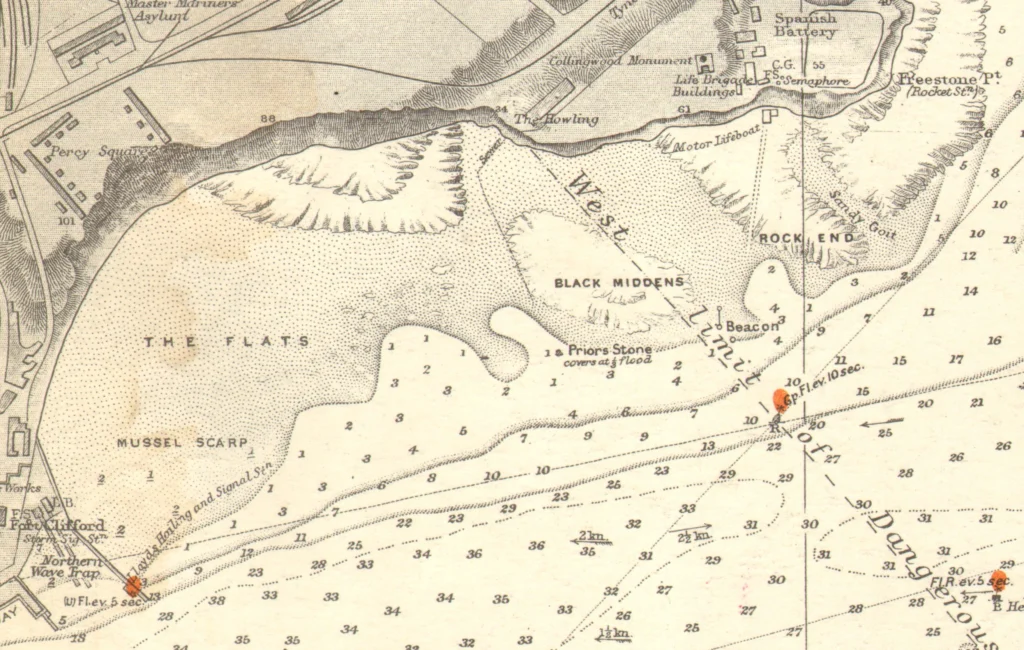
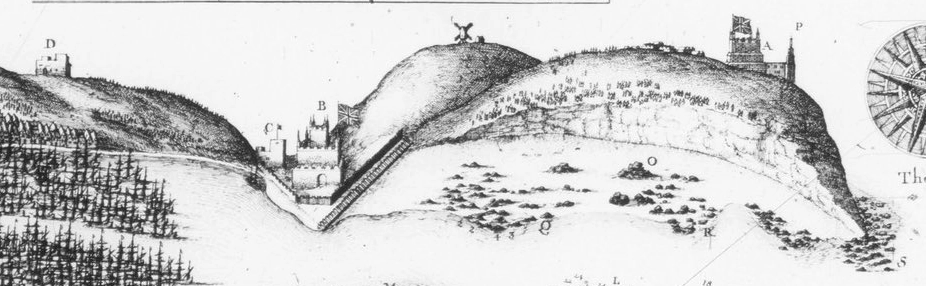
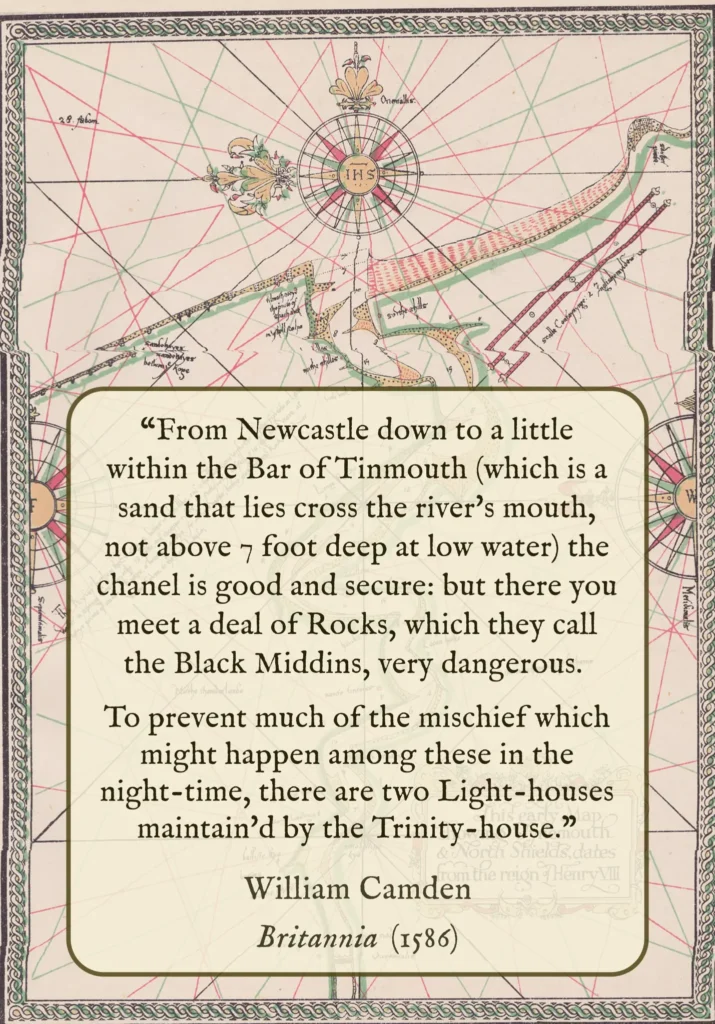
This notorious reef known as the Black Middens, has been claiming ships and the lives of mariners since the time of the Vikings. Being almost fully submerged at high tide and thereby all the more dangerous, they are the reason the High Light and the Low Lights exist: to keep ships away from them. And thus the Black Middens have shaped the face of North Shields since the first navigation lights were erected in 1539.
Leading Lights
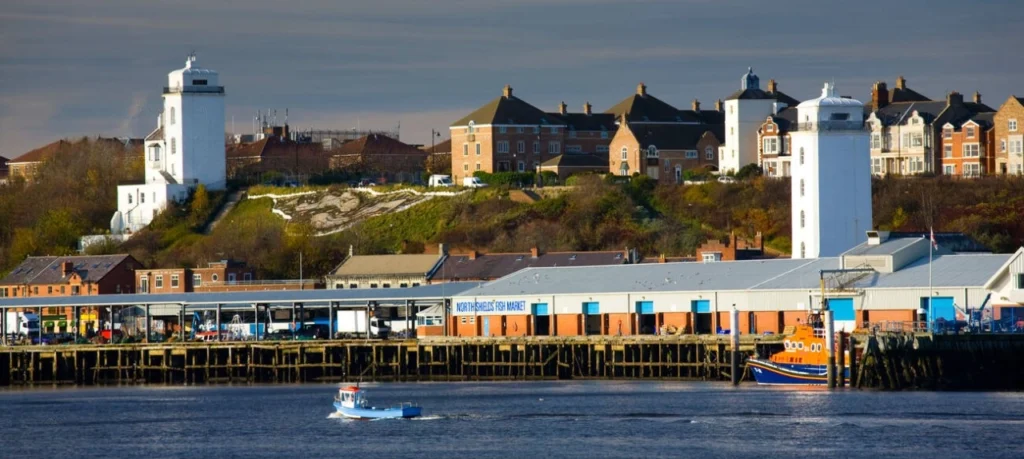
These two most recognisable features of North Shields serve to guide ships through the Tyne harbour. They came about after Henry VIII, in reorganising the English Church, removed the Prior out of Tynemouth, a man who had hitherto been all-powerful in the area and had profited directly from shipwrecks. In his place, Henry granted authority to Trinity House to manage the traffic on the river and exact a levy from passing ships for use of their navigation lights. To build the first High and Low lights, they used stone robbed out from Blackfriars in Newcastle, and this stone can still be seen on the western side of Cliffords Fort.1

Invasions and Innovations
The Black Middens, then, have hindered navigation for centuries and made entering the river a hazardous endeavour. They have necessistated the invention of both the first purpose built lifeboat at South Shields and the first ship-to-shore life brigade, the TVLB.
The oldest reference to these rocks is found in the writings of the chronicler, Symeon of Durham, in the early 12th century. In this video I tell the story of the Vikings losing a battle in the Tyne at Jarrow and becoming wrecked and subsequently slaughtered there by the local people.
The legend is detailed in an early short story by the novelist Robert Westall, published here:
Folklore
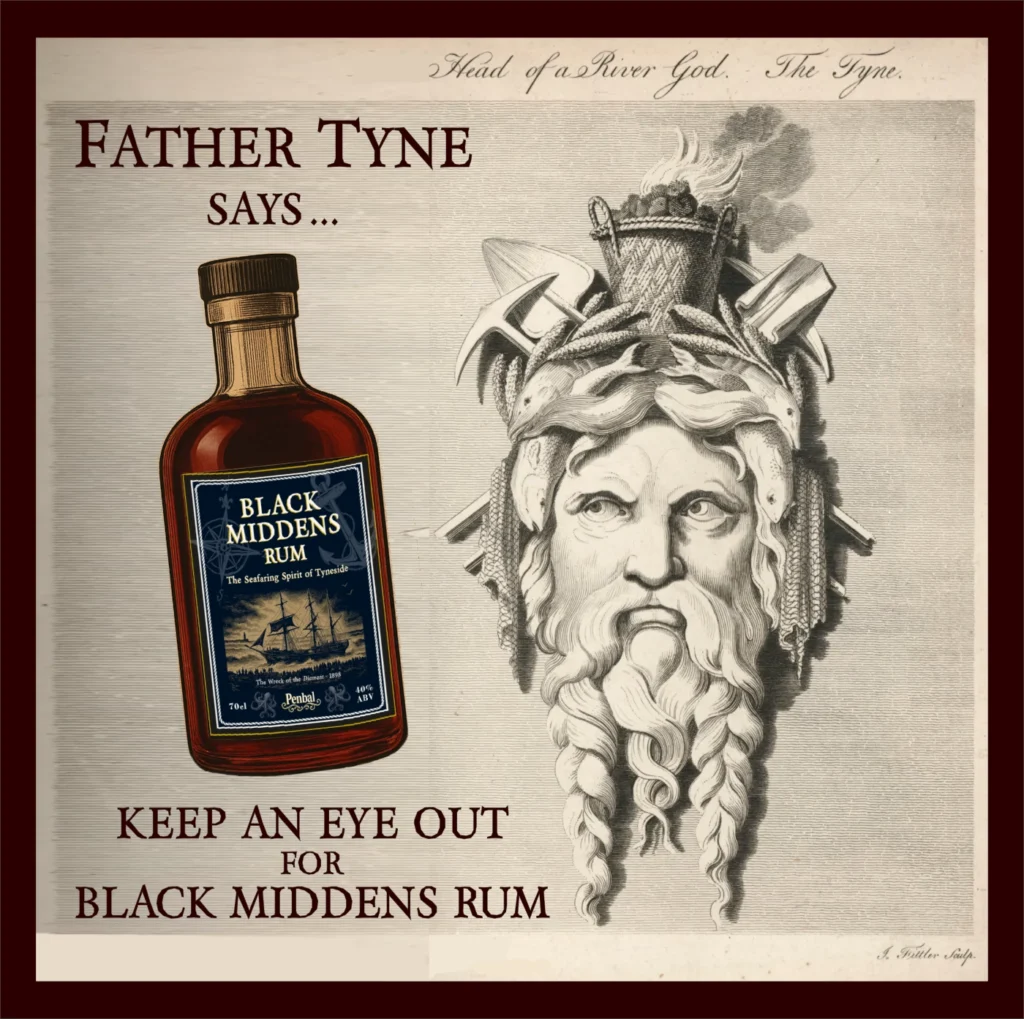
The Middens have their own mythology too, and this story seems to have its roots in the ancient Celtic folklore of the region and the Tyne Valley. The story sets out an idyllic scene where people were free to prosper from the river’s bounty. In these halcyon times the Tyne god, Cor, lived in harmony with his counterpart, Neptune, who occupied the seaward end of the river and would “wanton” with his dolphins in the river mouth. That was until things soured between the two marine gods and they came to blows, with Neptune’s parting shot being to hurl a handful of stones at Cor. Where they landed formed the Black Middens, which would forever thence obstruct shipping and claim the lives of sailors — a curse and a blight on the trade and smooth sailing of the waterway.
The full story here:
A Pipe Dream
We may wonder why the Black Middens weren’t dynamited long ago, and this brings us to the formation of the Tynemouth Dock Company, when there was a plan to do just that.
From the 1840s to 1860s a much vaunted proposal was advanced for a dock in the prime spot below where Knotts Flats sits today. The idea was to capture all the trade away from Newcastle and bring unlimited prosperity to North Shields.
In order to achieve this new dock, it would require blasting most of the Middens, not just to create access but to provide a deep water harbour for ships to berth.

via Steve Ellwood @TyneSnapper
Despite the excitement and fanfare, practicalities, costs and politics soon intervened to prevent it happening. Instead, the Tyne Improvement Commission united the four boroughs around the river to dredge, deepen and industrialise the river with the building of the two Piers, the enormous Albert Edward Dock as well as the Tyne Dock and the technological marvel of the Swing Bridge, a counterpoint to the already spectacular High Level Bridge.
These projects preserved and increased the interests of super-rich industrialists like William Armstrong. They allowed the railways to protect their revenues and they made redundant the risks of fundamentally exposing the harbour and berthing ships to the full force of the North Sea and its powerful tides.
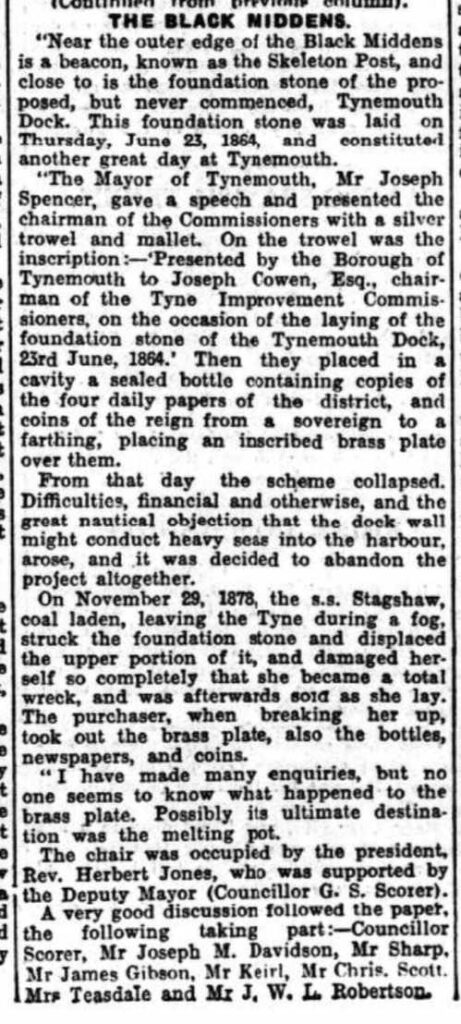
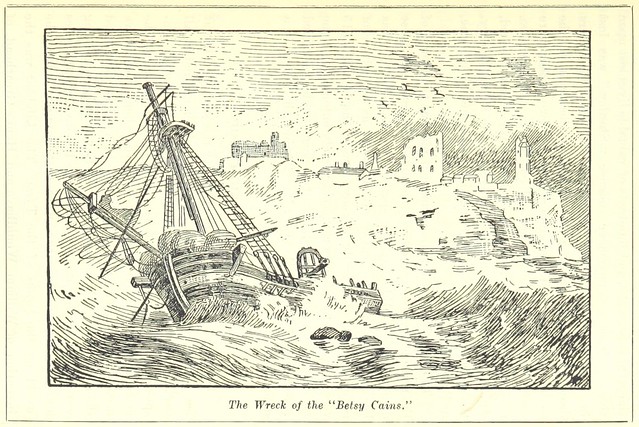
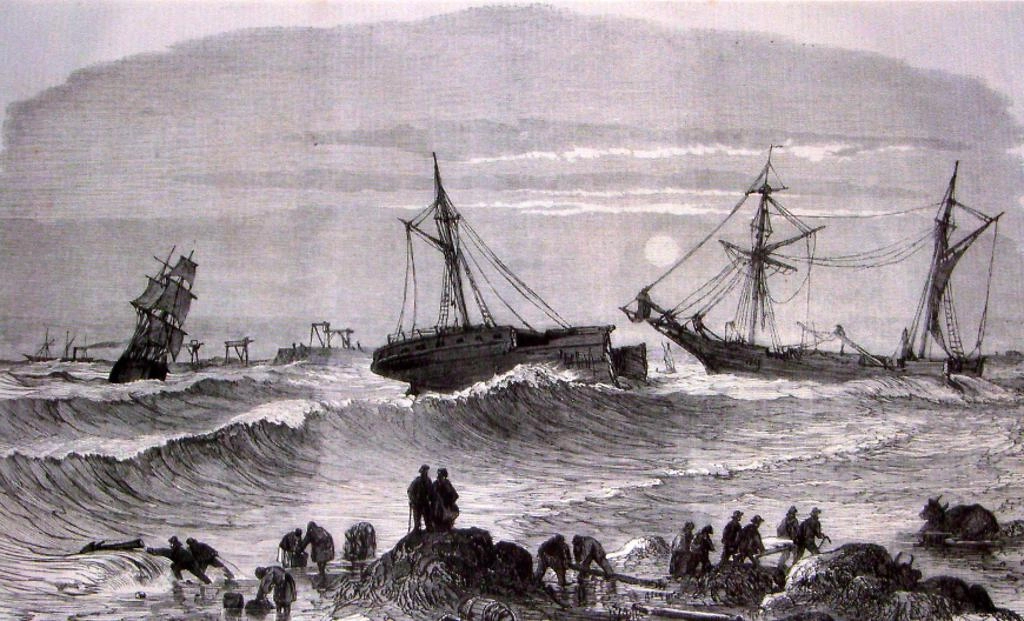
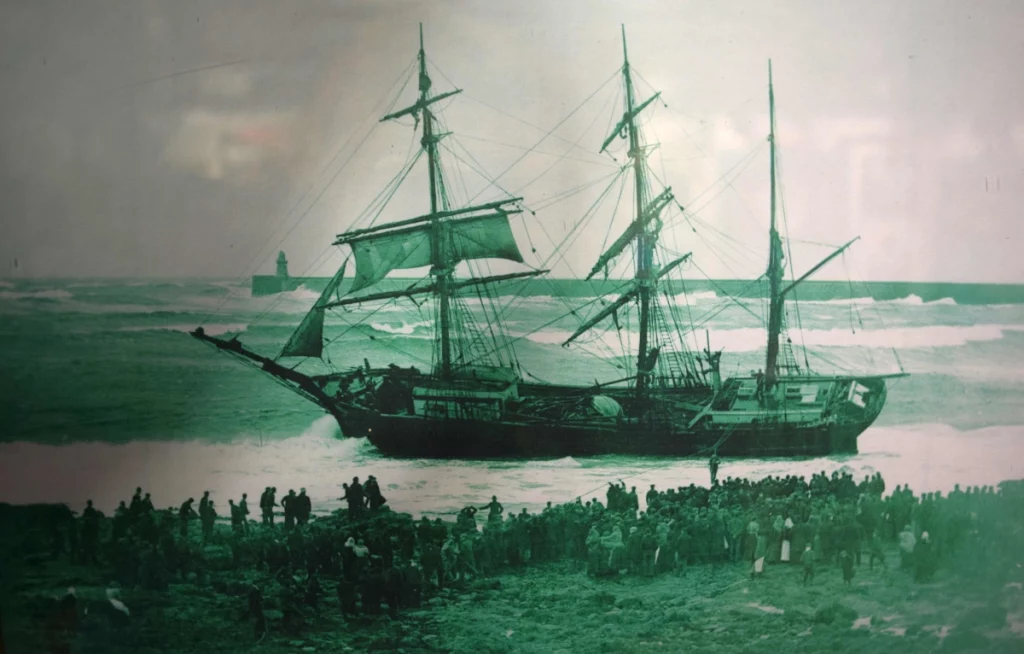
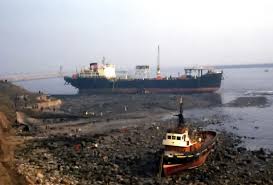
The Black Middens Most Famous Wreckings:
- The Betsy Cairns (1827)
2. Steam Ship Stanley (1864)
3. Diamant (1898)
4. OREGIS (1974)
Thankfully, navigation, communication and piloting has improved since these times, making a wreck on the Black Middens practically unheard of these days.
Never miss an article. Enter your email or give our FB page a like
Reference:
- Tyne & Wear Sitelines, Historic Record 9835:
“The monastery of the Black Friars in Newcastle was surrendered to the King and dissolved on 10 June 1539. King Henry VIII granted the fabric of the church to the Trinity House, and the stones were converted into the lights at Shields. In 1540 the building of the lights at Shields was begun.”
Blackfriars was one of the biggest friaries outside London and its entire church was demolished at this time, while the other friaries and convents in Newcastle were sold to private landowners, Blackfriars went to the Corporation, who had an interest in keeping the harbour navigable at Shields.